top of page

Another project of the Hinghwa Heritage Centre
Food & Fruits
"If it is delicious,
it must be Hinghwa food."


Image is for illustration purposes only. There are different ways of cooking the same dish; hence, the image may vary.
Hinghwa cuisine is renowned worldwide for its unique taste. Its preparation often takes many hours, sometimes continuing through the night.
This was exactly what my mother did on the eve of every Chinese New Year, just to prepare the special dish called Sou Min (面线) or Shòu Miàn (寿面; Longevity Noodles). It is also known as Mazu Mian (妈祖面线).
The secret to making delicious Hinghwa noodles lies in the broth, which requires long hours of slow simmering to develop its rich flavor. So, if it is Hinghwa noodles, it must be YUMMY!
*
Xia por penn?
吃饱了吗?
Have you eaten?
When Hinghwa elders meet, it is common to hear them ask each other, “Have you eaten?” This simple greeting stems from a shared past of hardship and poverty, especially before they migrated to Nanyang. The severity of that time was such that millions perished due to famine. As a result, the value of food is deeply ingrained in Hinghwa culture, and wasting food is strongly discouraged.
Our elders would often remind their children to finish every grain of rice in their bowls. For Hinghwa housewives, cooking is not just a chore but a joyful expression of care and pride. Every noodle dish often carries symbolic meaning, either to commemorate a particular event, to convey blessings, or sometimes both.
Among all Hinghwa dishes, noodles are the most iconic. They are especially flavorful, often cooked with an abundance of fresh seafood sourced from the long coastline of Putian.
Hinghwa noodles are famous not just for their taste, but also for the cultural significance behind each variety. This is what makes Putian noodles so unique.
There are three main types of Hinghwa noodles:
-
Sou Min (面线) or Shòu Miàn (寿面; Longevity Noodles), also known as Mazu Mian (妈祖面线)
-
Loh Min (卤面; Lǔ miàn; Braised Noodles)
-
Chor Bi Hoon (炒米粉; Fried Vermicelli)
-
Fried Mee Suah (兴化炒面线; Fried Sou min)
In addition to these, there are two other beloved dishes that, while not technically noodles, are just as delicious:
-
Ba Wei (兴化炒年糕; 白粿; Stir fried white cake)
-
Chak Hoon (擦粉; Chā fěn)
*
Sou Min (线面), aka Longevity Noodles (寿面), aka Mazu Noodles (妈祖面)
Among the Hinghwa, these delicate, hand-pulled noodles are traditionally known as Sou Min (线面). Their long, slender, unbroken strands are closely associated with the idea of longevity and have made them an indispensable part of festive and celebratory meals.
Traditionally, a single batch of noodles was painstakingly made by hand from a piece of dough. The dough was stretched repeatedly until it became a mass of extraordinarily fine, long strands. This meticulous, labour-intensive craft can still be seen in some Chinese restaurants and traditional noodle-making establishments today, although most noodles are now produced commercially in large facilities, where the stretched strands are hung out to dry.
The noodles' remarkable length and unbroken strands came to symbolise a long and continuous life. They therefore became known as Shòu Miàn (寿面), or “longevity noodles,” and are particularly associated with birthdays, Lunar New Year, weddings and other auspicious occasions. Among the Hinghwa, they are also popularly known as Mazu Noodles (妈祖面) or Mazu Peace Noodles (妈祖平安面), reflecting their association with blessings for peace, safety and well-being.
A Bowl of Blessings
For many Hinghwa families, no bowl of longevity noodles is quite complete without Zicai (紫菜; seaweed). Its distinctive savoury flavour adds an unmistakable depth and aroma to the dish. Seaweed is also a familiar feature of the traditional Hinghwa preparation, where it is often accompanied by ingredients such as peanuts, vegetables, egg and meat.
Among the Hinghwa, the noodles continue to be commonly called Sou Min (线面). The character 寿 in Shòu Miàn means “longevity,” and the noodles' long, continuous strands naturally lend themselves to this symbolism. A bowl of unbroken noodles therefore represents hopes for a long, healthy and prosperous life.
The noodles are also known by several names depending on the community and context. In Mandarin, they are Miànxiàn (面线); in Hinghwa/Puxian speech, they are known by local pronunciations such as min niea. In other Chinese communities, they may be referred to as Mee Sua. They are sometimes described in English as Hinghwa hand-pulled noodles, although this term can encompass other noodle traditions as well.
Noodles for the Lunar New Year
Longevity noodles hold a particularly important place in the Hinghwa celebration of the Lunar New Year.
On the first day of the Chinese New Year, families traditionally begin the year with a bowl of noodles, symbolising the hope for longevity, good health and an auspicious year ahead. Among the Hinghwa, the noodles are also eaten again on the fifth day of the Lunar New Year, when families traditionally “celebrate the New Year” once more as part of the distinctive Five Days of the New Year (五日岁) customs.
The fifth-day tradition is especially significant because the Hinghwa New Year follows customs that developed from the region's historical experience during the Ming dynasty. The practice of observing an extended New Year period eventually became known as Wurì Suì (五日岁), or the “Five-Day New Year.”
On these festive occasions, the noodles are commonly accompanied by an assortment of colourful toppings. Depending on the household and locality, these may include seaweed, peanuts, vegetables, mushrooms, egg, pork and other meats. There is no single fixed recipe: variations from village to village and family to family are part of the tradition itself.
According to Li (2015), Hinghwa longevity noodles express wishes for peace, happiness, good health and a long life (兴化寿面表达了祝愿人们平安幸福,健康长寿的寓意). On Meizhou Island, the noodles are also known as Mazu Peace Noodles (妈祖平安面), reflecting their association with prayers for peace and protection.
A Noodle with a Mazu Connection
Mazu, traditionally identified as Lin Mo, was born on Meizhou Island in Putian, Fujian, and was later venerated as a protector of seafarers and the sea. Her story and the Mazu tradition became deeply woven into the life of the coastal communities of Putian.
The Meizhou Mazu Ancestral Temple on Meizhou Island is regarded as the birthplace and ancestral temple of Mazu worship. From Putian, Mazu belief spread widely with maritime trade and migration, eventually reaching communities throughout China and Southeast Asia and beyond.
This connection helps explain why the noodles came to be associated not only with longevity but also with peace, protection and safe journeys. According to a recent Fujian government account, fishermen traditionally received a bowl of line noodles from their families before setting out to sea, carrying with it the wish that they would return safely.
How the Noodles Are Made
According to Guo (2017a), Hinghwa longevity noodles are made from a combination of high-gluten flour (高筋面粉; gāojīn miànfěn), cassava flour (木薯粉; mùshǔ fěn), sweet potato flour (番薯粉; fānshǔ fěn), peanut oil (花生油; huāshēng yóu), salt (盐; yán) and water (水; shuǐ).
This combination gives the noodles their characteristic slightly off-white appearance, distinguishing them from the brighter white of Hinghwa rice vermicelli.
Traditionally, the dough is repeatedly stretched and pulled by hand until it becomes extremely thin and long. The process requires considerable skill and patience. Today, although handmade production survives, much of the noodle-making process has been industrialised, with the stretched noodles hung in long rows to dry.
The noodles are generally cooked with a savoury broth or sauce and served with a selection of prepared ingredients. Depending on the household or locality, these may include three-layered pork belly, seafood, vegetables, mushrooms, egg, peanuts and, most importantly, Zicai seaweed. The precise combination varies, but the symbolism remains remarkably consistent: longevity, prosperity, peace and well-being.
A Family Tradition
The significance of longevity noodles extends beyond the food itself.
During the Lunar New Year, family members gather around a bowl of noodles to mark the beginning of another year together. In traditional families, married children may visit the husband's parents first before visiting the wife's family later in the day. Sharing a bowl of longevity noodles during these visits is both a gesture of hospitality and a blessing for the year ahead.
The noodles are equally at home at birthdays and other joyful occasions. They may be served when an elder celebrates a birthday, when a family welcomes a new addition, before a sea voyage, or simply when loved ones gather and wish one another peace, safety and prosperity.
In this sense, Sou Min is far more than a noodle dish. Its long, unbroken strands carry centuries of symbolism: the hope for a long life, the wish for a safe journey, the joy of family reunion and the promise of another year together.
For the Hinghwa, a bowl of Sou Min is, quite literally, a bowl overflowing with blessings.
*
Cooking Mazu Noodles
Source: Tik Tok for educational purpose.
Stewed Noodle (卤面) 兴化卤面
In Hinghwa, this beloved noodle dish is known either as Pah Min (打面) or Lou Min (卤面). According to Mdm. Song Mei Zhu (蘇宋美珠), the term Pah Min, literally mean "beaten noodles", refers to the noodle in its raw form and is named after the unique method used to prepare it.
To make the noodles, flour (面粉) is combined with water and salt to form a dough. This dough then undergoes a repetitive process of turning, folding, and beating to thoroughly mix and aerate it. The distinctive beating technique gives the dish its name: Pah Min (打面). After the dough has been worked into a smooth texture, it is pulled into long, thin noodles and dried for preservation.
When cooked, the dish is commonly referred to as Lou Min (卤面), or stewed noodles. This method involves stewing the noodles together with a rich combination of ingredients, mainly clams and small dried prawns, both of which are abundant in the coastal waters of Putian.
The resulting dish is full of flavor, thanks to the seafood-based broth that forms as the ingredients are stewed together. The noodles absorb the essence of the sea, creating a savory, gravy-rich dish that is both comforting and satisfying. Lou Min is particularly popular among coastal communities, where seafood is a staple, but it has since become a favorite among Hinghwa people worldwide.
In many Hinghwa households, it is common to bring home a large pot of Lou Min to be shared as a family meal. The rich, umami flavors and hearty texture make it a beloved dish that appeals to all ages. Its versatility also makes it suitable for a variety of occasions -- from casual meals to festive gatherings.
Historically, this noodle is believed to have originated from Wei County, one of the most powerful states during the Three Kingdoms period. Over time, its popularity grew, especially during the Han dynasty, due to the simplicity of its preparation and the richness of its flavor. Even when eaten plain or "raw," Pah Min can be quickly transformed into a delicious meal simply by stewing it with available seafood or shellfish -- making it a practical yet flavorful staple.
Today, Pah Min and Lou Min stand as symbols of Hinghwa culinary heritage, embodying the community's connection to the sea, its history of resilience, and its deep-rooted tradition of communal dining.
*
Chak Hoon (擦粉): The Pragmatic Noodle of Hinghwa Tradition
According to Mdm. Song Mei Zhu (蘇宋美珠), an 89-year-old Hinghwa elder originally from Putian, has this humble and deeply meaningful dish called "Chak Hoon" (擦粉). Chak Hoon is essentially made from broken vermicelli -- the leftover or scrap noodles that fall out of the packet or accumulate around the production area during noodle-making.
This dish is considered a variation of Hinghwa Bi Hoon (兴化米粉; Pútián xīng huà mǐfěn), except that instead of pristine, unbroken strands, it uses the fragmented bits that would otherwise be discarded. In times of hardship, whether caused by war, famine, or displacement -- every scrap of food became precious. Chak Hoon was a practical solution born of necessity, turning what was considered waste into nourishment.
Despite its modest origins, Chak Hoon is a dish of survival and resilience. Eating long noodles traditionally symbolizes longevity, but in the face of hunger, satisfying the immediate need for food takes precedence. Thus, Chak Hoon represents what may be called a “pragmatic noodle”, where the focus is on survival rather than symbolism.
History Rooted in Calamity
As Li (2018a) recounts, a particularly telling episode from Putian’s wartime history gives Chak Hoon its symbolic power. On the eve of the Chinese New Year, the people of Putian were preparing for the festive celebration when Japanese pirates invaded. Many villagers fled to the mountains to escape. When they returned on the fourth day of the New Year, their homes were ransacked and food supplies depleted. Left with few options, they gathered whatever scraps of vermicelli and ingredients they could find, stewed it together, and called the resulting dish 擦粉 (Cā fěn) -- scrap noodle.
From that point on, Chak Hoon was seen as a dish that had saved lives -- a meal that gave hope and sustenance in the darkest of times.
A Dish of Hope and Festivity
Over time, Chak Hoon evolved from a survival meal to a symbol of good fortune and hope, especially during community festivals. One notable example is the Spring Lantern Festival celebrated in Dongpo Village, Wutang Town, Putian (莆田梧塘镇东坡村). During this festival, a large-scale communal cooking of Chak Hoon takes place with elaborate ingredients and strict preparation methods.
As described by Li (2018b), the cooking process requires a 60 cm-diameter deep pot and a specific list of ingredients known as "Twelve Three Ca Fen" (十二个三的大擦粉), meaning 12 ingredients at 3 kg each:
-
Various forms of noodles or rice flour
-
Sweet potato flour
-
Oysters
-
Pig blood
-
Pig intestines
-
Tofu
-
Broad beans
-
Winter bamboo shoots
-
Peas
-
Broccoli
-
Garlic greens
-
“Sugar withered” (red sugar mixed with pork)
This version of Chak Hoon is a regional specialty and a highlight of the Lantern Festival celebration, showcasing how a dish once born of scarcity has transformed into a rich, communal delicacy.
Common Misconception
Chak Hoon is sometimes mistaken for Lǔ Mǐfěn (卤米粉; stewed vermicelli) due to its similar appearance and method of preparation. However, stewed vermicelli typically uses unbroken rice noodles, whereas Chak Hoon specifically refers to the broken or fragmented vermicelli.
A Modern Comfort Food
Today, Chak Hoon has become a cherished dish among Hinghwa people, enjoyed not just for its taste but for the story it carries. While the ingredients may vary from household to household, the dish continues to reflect the Hinghwa spirit of resourcefulness, gratitude, and resilience -- a culinary legacy passed down through generations.
*
Chor Bi Hoon (炒米粉): A Hinghwa Vermicelli of Longevity and Heritage
In Hinghwa, this dish is known as Chor Bi Hoon (炒米粉), stir-fried vermicelli.
Like its counterpart, Sou Min (寿面; longevity noodles), Chor Bi Hoon also symbolizes long life and blessings, owing to the length of the noodles. The vermicelli is unbroken, though bent and dried for ease of packing. It may be served not only during birthdays or New Year celebrations, but also during the Mid-Autumn Festival or other special family occasions.
Distinctive Preparation & Flavour
Though the ingredients may appear similar to other Hinghwa noodle dishes, the preparation technique is entirely different, giving Chor Bi Hoon its unique flavor profile.
The key secret to cooking Hinghwa vermicelli lies in not soaking it in water beforehand.
Instead, the dry vermicelli is stir-fried directly in the wok together with all the pre-prepared ingredients and stock. This allows the vermicelli to absorb all the flavors and gravy in the wok, making it deeply savory and satisfying.
Common Ingredients Include:
-
Red onions (fried for fragrance)
-
Sliced pork
-
Sliced mushrooms
-
Dried scallops
-
Dried tow pok (fried tofu puffs)
-
Small prawns
-
Clams (啦啦; lā lā)
The clams are particularly crucial, adding a distinct briny sweetness that defines the soul of the dish.
No MSG Needed
Thanks to the rich combination of ingredients and the technique used, no monosodium glutamate (MSG) is required. The natural umami from the seafood, mushrooms, and dried scallops creates all the flavor needed. The final flourish is a generous sprinkle of roasted peanuts and Zi Cai (紫菜; dried seaweed), adding both crunch and depth.
The (Stork) Behind the Magic
Before stir-frying, a proper stock must be prepared. Traditionally, this is made by boiling pork bones, chicken bones, or both over a slow fire for up to 5 hours.
However, in modern high-rise living (such as in Singapore), this method is no longer practical. Many opt for packet stock from supermarkets as a convenient alternative. While it may lack the depth of traditional stock, for most eaters, the difference is minor, unless one is a seasoned Hinghwa culinary expert.
A Legacy of Survival
Historically, Hinghwa vermicelli was also a military ration. Because it is made from dried rice flour, it can be eaten raw or softened with just a bit of hot water. Lightweight and easy to carry, a soldier could bring multiple packets on the battlefield as a compact meal. Add a pinch of salt or minimal ingredients, and it becomes a hearty dish, one that nourishes and sustains, even in times of hardship.
More Than Just Food
Though born of practicality, Chor Bi Hoon carries cultural significance. It is more than just a noodle dish, it is a representation of:
-
Longevity through unbroken strands
-
Resourcefulness in its preparation
-
Community and family through their shared nature
-
Survival and resilience, echoing its use as sustenance in war times
It is a dish that lives on in kitchens across the world, wherever Hinghwa families gather and celebrate their roots.
*
Bai Guo (白粿): The Auspicious White Cake of Hinghwa
In Hinghwa, this delicacy is affectionately known as ‘Ba Wai’ -- literally meaning white cake. It originated from the mountainous regions of Putian, and is sometimes referred to as 山里白粿 (shān lǐ bái guǒ), or mountain white cake.
A Symbol of Good Fortune and Friendship
Bai Guo is one of the most auspicious traditional foods of the Hinghwa people. Historically, it was not a daily staple, but a special treat prepared and offered only on important occasions.
Most notably, Bai Guo is presented as a gift to friends and relatives during the Chinese New Year, especially on the third day and before the 15th day of the Spring Festival. Each gift is typically wrapped or accompanied by a pair of red-colored papers, symbolizing the belief that good things come in pairs. This offering is meant to bring:
-
Good luck in the New Year
-
Everlasting friendship
-
Harmony and happiness for both giver and receiver
(Chen, 2012c)
Ingredients & Traditional Preparation
The star ingredient of Bai Guo is high-grade ‘winter rice’, a premium variety of white rice known for its purity and texture. The preparation is labor-intensive, and traditionally requires a team of up to 10 people working together.
The traditional process:
-
Cook the rice thoroughly until soft and sticky.
-
Lay the cooked rice onto a large stone mortar.
-
Pound the rice rhythmically using long-handled mallets—a communal task requiring strength and coordination.
-
During the pounding, salt and peanut oil are added intermittently to enhance texture and flavor.
-
Once smooth and elastic, the hot dough is pulled onto a chopping board.
-
It is then shaped and cooked into the final form of white cake -- ready to be enjoyed or gifted.
A Dish of Legacy
Today, Bai Guo remains a beloved dish, not just for its taste but for what it represents -- blessings, community, and tradition. The act of making Bai Guo is often a shared, intergenerational experience, where elders pass down techniques and stories to the younger generation.
Though modern tools and methods may have shortened the process, many Hinghwa families still treasure the traditional way, seeing it as a form of cultural preservation.
*
Hinghwa Red Mushroom (紅菇)
Russula sanguinaria – The Rare Treasure of Putian’s Mountains
The Hinghwa Red Mushroom, scientifically known as Russula sanguinaria, is a rare and prized delicacy found in the mountainous regions of Putian. Distinguished by its deep liver-red hue, this mushroom is not especially appealing in appearance -- especially when dried, where it becomes wrinkled and dull. Nor does it boast a flavor that one might crave. However, what it lacks in aesthetics and taste, it more than makes up for in its exceptional nutritional and medicinal value.
According to Lee (2015), this mushroom is rich in compounds that help lower cholesterol and even contain cancer-fighting properties. Wang Y.Y. (2018) further notes its impressive medicinal qualities: anti-aging benefits, immune system enhancement, and the ability to nourish internal organs, Yin, and blood.
Despite its understated appearance, the Hinghwa Red Mushroom is revered for its health benefits and was once considered so rare that even money couldn’t guarantee its purchase. Locals often referred to it as the “King of Mushrooms” in China due to its scarcity and prestige.
Its nutritional value has been likened to that of Western truffles -- offering comparable health benefits at a fraction of the price -- making it a hidden gem in the world of traditional Chinese delicacies.
*
Hinghwa Snacks
Hinghwa Red Rice Cake (红团; Hóng Tuán)

án-duán pau tou dao, tak gay xie lao lao
吃红团饱豆沙, 大家都会长寿;
chī hóng tuán bǎo dòushā, dàjiā dūhuì chángshòu
The rhyme is: ‘Longevity comes with eating ‘an duan’ with peanuts.’
According to Huang Xiufeng (黄秀峰), a Putian folklore expert, the hóng tuán (红团) holds deep symbolic meaning for the Hinghwa people. Its round shape represents family reunion, while its packed fillings, red color, and sweet flavor symbolize prosperity, unity, and a bright future. As the saying goes, yī jiā rén hóng hóng huǒ huǒ (一家人红红火火) -- a family blessed with joy and good fortune (CCTV, 2019). The sweetness of the cake reflects the wish for a “sweet” and smooth year ahead. This pastry is an important part of the Chinese New Year celebrations.
The red rice cake is made from glutinous rice flour and filled with a variety of ingredients, such as pounded peanuts, mung bean paste, or glutinous rice. Each cake is placed on a piece of banana leaf and then steamed, resulting in a chewy, sweet treat that’s rich in flavor but not greasy. Traditionally, the top of each cake is stamped with a Chinese character -- ‘福’ (fú, blessing), ‘禄’ (lù, fortune), or ‘寿’ (shòu, longevity) -- imbuing the treat with auspicious wishes.
Variations and Symbolism
Weddings:
For marriage celebrations, a special version known as the “adult red rice cake” (成人米团; chéngrén mǐ tuán) is prepared. It is typically twice the size of the regular cake and served on a single banana leaf. The larger size symbolizes fertility -- particularly the hope for twins -- and a lasting, harmonious union.
Baby’s First Month:
Another variation is served to mark the baby’s first month (满月), a milestone worth celebrating, especially in ancient times when infant mortality rates were high (Wu, 2012). This hóng tuán marks survival, growth, and new beginnings.
Red Turtle Cake:
There is also a version shaped like a turtle, known as the red turtle cake (红龟团; hóng guī tuán), or mǐ shě pán shě guī hóng tuán. The turtle is a symbol of longevity and endurance in Chinese culture, as it is believed to live for over a hundred years. In Singapore, this version is popularly known as Ang Ku Kueh (红龟粿) and is beloved by many for its association with blessings and long life.
No matter the form or occasion, Pútián hóng tuán has become an essential part of Hinghwa celebrations -- a humble yet meaningful delicacy filled with history, symbolism, and community spirit.
*
Horse Cake
(马糕; Mǎ Gāo)

Despite its name, horse cake is not made from horses. Instead, the name comes from the role a horse plays in its preparation: the horse is used to grind rice into flour. A long stick is tied to the horse’s back and attached to a grinder. As the horse walks in circles, it turns the grinder, producing the rice flour used in the cake.
The mǎ gāo, or Horse Cake, is a traditional Hinghwa snack with roots tracing back to the Ming dynasty. Legend has it that horses were once used to knead the dough, hence the name Horse Cake. Though the origin story may sound mythical, it highlights the rustic and humble beginnings of this beloved pastry.
This snack became a staple breakfast item among the Hinghwa community, particularly at the Hinghwa enclave in Pasar Lane. In the 1960s and '70s, a popular hawker, himself a Hinghwa -- sold slices of mǎ gāo from his stall near the living quarters behind the mosque at Weld Road. A single slice costs only $0.05, usually paired with a cup of tea or coffee, a modest yet fulfilling meal for many.
How It's Made
Mǎ gāo is made with a simple blend of sticky rice flour, glutinous rice flour, and water. The ingredients are kneaded until the mixture becomes smooth and cohesive. Once ready, the dough is flattened and laid out in a large steamer basket lined with cloth. The edges of the cloth are then folded over the dough, wrapping it snugly.
The dough is steamed for around half an hour, transforming it into a soft, slightly chewy pastry. Its subtle sweetness and gentle aroma make it a comforting food -- easy to prepare, easy to eat, and easy to love (Feng, 2019).
Though simple in ingredients and method, mǎ gāo carries the warmth of tradition and the memory of old Hinghwa neighborhoods. It’s a humble reminder of how even the most modest of snacks can be rich in history and meaning.
*

Hinghwa fruits are naturally sweet and full of flavor.

The fertile land of Putian has allowed it to produce a variety of unique and delicious fruits, some of which are well known for their distinctive flavors and rich history. Here are a few notable fruits from Putian:
1. Red Berry (杨梅; Yángméi)
The red berry, or Yangmei, is a small, red fruit with a slightly sour and sweet taste. In the 60s, these fruits were imported from Putian, often packed in brown oval-shaped jars, filled with salt and water to preserve them during shipping. The fruit would be soaked in sugar water after being washed, and within a week or two, it would be ready to eat, with a refreshing and sweet-sour flavor. Today, it is often consumed fresh.
2. Lychee (荔枝; Lìzhī)
Lychee is one of the most iconic fruits from Putian, known for its sweet, juicy, and smooth flesh inside a rough, reddish-brown exterior. The city of Licheng (Lychee City) is named after this beloved fruit. Lychee gained fame during the Tang dynasty, as Emperor Xuanzong had it sent daily to his concubine, Yang Yuhuan. The fruit has remained a symbol of sweetness and luxury. Lychee can be found throughout Putian and is highly sought after for its delicate flavor.
3. Longan (龙眼; Lóngyǎn)
Longan, meaning "dragon's eye," is a translucent, glassy fruit that, when peeled, resembles the mythical dragon's eye. The fruit's flesh is chewy and sweet, and its delicate texture and flavor make it a favorite in many Chinese desserts. Putian is known for its fertile land, making it the perfect place for growing longan, with over 70 varieties produced in the region. The fresh fruit is especially addictive, and dried longan is often used in various sweet and savory dishes.
4. Loquat (枇杷; Pípá)
Loquats from Putian are known for their exceptional sweetness and unique texture. The fruit comes in different shades of yellow and orange, and its skin is edible. With nearly a hundred species of loquats, the ones from Putian stand out for their sweetness and are considered some of the best in the world. The loquat is enjoyed both fresh and dried, often used in juices or desserts.
5. Shaddock Pomelo (文旦柚; Wéndàn yòu)
The Shaddock Pomelo, known for its thick green skin, is a special variety of pomelo found in Putian. When peeled, another layer of white 'skin' must be removed before revealing the juicy, sweet flesh. The fruit is particularly high in Vitamin C and is known for its refreshing taste. Historically, the Shaddock Pomelo was given as a tribute to the emperor during the Qing dynasty, symbolizing its cultural significance and high value.
These fruits, with their distinctive tastes and histories, contribute to the rich agricultural heritage of Putian and are integral to both local cuisine and culture. Whether enjoyed fresh, dried, or in desserts, they are a true reflection of the fertile and abundant land in the region.
*
In Support of Hinghwa Hawkers
An increasing number of hawkers from Putian have set up stalls in Singapore’s hawker centres. Many of them lack the resources to advertise their food. This section aims to provide them with a platform to showcase and promote their unique cuisine.
*

Ms. Lin Z. P. from Putian and her husband, Mr. Wang S. W., Quanzhou) manage a stall selling Chinese noodles, such as Lala noodles, Fried dumplings, Mix noodle, Dumplings Soup, Tom Yam Seafood Noodle, etc.
Food is delicious, and the prices are very reasonable. Service is excellent.
It is located at Block 117 Aljunied Avenue 2, #01-08, S(380117).
*
Source: Author
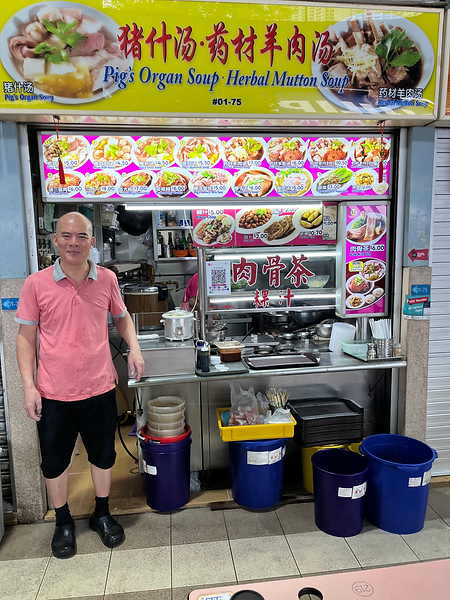
Mr. You Y. K. was a native of Jiangkou, Putian. He came to Singapore in 1993, and has been running a pig's organ soup cum mutton soup stall with his wife at the Whampoa Hawker Centre. The pleasant couple works long hours daily.
Food is delicious and the prices are very reasonable. Service is excellent.
It is located at 91 Whampoa Drive, #01-75, Singapore 320091
*
Source: Author
bottom of page