
Another project of the Hinghwa Heritage Centre
兴化人,四海一家

AI-generated illustration onAll Men Are Brothers
Source: OpenAI(2025).
ALL MEN ARE BROTHERS!
This timeless saying rang true when the Hinghwa migrants first arrived in Nanyang. Many came without friends, family, or money, but fortunately, they found support from the Singapore Hokkien Huay Kuan.
Despite this broader support, people from the same village or hometown tended to remain closely connected. This strong sense of community gave rise to what became known as the "Bang Structure" or self-help system.
The Bang Structure
The Hinghwa people were united by an invisible bond, a shared heritage from their hometown of Putian, that held them together, no matter where they settled in Nanyang. This unity naturally led them to gather and form tightly knit groups, often described by the saying, "birds of a feather flock together." Over time, this sense of brotherhood was formalized into what became known as the Bang Structure (帮结构), or clan-based support network.
Most of the early Hinghwa refugees and migrants who arrived in Singapore came with little more than the clothes on their backs. With no immediate friends or relatives, many found themselves isolated and vulnerable. This is where the Bang Structure played a crucial role. These groups acted as grassroots support systems, helping newcomers find jobs, shelter, and protection. They also provided essential assistance in times of illness, and even took care of funeral arrangements when someone passed away without family.
As these informal networks matured, they evolved into more organized associations and religious organizations, often led by elected officials. Many adopted names referenced "Hin Ann" or "Hinghwa," while others were named after the specific villages or regions they represented. Some communities were so tightly bonded that they chose to form multiple small groups rather than join a larger one.
This reflects an intense form of Guanxi culture, a traditional Chinese system of social networking based on trust and reciprocity. Though often subtle to outsiders, this culture of exclusive relationships remains deeply rooted in Chinese communities around the world and continues to influence the formation of social and cultural associations.
*
世界第一兴安会馆

Emperor Duanzong (端宗)
aka Jingyan (景炎)
Source: Baidu
The name 兴安 (Hin Ann) is an auspicious name for the Hinghwa people because it was endorsed by the Song Dynasty Emperor Duanzong (端宗), also known as Jingyan (景炎), in 1276.
In the Nanyang, different groups of Hinghwa named their associations according to their preference or affiliation to their hometown.
*
World's First Hin Ann Association
(世界首个兴安会馆)
A Historical Discovery in Hanjiang, Putian
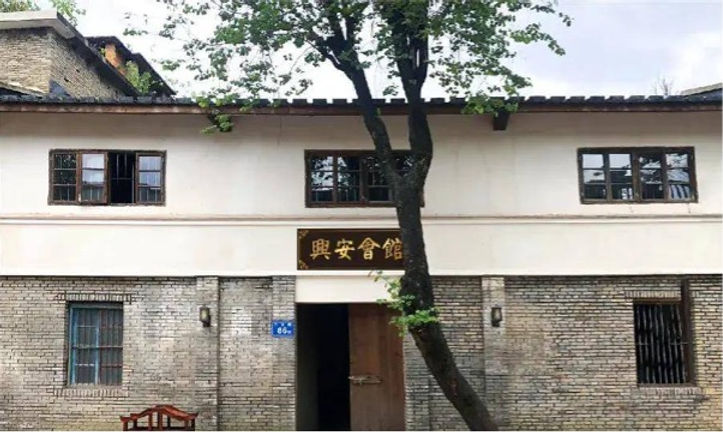
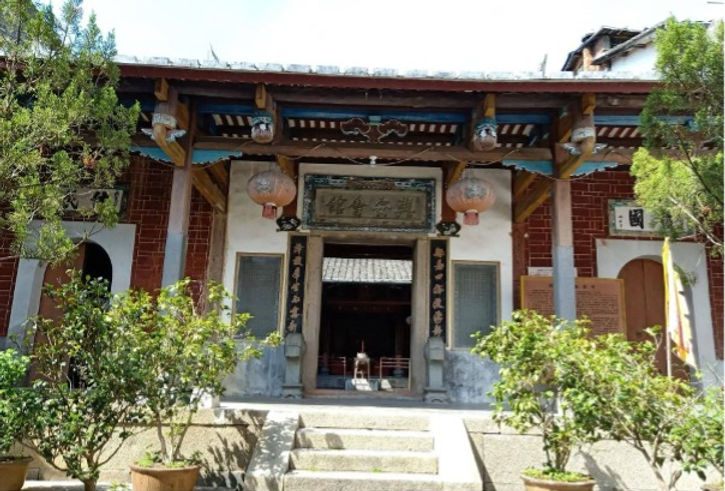
Accompanied by local natives of Putian, Lin Zhou (林洲), Zhang Yuanchang ( 张元昌), and Zhisheng (志昇), I was led to the remarkable historical site of what is believed to be the first Hin Ann Association in the world. The Association is located in Xiaxu Community, Handong Street, Hanjiang District (涵江区涵东街道霞徐社区), adjacent to the historic Tianfei Palace. This discovery was particularly meaningful to me, as there had been no known records or information about its existence until cultural expert Zhang Yuanchang shared it with me. In September 2024, during my study tour, the three of them graciously brought me to visit the site, a moment I will always treasure, as it took me years of searching to uncover.
Originally constructed during the reign of Emperor Qianlong in the Qing Dynasty, around 1739 AD, the building was later rebuilt during the Tongzhi era, circa 1870. In its early days, a group of merchants, led by the influential Huang family of Xiaxu, founded the “Hanjiang Xing’an Guild Hall” by the dock as a hub for business activity. The leader of the group is believed to be Huang Ruiyu (黄瑞裕). However, there was no corroborating evidence to support this, although he was on record as the largest donor. The guild organized annual sea sacrifice ceremonies at the Xiaxu dock to honor maritime deities and ensure safe trade voyages.
The association quickly became a thriving center of commerce, earning the nickname “Little Shanghai.” Its strategic location near the port allowed it to serve as a key distribution center for goods entering Putian and a bustling international trade hub.
During the Japanese invasion, the building took on a new role, serving as a united anti-Japanese base for both the Communist Party of China and the Kuomintang.
In 1958, following the early days of China's liberation, the premises of the Hin Ann Association were taken over by the local government and renamed Hanjiang Textile Factory. The factory ceased operations in 2003, and the building has remained vacant ever since.
Note: Excerpts from Puxian Culture and Tourism.
*
The First Hin Ann Association in Hanjiang, Putian, at the height of its influence and activity.

The following text was from the inscription by Guo Shiling, a native of Zhejiang and a scholar from the Qing Dynasty era.
(张元昌):
重修兴安会馆碑记
莆人之贾于吴越者率以海舶,其出纳登降皆集于涵,故其主客皆会于涵,此涵江会馆之所以由设也。馆创于乾隆己未年,岁久浸坏,至同治庚午年,众举黄徵君邦杰等董其事,费取于货之厘,制因其馆之旧。阅数岁始蒇事,以壬申年腊月吉日落成。
众请于余曰:【君以劳不可以弗书,众之醵不可以弗志,幸文于石,以垂久远。】余慨然曰:【今莆之估于外者,视昔岁百之一。舶之集于涵者,视昔岁十之一,修之之难殆甚于创。盖取于厘则所入必啬,且为日必濡,以至啬之入,至濡之日成至钜之工,众志必怠。非其人公则众弗亲,其人义则众弗和,则其事弗集。故自创建以后,宜修者屡矣,卒莫能以时之,遂至于坏,及其坏也,又以难故,举而委之,几至不可复修,皆以不得其人故。今徵君首出重赀,又躬任其瘁,寒暑无间,众亦翕然应之,无所前却,旧观顿复。藻绘有加焉。余既幸其馆之克有成就,又多君之公而义,众之和而亲,一举而三善备焉。不能己于言。】
然固无所待于余之言也,请直书之曰:董其事者为其首倡,而赀最厚者为某:以次出赀而无所吝惜者为某某。列而揭之庭庑之间,观于是者,孰不额手嗟叹,以为此某之公而义,此某某之和而亲。此馆之坏且久而克有成就也,又何待于余之言,于是列其爵里、姓氏、出赀之数于左:黄瑞裕号抽钱伍佰柒拾千文;黄益丰号抽钱贰佰拾肆千文;黄振兴号抽钱壹佰肆拾千文;黄义生号抽钱壹佰三十一千文;卢永茂号抽钱柒拾千文;黄益彰号抽钱伍拾叁千文;田合盛号抽钱柒拾捌千文;蔡万顺号抽钱伍拾九千文,东甡号抽钱伍拾肆千文;宝来号抽钱叁拾玖千文;源珍号抽钱叁拾捌千文;甡兴号抽钱叁拾肆千文,复兴号抽钱叁拾千文;泉盛号抽钱貳拾玖千文;德盛号抽钱贰拾玖千文;万珍号抽钱貳拾伍千;益泰号抽钱贰拾千文;聚泉号抽钱貳拾千文;义顺号抽钱壹拾捌千文;福泰号抽钱壹拾陆千文;源兴号抽钱壹拾伍千文;丰源号、春盛号、义甡号各抽钱壹拾肆千文;丰顺号、协茂号各抽钱壹拾贰千文;晋益号抽钱捌千三百文;益谦号抽钱柒千陆百文;永记号抽钱陆千叁百文;德陆号抽钱伍千贰百文;信兴号抽钱伍千壹佰文;万隆号抽钱伍千文;茂顺号抽钱肆千陆百文;隆兴号、福兴号各抽钱叁千肆百文;宝山号、永茂号、广协号、万金号各抽钱贰千伍百文;泰茂号抽钱壹千文。
董事职员卢德州、职员吴国佐、职员黄邦士、职员黄占元、职员黄宇庆、监生黄文明、职员苏国英。倡首董事孝廉方正黄邦杰。即补浙江同知郭篯岭拜撰。生员户显扬拜书。光绪二年岁次丙子阳月谷旦。(原碑拓本校录)
按:此碑现存莆田市涵江区霞徐天妃宫(旧宫)碑廊。高1.50米,,0.86米,文二十七行,行四十八字。郭篯岭:生卒年未详,字子寿,福建莆田人。大理寺卿郭尚先子。隐居治学。自号山民。有《吉雨山房集》、《山民随笔》等。
Source: Zhang Yuanchang (张元昌):
Following is the translation. Please read with discretion.
Renovation of the Stele of Xing'an Guild Hall.
The merchants of the Pu people from the regions of Wu and Yue often traveled by sea, and their cashiers congregated in Hanjiang. As such, both merchants and their guests gathered in Hanjiang, giving rise to the establishment of the Hanjiang Guild Hall.
This hall was originally founded during the reign of Emperor Qianlong. Over time, it suffered considerable damage due to prolonged exposure and decay. By the fifth year of the Tongzhi period (Gengzhi year), various officials, such as Huang Zhengjun and Bangjie, were elected to oversee the restoration.
A small percentage of commercial goods was levied to fund the project due to the museum’s deteriorated condition. The restoration began a few years later and was completed on an auspicious day in the twelfth lunar month of the Renshen year. Yu once said:
"One cannot rely solely on strength to build, nor on speed to complete, nor on ambition to endure. But if it can be inscribed on stone, it may endure for generations. "Yu sighed with emotion:"
Those who value present achievements more than those of the past estimate them to be a hundredfold greater. Yet, the effort of preservation is often harder than the act of creation. If current value is dictated by profit, effort becomes stingy.
Even if pursued for personal gain, the will of the people weakens. Only when pursued for public good and righteousness can great things be achieved.
"From the beginning, many attempted to appoint a suitable person to lead the restoration. But unless motivated by a greater cause, success was elusive. Now, thanks to contributions from many, including His Majesty's generosity and the shared commitment of the people, despite enduring the elements, the project has been completed.
The old glory of the Guild Hall has been restored, and new embellishments have been added. We are thankful for the cooperation and righteous spirit of all involved. With a single effort, we have achieved success in three areas: restoration, unity, and legacy.
While it is difficult to give voice to all involved, it is only right to record the contributions of those who made this possible:
Huang Ruiyu: 570,000 wen
Huang Yifeng: 24,000 wen
Huang Zhenxing: 140,000 wen
Huang Yisheng: 131,000 wen
Lu Yongmao: 70,000 wen
Huang Yizhang: 53,000 wen
Tian Hesheng: 78,000 wen
Cai Wanshun: 59,000 wen
Dongsheng: 54,000 wen
Bora Account: 39,000 wen
Yuanzhen: 38,000 wen
Shengxing Account: 34,000 wen
Fuxing Account: 31,000 wen
Quansheng: 29,000 wen
Desheng: 29,000 wen
Wanzhen: 25,000 wen
Yitai: 20,000 wen
Juquan: 20,000 wen
Yishun: 18,000 wen
Futai: 16,000 wen
Yuanxing: 15,000 wen
Fengyuan, Chunsheng, Yisheng: 14,000 wen each
Fengshun, Xiemao: 12,000 wen each
Jinyihao: 8,300 wen
Yiqian: 7,600 wen
Eternal Signs: 6,300 wen
Delu: 5,200 wen
Xinxing Account: 5,100 wen
Bandung: 5,000 wen
Maoshun: 4,600 wen
Longxing, Fuxing: 3,400 wen each
Baoshan, Yongmao, Guangxie, Wanjin: 2,500 wen each
Taimao: 1,000 wen
Personnel Involved:Director: Lu Dezhou
Employees: Wu Guozuo, Huang Bangshi, Huang Zhanyuan, Huang Yuqing
Supervisor: Huang Wenming
Employee: Su Guoying
Chief Advocate and
Founder: Huang Bangjie
The inscription was written by Guo Shiling, a scholar from Zhejiang. He respectfully documented this for posterity in the second year of the Guangxu era. The stone was worshipfully carved and preserved. Note: This stele is currently housed in the stele corridor of the Xiaxu Tianfei Palace (Old Palace), located in Hanjiang District, Putian City. Dimensions: 1.50 meters high by 0.86 meters wide; 27 lines, 48 characters per line. About Guo Shiling:Year of birth and death unknown. Style name: Zishou. Born in Putian, Fujian. A descendant of Guo Shangxian, Minister of the Dali Temple. Lived in reclusion, referred to himself as a "man of the mountains. "Authored works such as Ji Yu Shan Fang Ji and Shan Min.
---
Note: Tianfei Palace, also known as the Mazu Temple during the Yuan Dynasty, was posthumously bestowed the honorific title Tianhou (Queen of Heaven) during the Qing Dynasty.
*
The author observes with sadness that the first Hin Ann Association, once a place of vitality and pride, has fallen into neglect. It now stands empty and in a state of disrepair.
It is my heartfelt hope that this important site can one day be restored, to revive not only the physical structure, but also the spirit and legacy of the Hin Ann name, which is truly worth preserving.
*

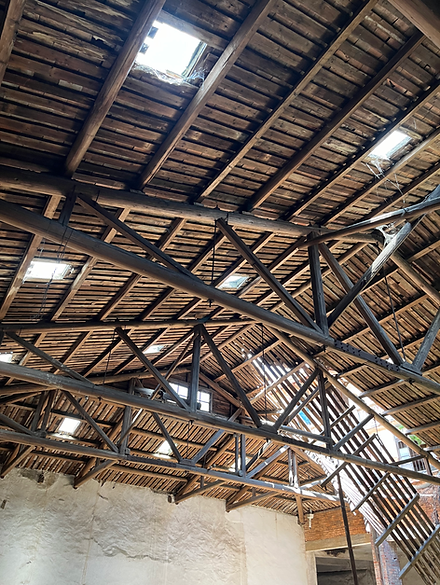

LH: Entrance to the first Hin Ann Association in Hanjiang. Middle: The stone tablet with the engraved Chinese characters 兴安会馆 is the evidence of its existence. RH: The interior of the sprawling compound that once represents the association. It has been unoccupied for a long time.
Source: Author, 林洲, 张元昌 & 志昇 (Caretaker of the premises)..
Latest Video on the
First Hin Ann Association in Putian
Inscription at the entrance of the association
Source: Author, 林洲, 张元昌 & 志昇
Source: Author, 林洲, 张元昌 & 志昇
The Interior of the Association
Source: Author, 林洲, 张元昌 & 志昇
Source: Author, 林洲, 张元昌 & 志昇
3D Video Link by Puxian Culture and Tourism:
创作者:莆仙文旅
Source: 志昇

I extend my deepest appreciation to Zhi Sheng (志昇), Guardian of Hinghwa Heritage, for generously sharing the history of the World's First Hin Ann Association in Putian, and the affiliated Mazu Temple nearby. I am profoundly grateful for his kind hospitality and passionate sharing.
With Distinguished Leaders of the
Nanyang Hinghwa Community.

Row 1 (L): Mr. Ng Kim Choon, President, Hin Ann Huay Kuan, Singapore
Row 1 (R): Mr. Ng Chee Hwa, Deputy President, Hin Ann Huay Kuan, Singapore
Row 2 Right (L): Dato’ Sri Ngoh King Hua, Former President, Federation of Heng Ann Associations, Malaysia
Row 2 Right (M): Datuk Lim Wei Fook, President, Federation of Heng Ann Associations, Malaysia.
Row 2 (R): Mr. Rudy Susanto, President, Perhimpunan Hin An, Jakarta
Hinghwa Associations
Malaysia,
including Sabah & Sarawak

Source: Federation Heng Ann Association
This impressive list of Hinghwa associations in Malaysia is attributed to the wisdom of three prominent figures whom I call the 'Sages of the Nanyang': Shee Hock Leong (JP), Tan Sri Dato Tong Yoke Kim, and Datuk Lim Kim Soo. A detailed account of their magnificent contributions is recorded in the 'World of Eminent Hinghwa (Malaysia)' section.

Persatuan Hin Aun Taiping was said to be the first Hin Ann association in Malaya.
President: Mr. Ng Chor Huat (黄祖发).
Address: 222, 2nd Floor, Jalan Chung Thye Phin, 34000 Taiping, Perak.
Telephone: +60 5-808 3582
Email: hinauntaiping@gmail.com
Taiping, Perak, Malaysia became a vibrant town following the discovery of tin in the mid-19th century. Thousands of Chinese migrants arrived to mine this precious metal, including approximately 4,000 Hinghwa people hailing from the towns of Putian and Xianyou.
Leaving their families and loved ones behind, this large community of Hinghwa migrants quickly found themselves isolated and vulnerable in a new land. To address both their physical and spiritual needs, five Hinghwa elders, led by Cheng Bee (郑美), acquired a plot of land to establish the Chong Sheng Temple (崇圣宫). The temple's central deity was the Bodhisattva Guan Yin, flanked by a sculpture of Mazu on the left and the founder of the San Yi religion, Lin Zhao'en, on the right. This sanctuary is believed to be the very first Hinghwa organization established in British Malaya.
Over time, the temple evolved into the Fu Xing Xian Guan (福兴仙馆), which served as the precursor to today's FuPuXian Association. The modern acronym represents Hinghwa descendants originating from Fuqing, Jiangdou, Putian, and Xianyou--a name shared by several other Hinghwa organizations across Malaysia and Singapore. Like many Chinese associations in Southeast Asia, its facilities were either abandoned or destroyed during the Japanese occupation in World War II.
In 1947, following the end of the war, the organization was revived and officially renamed the Taiping Hin Ann Association (太平兴安会馆). Since the inception of the Chong Sheng Temple, the structure has undergone several rounds of renovation, notably in 1948, 1958, and most recently in 1982.
The 1982 reconstruction project was led by the newly elected President, Huang Linfang (黄麟芳), who generously provided the seed funding to launch a donation drive. This drive was spearheaded by Huang Guonan (黄国南), the chairman of the building committee and son of the late Huang Anshi (黄安世)--the prominent developer behind the famous Anshi Garden residential complex near Taiping Lake.
Huang Guonan and his brother, Huang Guomin (黄国民), played a pivotal role in the building's reconstruction. The Huang brothers were also credited with recovering the property's land titles, which had been lost during the chaos of the war. Through sheer perseverance and close collaboration with the Ipoh Land Office, they successfully secured the official land titles on April 25, 1974. Despite being instrumental in raising the necessary funds, they remained deeply humble, never complaining or seeking credit for their efforts. Together, they helped transform the old wooden structures into a modern four-and-a-half-story building equipped with full facilities to serve the needs of their fellow Hinghwa community members.
At its peak, the association boasted several thousand members. However, membership has since declined to fewer than a thousand people following the collapse of the local tin-mining industry. Today, the association--alongside other local clan groups--is working to revive the former glory of the town by transforming its historic sites into vibrant tourist attractions.
Malacca Heng Ann Association
Address: 98, Jln Laksamana Cheng Ho, 75000 Melaka, Malaysia
Phone: +60 6-283 3217

Source: Sohu
Kuching Hin Ann Association
Lot 204, Section 51, Jln Padungan, 93100 Kuching, Sarawak, Malaysia
Phone: +60 82-244 595

Lot 204, Section 51, Jln Padungan, 93100 Kuching, Sarawak, Malaysia

Source: Author
Kuching Fishing Boat Association
(古晋鱼船公会)

Source: Koperasi Kemajuan Henghua Kuching Berhad

Source: Koperasi Kemajuan Henghua Kuching Berhad
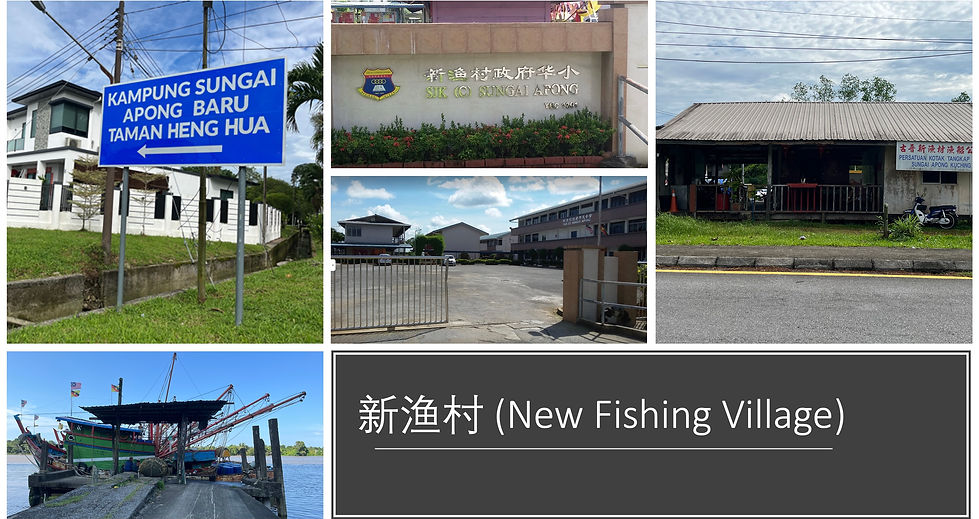
An impressive row of private landed homes was developed and sold by the Cooperative to the Hinghwa community. In both Kuching and Sibu, these homes formed Hinghwa enclaves known as Kampung Henghua, where beautiful houses still stand as a testament to their legacy.
One of the schools built by the New Fishing Village,
Kuching, Sarawak

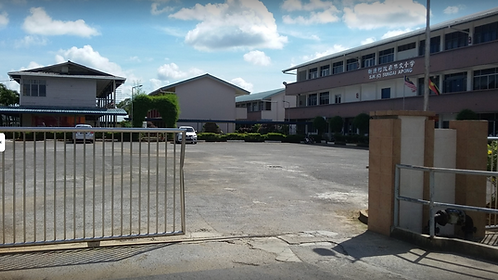
Source: Author & JP Hong Boon Siong
-
Kuching Fishing Boat Association (古晋鱼船公会)
(Kapitan Chen Guozhang) (甲必丹陳国璋)
-
New Fishing Village Cooperative (新渔村合作社)
(Secretary Liu Shunrong) (刘顺荣秘书)
(Consultant Li Wenhou) (李文侯顾问)
Source: Author & JP Hong Boon Siong
Arrangements by Author
Sibu Hin Hua Pou Sen Association
Jalan Wong Nai Siong, Pekan Sibu, 96000 Sibu, Sarawak, Malaysia
Phone: +60 84-332 466

Sibu Hin Hua Pou Sen Association
President, Penghulu Yong Che Chong
(B.B.S., P.P.T., A.B.K.) (杨志聪)
Source: Author
A Glimpse of Sibu Hin Hua Settlement

Source: Author
Schools Managed by the
Sibu Hin Hua Pou Sen Association
-
中兴小学. (Tiong Hin Primary School)
-
中兴中学. (Tiong Hin Secondary School)
Schools Managed by other Hin Hua Organisations
-
建兴小学. (Kiang Hin Primary School)
-
建兴中学 (Kiang Hin Secondary School)
-
华兴幼稚园. Hua Hin Kindergarten.)
-
华兴小学 (Hua Hin English School)
-
嘉兴小学 (Ka Hin Primary School) (closed)
-
新兴小学 (Sing Hing School) (closed)
-
中兴幼稚园 (Tiong Hin Kindergarten) (closed)
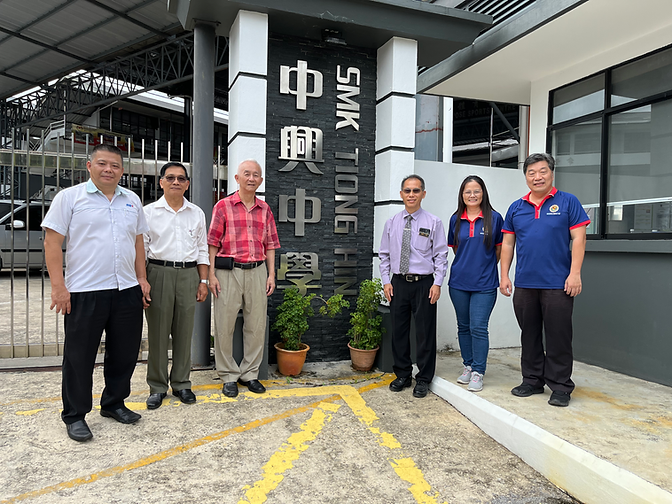
Tiong Hin Secondary School. A project of Sibu Hin Hua Pou Sen Association.
Source: Author & Kapitan Frankie Nee

Tiong Hin Secondary School. A project of Sibu Hin Hua Pou Sen Association.
Source: Author & Kapitan Frankie Nee

Kiang Hin Secondary School.
Source: Author & Kapitan Frankie Nee
Hin Hua Dui Binn Community Association
诗巫兴化场边同乡会
Sibu, 96000 Sibu, Sarawak, Malaysia

Hin An Hwee Koan (Indonesia)
(兴安会馆)

Hin An Hwee Koan Association, Indonesia
President, Rudy Susanto

Hin An Clinic, Indonesia
President, Rudy Susanto
Hinghwa Associations in Singapore
-
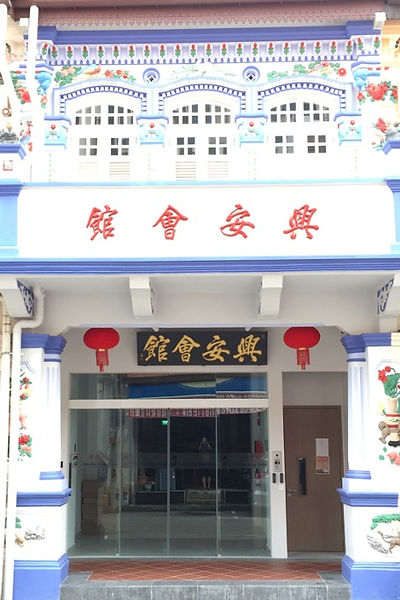
Hin Ann Huay Kuan (兴安会馆) (1920).
-
Phor Tiong Koh Peng Association (新加坡莆中高平公会)(1947).
-
Singapore HockPoSian Association(新加坡福莆仙公会)(1948).
-
Singapore Putian Association (新加坡莆田会馆) (1956) formerly known as Nanyang Pho Chen Huay Kuan(南洋莆田会馆).
-
Singapore Kang-Tau Ong Clansmen Association (新加坡江兜王氏公会) (1974).
-
Singapore Puxian (Hinghua) Network (莆仙同乡联合会) (2019) formerly known as Puxian (Singapore) Entrepreneurs Network Ltd.
Trade/Occupational
-
Singapore Cycle & Traders Association (新加坡车商公会)(1932).
-
Taxi Transport Association (新加坡交通德士公会)(1946).
-
Singapore Trishaw Owners Association (截客三轮车车主公会)(1947).
-
Singapore Bicycle Dealers Association (新加坡自行车商公会)(1952).
-
Singapore Motor Tyre Dealers Association (新加坡汽车胶轮商会) (1952).
-
Singapore Cycle and Motor Workers Union (新加坡车业职工联) (1955).
Source: Cheng, L. K. (1993, p. 46)
Updated by Jason Ong
Source: Author
In 1920, following the Hinghwa tradition, Tan Yeow Joo (陈耀如), a native of Putian, together with 林志诚 (Lin Zhicheng), 林鸿宾 (Lin Hongbin), and their fellow Hinghwa compatriots in Singapore, established the Hin Ann Huay Kuan at 133 Queen Street. Tan Yeow Joo served as its chairman for 27 years. The association later moved to Sam Leong Road. In the same year, the clan also founded the Hong Wen School.
The original Hin Ann Association is located near Tan’s home in Putian, which is now vacant.
Before the establishment of the Hin Ann Huay Kuan in Singapore, the early Hinghwa community was considered part of the Fujian 'bang.' It was only after the First World War that the Hinghwa community decided to form their own 'bang' structure (Lim J., 2013).
The association has withstood the test of time, and successive presidents and leaders have successfully maintained both the association and Hong Wen School to this day.
*
Hong Wen School

Source: Jason Ong

Source: Jason Ong
The Singapore Hockposian Association located at 161-B Kitchener Road, Singapore. 208531. The premise at the third storey of a shophouse appears unoccupied. It was once reported as defunct, but this could not be ascertained.
Phor Tiong Koh Peng Association
(莆中高平公会)
157B Kitchener Rd, Singapore 208529.
Tel: +65 6842 2883

Source: Jason Ong
The Phor Tiong Koh Peng Association was founded on October 10, 1947, by members of the Hinghwa community from Putian. These members primarily came from the areas of PuZhong (中门), BeiGao (北高), PingHai (平海), and DaiTou (埭头). It is unclear why the acronym for the association did not include DaiTou, given that some members were from that region. These locations are situated in what is now known as the Xiuyu District of Putian (秀屿区, 莆田), an area predominantly inhabited by fishermen and coastal farmers.
Historically, this region was marked by conflict, with ongoing battles against the Qing Dynasty army leading to the construction of a defensive wall infamously called the Jiewai (界外). When the opportunity arose for people to escape by sea, many fled without hesitation. In 1920, most Hinghwa individuals were members of the Hin Ann Huay Kuan. However, some villagers from what is now Xiuyu District felt the need to establish their association to better represent their interests. Consequently, the Phor Tiong Koh Peng Association (莆中高平公会) was formed in 1947 under the leadership of Tang Wen Li (唐文理).
Initially, the association was housed in the home of Lin Ya Mei (林亚梅), but later moved to a leased premise at No. 7 Kelantan Lane in Singapore. Today, the association is located at 157B Kitchener Road, Singapore.
(Excerpt from the Phor Tiong Koh Peng Association 40th Anniversary Celebration Souvenir Magazine, 1947-1987.)
*
The 37-kilometer wall that separated Xiuyu District from other parts of Putian during the Qing Dynasty was infamously known as the Jiewai

Source: Google Maps
Illustration: Jason Ong
Singapore Kang-Tau Ong Clansmen Association (新加坡江兜王氏公会) (1974)
The Association, located at 56-58 Jalan Besar, Singapore, was established by a group of Hinghwa individuals with the surname ‘Ong’ from Jiangdou, Fuqing. Historically, Fuqing was under the jurisdiction of the Xinghua Administration, and Jiangdou was a town inhabited by many Hinghwa families with the surname ‘Ong’. According to Meng (1975), their ancestral home is in Jiangwan Village, Fuqing (福清市江完村). Ethan Ong indicates that this group is united by a common ancestor named Wang Yanqing (王严清).
There are approximately 745 families in Jiangwan Village, with around 90% of them sharing the surname Wang. As per 1997 statistics, there are about 13796 Wang families spread across Singapore, Malaysia, Indonesia, and Thailand. Many individuals I interviewed in Singapore and Malaysia confirmed that they identify as Hinghwa, although their identity cards list them as ‘Hockchia’. This distinction was corroborated by several Fuqing Hinghwa, including relatives of Ong Boon Hua, also known as Chin Peng. This book will later illustrate that the Putian Hinghwa and the Fuqing Hinghwa from Jiangdou share a common bond in the Nanyang region, while being distinctly different from the Hockchia ethnic group, which is predominant in Fuqing and has its own unique ‘Hockchia’ dialect. Karen Kuan explains that Chin Peng was also from Jiangdou and confirmed in his book that he identified as a Hinghwa. She noted that her neighbor identified as Hockchia, highlighting the distinct differences in their dialects.
During various rezoning efforts under different administrations, Fuqing became part of Fuzhou, bringing Jiangdou along with it. This caused identity confusion for those who migrated to the Nanyang region. When registering for identification cards, Hinghwa individuals from Jiangdou would register themselves as being from Fuqing, which is referred to in their dialect as ‘Hockchia’. Consequently, their identity cards reflected the designation ‘Hockchia’, leading to the formation of a separate identity. This confusion was addressed in 1948 with the establishment of the Singapore HockPoSian Association (新加坡福莆仙公会).
However, this did not prevent a new group of Jiangdou Hinghwa from forming the Singapore Kang-Tau Ong Clansmen Association (新加坡江兜王氏公会) in 1974 to distinguish themselves from the mainstream Hinghwa, who were affiliated with the Hin Ann Huay Kuan and other Hinghwa associations.
As the pioneer generations passed away, both the Singapore HockPoSian Association and the Singapore Kang-Tau Ong Clansmen Association eventually became defunct. According to Mdm. Ong Lee Wha the last known address of the latter is believed to be at the Fuqing Association better known as 'HockChia' association in Singapore.
*
臺灣興安會館
Taiwan Hin Ann Association

Source: Taiwan News

臺灣興安會館落成紀念專輯
(Taiwan Xing'an Hall Opening Commemorative Album)
福建興化文獻
(Fujian Xinghua Literature)
The title of the book, published in 1967, says it all. It is a well-documented record of the Hinghwa people, tracing their roots back to ancient times. The book is a collection of chapters written by various experts in their respective fields.
Special thanks to the Chairman and Committee members of the association for taking the initiative to document the history and legacy of the Hinghwa people from Fujian.
*
With heartfelt gratitude to 黃逸耕 from Taiwan Hin Ann Association (臺灣興安會館) for this thoughtful and much-appreciated gift.
Attempts to contact the following associations have been futile. We appeal to anyone who can help us connect with them. Thank you.
-
East Java Hin Ann Association (印尼东爪哇兴安会馆)
-
Surabaya Fu-Pu Fellow Townsmen Association (Indonesia). (印尼泗水福莆同乡会).
Invitation to Join Our Heritage Showcase
All Hin Ann associations and related Hinghwa organisations are warmly welcome to submit the history of their esteemed organisation for publication here.
To help guide your submission, please include the following details:
-
Name of the Association: The Chinese and English name of the association.
-
Year of Establishment: The year the association was founded.
-
Inaugural President: The name of the first president.
-
Inaugural Committee: The names of the first committee members.
-
Contact Information: Official address and contact details.
-
Current Leadership: The name of the current president.
-
Please include a hi-resolution image each of the association building, and all relevant officials.
My research at a glance.
Following the migration trail of the Hinghwa people to Nanyang, my research has encompassed Singapore, Malaysia (including Sabah and Sarawak), Brunei Darussalam, Indonesia, Thailand, Taiwan, the Philippines, Laos, Cambodia, Vietnam, and Myanmar.
Notably, apart from the first Hin Ann Association in Hanjiang, Putian, only Singapore, Malaysia (including Sabah and Sarawak), Indonesia, and Taiwan have established dedicated Hin Ann or other Hinghwa associations to represent their communities. Many of the most prominent Nanyang Hinghwa individuals originated from these four regions, including Brunei Darussalam.
In other parts of Southeast Asia, the Hinghwa population is generally too small to sustain independent associations. As a result, they are often represented either by name or under broader Hokkien ethnic organizations. Some congregate around their surname clan, or the Mazu temples.
There are also Hinghwa communities further afield, in the USA, South America, and Europe. Most of these individuals were students, workers, or small-time traders who connected through social media and online chat groups.
So far, only one formal Hinghwa organizations have been identified beyond the Nanyang region, but research is ongoing. Wish me luck!
*