
Another project of the Hinghwa Heritage Centre

In ancient times, we had great people; even today, the descendants of our pioneers have shown that they still carry the Hinghwa DNA of excellence.
It has been my privilege to uncover many of them through my ongoing research. As they are found across the globe, I have chosen to describe them collectively as The World of Eminent
The Peace Makers


People's Republic of China

LH: Academician Min Gui Rong (闵桂荣院士), Academician of the Chinese Academy of Sciences (中国科学院院士), Academician of the Chinese Academy of Engineering (中国工程院院士). CTR: Professor (Dr.) Gong Qihuang (龚旗煌, 教授, 博士), President of Peking University (北京大学校长). RH: President Li Zu Hong (李祖洪院长), Senior Consultant, Beidou Space Satellite.
Sources: 中国科学院; 北京大学; 北斗卫星导航系统.
Academicians in China are the elite among the brightest scholars.
Led by the President of Peking University, Prof. Gong Qihuang, they have reignited the glory of Putian as a center of culture and literature (文献名邦、海滨邹鲁). It is with great pleasure that I share some of their stories.
Professor (Dr.) Gong Qihuang (龚旗煌, 教授, 博士)
President of Peking University (北京大学校长)
Professor Gong was born in August 1964 and is a native of Yuantou Village, Huating Town, Chengxiang District, Putian City (莆田市城厢区华亭镇园头村).
He graduated from the Department of Physics at Peking University in 1983 and obtained his Ph.D. in Physics from Peking University in 1989 (jointly trained by China and the UK). In 2022, he became the President of his alma mater, Peking University (北京大学).
He is an optical expert, an Academician of the Chinese Academy of Sciences, and an Academician of the Academy of Sciences for the Developing World.
Source: Peking University and Putian University
**
President Li Zuhong (李祖洪院长)Senior Consultant, Beidou Satellite Navigation SystemChina’s renowned space satellite expert, Li Zuhong (航天专家), is a native of Putian. He oversaw China’s first satellite launch into space. By the time he retired, more than 50 satellites had been launched under his leadership.He later served as Executive Vice President of the China Academy of Space Technology (中国空间技术研究院常务副院长), and continued to contribute as Senior Consultant to the Beidou Satellite System (Weng, 2020). Source: 百度百科
*
Academician Min Guirong (闵桂荣院士)Academician, Chinese Academy of SciencesAcademician, Chinese Academy of Engineering Academician Min Guirong (1933–2021) was a native of Putian and an expert in aerospace technology.In 1952, he entered the School of Engineering at Xiamen University, but graduated from the Nanjing Institute of Technology in 1956. In 1963, he completed postgraduate studies at the former Soviet Academy of Sciences, earning an Associate Doctorate in Technical Sciences.He served as President of the China Academy of Space Technology, Chief Satellite Designer, and Chief Scientist of the National 863 Aerospace Program. He was also a technical consultant to the China Academy of Space Technology and an Academician of both the Chinese Academy of Sciences and the Chinese Academy of Engineering.Source: 中国工程院
*
Academician Huang Yuhua
The Phone Rang, and He Vanished for Thirty Years

Source: All-China Federation of Returned Overseas Chinese
He answered a phone call, and without saying a word, he disappeared for 30 years.
The mystery began to unravel when his mother received an envelope containing a magazine. As she opened it, she was astonished to see a photograph of her son—a son she had not seen for three decades. Excitedly, she gathered her other children to find out what the magazine was about.
Only then did she realise that her son had disappeared to serve the nation in a top-secret project.
The heartache of a mother who had lost her son in the prime of his life was soon replaced by immense pride. She learned that he had become known as the "Father of China's Nuclear Submarine Programme" and had been honoured by the nation, with a commemorative plaque bearing the signature of the Minister of National Defence displayed outside his home.
The success of China's nuclear-powered submarine programme significantly strengthened the country's naval capabilities. It enabled China not only to better safeguard its extensive coastline but also to operate far beyond its own waters, placing it among the world's major naval powers.
The renowned scientist was none other than Academician Huang Yuhua.
Although Huang Yuhua proudly identified himself as a native of Jieyang, Shanwei, Chaoshan, Guangdong, he never forgot his ancestral roots in Putian's Shize, represented by the words "莆田世泽 江夏家声" displayed at his residence in Chao'an. This inscription reflects a long-standing Chinese tradition in which families honour their ancestral origins through hall names (堂号) and ancestral couplets (楹联), preserving their heritage wherever they may live.
For Hinghwa people around the world, Huang Yuhua's achievements are a source of great pride. His life stands as a reminder that, wherever they may settle, many descendants of Putian have continued to remember their ancestral roots while making remarkable contributions to their adopted communities and to their nations.
Excerpts:
Huang Yuhua (黄旭华核潜艇之父)
http://www.chinaql.org/n1/2024/1113/c420278-40360517.html
(Editor: Pi Bo, Zhang Wen) Copyright: All-China Federation of Returned Overseas Chinese Technical Support: People's Daily Online Beijing ICP No. 09065697 Beijing Public Security Bureau
Wang Xuedan (王学丹)

A 13th-generation descendant of Yanqing Gong, he was born in 1860 and died in 1939. A native of Jiangdou, he was widely read from a young age and had a deep love of poetry, calligraphy, and painting.
He developed a unique style of finger painting, particularly in his landscape works. His artistic achievements were recognised in a volume featuring renowned artists from Putian County. Deeply inspired by the beauty of his hometown, he once painted the Eight Views of Jiangdou and composed eight accompanying poems, expressing his profound love for his homeland.
In 1925, the 14th year of the Republic of China, his finger paintings were exhibited at an international art exhibition in Tokyo, Japan, where they received considerable acclaim.
He and his younger brother were both accomplished painters. While he specialised in landscape painting, his younger brother excelled in figure painting. Together, they became known as the “Two Talents of the Wang Family.”
In addition to his achievements in painting, he was also proficient in medicine, epigraphy, and martial arts, particularly southern-style boxing. Lin Sen, then Chairman of the National Government, personally inscribed a plaque bearing the words “Cultivating Arts and Benevolence” (游艺依仁). The plaque still hangs in the main hall of his ancestral home.
"Note: The text above is an automated Google Translation of the Chinese entry in the 'Hinghwa Identity in Nanyang' section and may not be fully accurate.If you are able to provide an accurate English translation, we would greatly appreciate it! Please submit your translation for publication using the form at the bottom of this page, along with your contact number for verification purposes. Thank you!"
Wang Mingyun (王明云)

A 16th-generation descendant of Yan Qinggong, he was a native of Sanzuo Village, Jiangshi Town, and was born in September 1967. He obtained an in-service undergraduate degree from the Party School of the Central Committee of the Communist Party of China.
He previously served as Mayor of Jiangjing Town, Fuqing City; Deputy Director and Executive Deputy Director of the Organization Department of the Fuqing Municipal Committee of the Communist Party of China, both at section-chief level. Since July 2018, he has served as a member of the Party Working Committee and Secretary of the Discipline Inspection Commission of the Fuqing Rongqiao Economic and Technological Development Zone, at deputy-division-chief level.
From July 2013 to July 2016, he served concurrently as a member of the Party Branch of Jiangdou Village. During this period, he raised funds from various sources to support the construction of a beautiful village in Jiangguang Village, earning high praise from the villagers.
"Note: The text above is an automated Google Translation of the Chinese entry in the 'Hinghwa Identity in Nanyang' section and may not be fully accurate.
If you are able to provide an accurate English translation, we would greatly appreciate it! Please submit your translation for publication using the form at the bottom of this page, along with your contact number for verification purposes. Thank you!"
Wang Shengzhang (王声章)

Wang Shengzhang (王声章), a 15th-generation descendant of Yan Qinggong, was born in 1941 and died in 1995. He was a native of Caiyuan Village.
After graduating from university, Wang served in the military for many years. Following his demobilisation, he continued to uphold the fine traditions of the People's Army. He was known for his ability to unite his comrades, his care and concern for fellow cadres, and his willingness to lead by example. He devoted himself wholeheartedly to his work and was diligent and conscientious in carrying out his responsibilities. He also contributed his ideas and efforts to the economic development and social progress of Putian.
During his military career, Wang Shengzhang served successively as a platoon leader, assistant quartermaster, deputy director, and director. After his demobilisation, he served as Deputy Secretary-General and Secretary-General of the Putian Municipal People's Government, as well as Secretary of the CPC Xianyou County Committee.
In 1992, he became a member of the Fujian Provincial Commission for Discipline Inspection of the Communist Party of China, a member of the Standing Committee of the CPC Putian Municipal Committee, and Secretary of the Putian Municipal Commission for Discipline Inspection.
"Note: The text above is an automated Google Translation of the Chinese entry in the 'Hinghwa Identity in Nanyang' section and may not be fully accurate.
If you are able to provide an accurate English translation, we would greatly appreciate it! Please submit your translation for publication using the form at the bottom of this page, along with your contact number for verification purposes. Thank you!"
Wang Guanglu (王光禄)

A 14th-generation descendant of Yan Qinggong, born and died (1879-1964), a native of Jiangdou Caiyuan. In 1898, he traveled overseas to Singapore, practicing medicine and his work took him to Indonesia, Malaysia, and other Southeast Asian countries. In 1938, he resolutely returned to his hometown to practice medicine, saving lives and healing the wounded. He was renowned for his superb medical skills, outstanding medical ethics, and philanthropy, and was hailed by his fellow villagers as a "great philanthropist."
After the victory of the War of Resistance against Japan, he actively participated in the founding of Fuqing Putian Hospital (later renamed Putian People's Hospital), serving as the first vice chairman of the hospital's board of directors. Wang Guanglu was consistently enthusiastic about public welfare, especially education in his hometown. In 1953, Wang Guanglu, together with overseas Chinese, raised funds to establish the Jiangdou Primary School teaching building (now the red brick building of Jiangdou Middle School), and Wang Guanglu served as the first chairman of the school's board of directors.
The villagers, grateful for his founding of the school, presented him with a plaque inscribed "High Moral Character." In 1954, he was elected as a standing committee member of the Fuqing County Federation of Returned Overseas Chinese. In 1956, he was elected as a member of the Fuqing County Political Consultative Conference. As a well-known overseas Chinese, he was invited to participate in the Beijing National Day observation group and was received by central leaders such as Zhu De and He Long, and took a group photo.
"Note: The text above is an automated Google Translation of the Chinese entry in the 'Hinghwa Identity in Nanyang' section and may not be fully accurate.
If you are able to provide an accurate English translation, we would greatly appreciate it! Please submit your translation for publication using the form at the bottom of this page, along with your contact number for verification purposes. Thank you!"
Prof. Dr. Wang Rumi (王如密)

He is the 16th generation descendant of Yan Qinggong. He was born in March 1948 and is a native of Caiyuan, Jiangdou Village. He graduated from the First and Second Military Medical University and Fuzhou University. He was formerly the Director of the Nervous System Center, Director of Neurosurgery, and Chief Physician of the Fuzhou General Hospital of the Nanjing Military Region, a professor and doctoral supervisor at the First Military Medical University and Fujian Medical University, a standing member of the Military Neurosurgery Academic Committee, a member of the National Three-Dimensional and Functional Neurosurgery Academic Organization, a member of the Nanjing Military Region Science and Technology Committee, an editorial member of the Chinese Journal of Neurology, an editorial member of the Chinese Journal of Clinical Neurosurgery, and a deputy director of the Fujian Provincial Neurosurgery Academic Committee. Wang Ru secretly holds a second-level civilian rank in the military, with the rank of division commander and deputy military level treatment.
"Note: The text above is an automated Google Translation of the Chinese entry in the 'Hinghwa Identity in Nanyang' section and may not be fully accurate.If you are able to provide an accurate English translation, we would greatly appreciate it! Please submit your translation for publication using the form at the bottom of this page, along with your contact number for verification purposes. Thank you!"

Source: Methodist Episcopal Church. Woman's Foreign Missionary Society
Li Bicu (M.D.) c. 1881 - ?
(李美珠醫生)
A Hinghwa was warmly welcomed to the White House by President Roosevelt.
Dr. Li's mother was born in an era when baby girls were often frowned upon, and as a result, she was abandoned at birth. Fortunately, she was found and taken to a Christian mission home, where she was raised, educated, and later married Mr. Li, a Methodist minister. It was during this time that Dr. Li was born.
As a child, a missionary recognized her academic potential and decided to send her to the United States, where she continued her education at the Folts Mission Institute. She later enrolled at the Woman’s Medical College of Pennsylvania in Philadelphia, where she graduated with honors as a medical doctor.
Upon graduation, she practiced medicine for eight years before returning to China to help train others. Prior to her departure, The New York Times on May 24, 1905, reported that she was warmly received at the White House by President Roosevelt.
Her dedication and compassion soon drew thousands of patients from surrounding communities. Some sought treatment not only for medical care, but also in hopes of staying longer in the hospital’s clean and comfortable environment, rather than returning to rural farms, where basic amenities were largely non-existent.

Lin Lanying (林兰英)
(1918 –2003)
The ingenuity of Lin Lanying rattles the United States of America, even today.
Her ancestor was Lin Run (林润), an Imperial Censor (御史) of the Ming Dynasty, a powerful position akin to that of a deputy premier. Their ancestral roots trace back to Putian.
Lanying was home-schooled by her father, Lin Jianhua, an educator. Her mother, Zhou Shuixian, groomed her to face life's challenges. Indeed, her tenacity and resilience were instilled from a young age.
Life for young girls then could be miserable or even dangerous. Long before her teens, she was expected to handle household chores. In a strange twist of fate, she was considered lucky -- many girls her age were either married off as child brides or abandoned.
An astute child, she realized early on that education was her ticket to a better life. At the time, educating girls was not a priority, and her parents were reluctant to send her to school. But she persisted -- even staging a hunger strike -- until they finally relented. She soon proved she didn’t need their financial support: her outstanding academic performance earned her a scholarship.
She would wake early to complete her chores, then rush to school. At home, she studied until midnight, often falling asleep at her desk. Her exceptional performance in junior high convinced her mother to let her continue on to Putian High School.
However, her first year in high school was cut short by the Japanese invasion of China. Many -- including her classmates -- were killed for resisting the occupiers. She fled to the Hamilton Girls’ School, where she assisted an American teacher by interpreting his lessons. Her fluency earned her the nickname “小老师” ("Little Teacher").
She later enrolled in Fujian Union College, where she graduated top of her class with a bachelor’s degree in physics.
Eventually, she received a scholarship to study in the United States, earning a degree in mathematics before completing a doctoral degree in solid-state physics -- possibly making her the first Chinese national to do so.
The significance of her work in semiconductors would become increasingly clear, especially after U.S. President Joe Biden passed the CHIPS and Science Act on August 9, 2022, channeling billions into semiconductor research to stay ahead of a rising China.
Yet, long before the U.S. government realized her value, she had already returned to China in 1957, becoming a researcher and Deputy Director at the Institute of Physics, Chinese Academy of Sciences, in Beijing. She would go on to serve as a deputy in the National People’s Congress (NPC) and a member of its Standing Committee—a political role nearly equivalent in prestige to that of her ancestor, Imperial Censor Lin Run.
In 1996, she was diagnosed with terminal cancer, yet she pressed on relentlessly to complete her research and establish China’s first semiconductor base.
On March 4, 2003, she passed away, leaving behind a legacy of genius and national pride. She is remembered as “The Mother of Aerospace Materials” and “The Mother of Semiconductor Materials” in China.
Excerpts from Tan, J. (2009)
*
Wang Jinzhao (王锦照)

Source: Wang Wenzhen
Jiangdou Village Committee
Wang Jinzhao, a 15th-generation descendant of Yan Qinggong, lived and died in 1938-2013. A native of Jiangdou Caiyuan, he was the former director of the Party and Government Office of Xincuo Town. In his spare time, he enjoyed collecting folk materials and published over 200 pieces of folk literature, totaling more than 300,000 words, many of which were legends and stories about Jiangdou. He won third prize in the first "Yanzhao Cup" National Storytelling Competition organized by the editorial department of the annual "Selected Folk Tales."
In 1995, he was included in the "Dictionary of Who's Who in Contemporary Chinese Art." His book, "The Customs of the Hometown of Overseas Chinese," won third prize in the 4th Fujian Provincial Outstanding Folk Literature Works Competition in 2006. In 2008, he received the Lifetime Achievement Award, the highest award for folk artists from the World Folk Literature and Art Association (Hong Kong) (Asia-Pacific region).
Note: Please refer to the Chinese text located at Nanyang Hinghwa Identity section.
Brunei Darussalam
Dato Dr. Amin Liew (刘光明)
Brunei Minister at the Prime Minister’s Office and the Minister of Finance and Economy II.

Dato Dr Amin Liew (刘光明) graduated with a First Class bachelor’s degree from Queen Mary College, University of London in 1984 and both a master’s degree in 1989 and a PhD degree in 1993 from Imperial College, University of London.
Dato Dr Amin holds a professional qualification as a Chartered Financial Analyst (CFA) since 2004. He is also a member of CFA Singapore.
Before the current position, he had held the position of Minister of Finance II, the Deputy Minister of Finance (Investment), Permanent Secretary of the Ministry of Finance, the Permanent Secretary of the Ministry of Industry and Primary Resources, and the Managing Director of the Brunei Investment Agency.
He was also the CEO of Darussalam Assets Sdn Bhd ("DA"), and currently serves on the boards of many Brunei Government-linked companies. Dato Dr Amin holds the Most Blessed Order of Setia Negara Brunei (Darjah Setia Negara Brunei Yang Amat Berbahagia - ‘PSNB’) and the Most Honourable Order of Seri Paduka Mahkota Brunei (Darjah Seri Paduka Mahkota Brunei - ‘SPMB’).
(Excerpts from Ministry of Finance and Economy, Brunei Darussalam)
---
*
Pehin Hong Kok Tin (1910 - 1989) (方国珍)
Pehin Hong was born in Kuching, Sarawak, with ancestry in Putian, China.
Pehin was a Malay Royal title conferred by the Brunei Sultan. His Ministerial post was when Brunei was still a British protectorate. A
t age 13, he worked as an apprentice in his relative's shop in Sibu, earning $3 a month.
He later moved to Miri, near the border of Brunei, where oil was discovered on the day he was born. He witnessed how the oil industry transformed his hometown. So, when oil was discovered in Kuala Belait, Brunei, in 1929, he figured that the town would also boom like Miri did.
In 1931, he started his bicycle cum grocery shop.
He did well until the Japanese invaders destroyed everything.
After the war, he became successful again. He helped to rebuild the Chung Hua School, where he became the chairman of the School Management Committee in 1955.
For his social services, and more importantly to the King and Country, he was conferred the title of Pehin Bendahari China Kornia Di-Raja by His Highness the Sultan of Brunei, Sir Omar Ali Saifuddin, in 1960. In 1963, he was appointed a member of the Executive Council and of the Legislative Council.
In 1965, he became the Deputy Minister for Health and was given an official residence in the Capital.
His official position enabled him to represent the Chinese Community in the Royal Palace and in the Government of His Majesty, the Sultan of Brunei Darussalam.
Pehin’s ninth son, Prof. Hong Geok Soon (方玉顺教授), is the Dy. Head, UG Program, National University of Singapore. Pehin Hong carried out his duties faithfully and loyally until he passed on peacefully in 1989.
---
(Excerpts from Brunei Chinese media (詩華日報 (Shī Huá Rì Bào) written by Dr. Niew Shong Tong (饒尚東博士).
*

Source: Dr. Niew Shong Tong
Lau Hong Siong (刘鸿祥; 1921-1985)
Belait United Traction Co, Brunei
Lau Hong Siong
Source: Dr. Niew Shong Tong
Lau Hong Siong fled Putian in 1934 with his father when a plague was sweeping through the town. They transited in Hong Kong and Singapore before arriving at Miri, Sarawak, where his father set up a bicycle shop, named Hock Joo Hin (福聚兴).
The first bicycle in town created a sensation in the Kampung (Malay village). He was to become the pioneer of the bicycle and auto trade in Kuala Belait, which is the 2nd largest town after Bandar Seri Begawan in pre-independence Brunei.
After the Japanese war, he rose again to become the sole distributor for British-made bicycles, Raleigh, and Goodyear tyres. He went on to own a fleet of trucks, taxis, and buses, where he founded the Belait United Traction Co. Soon, he had showrooms for different automobiles, including branded British cars.
His brother, Law Fah Ngin(刘华源) returned to help after graduating as a Barrister-at-Law in the U.K.
The company went on to become a landowner and developer. This led him to donate a large sum of money to build the Chong Hua Middle School in Kuala Belait (Law, 2012, pp. 489-491).
*


Lau Hong Siong Building
Chung Hua Middle School (Kuala Belait)
Hock Joo Hin
The first Hinghwa shop in Kuala Belait, Brunei.
Liew Hong Tee
(刘鸿池; 1921 – 2006)

Source: 汶莱福建会馆
Mr Liew Hong Tee was born on 13 July 1921 in a small village in Putian, Fujian Province. His family did farming, and he received his education in a village school. In the early 1930s, many people were migrating due to a plague sweeping across the town.
Although life was generally alright, Mr Liew decided to follow his friends to Singapore. He was then 13 years old.
They boarded a ship in Xiamen, and the trip cost ¥9. The journey took nine days. In Singapore, he stayed with his relative, where he worked from 6 am to 9 pm daily with no salary.
In 1934, he left Singapore and followed his uncle to Miri, Sarawak, to work in a bicycle shop with a monthly salary of ¥3. After working for 7 months, he received only a month’s salary. The owner compensated him for the remaining unpaid salary with part of their furniture and allowed him to set up his bicycle shop. He was only 15 then.
When the Japanese invaded the country, Mr Liew left his business and fled to Kuala Belait in Brunei. After the Japanese Army surrendered, Mr Liew returned to his bicycle business and founded a new company. He later ventured into the motor business and spare parts.
As his fortune grew, he turned his attention to giving back to society. He became one of the founders of the Hokkien Association Brunei Darussalam (汶萊福建会馆发起人).
Mr Liew Hong Tee is also the father of Dato Dr Mohd Amin Liew Abdullah, the Minister at the Prime Minister’s Office and the Minister of Finance and Economy II.
*
Mr. Francis Law was born in Miri, Sarawak, in 1936. He is a Barrister-at-law from the UK.
He had his education in Singapore, where he graduated with a degree in Industrial and Commercial Management from Nantah (The only Chinese university outside China, and is based in Singapore). He married Ms. Wang Geok Yin (王昭英) in Singapore, who had earlier graduated from the same university with a bachelor’s degree in the Chinese language. Together, they had a son and two daughters. He treasured his family dearly because his mother passed on when he was still very young.
A filial man who often sheds tears whenever memories of his mother come to mind. Law was a problem solver and an inspiration to many. His presence brings joy to all around him. He was instrumental in keeping Chinese education alive in Brunei. Together with his committee members, they successfully persuaded the Brunei Government to accept the gradual approach of converting Chinese schools into schools that comply with the government's national education policy. Law's contributions to the Chinese community in Brunei brought hope to them when all seemed lost. He retired in the late 1990s.
He was a great source of inspiration in the writing of my first book. Once he wrote me a message in Chinese “山穷水尽疑无路,柳暗花明又一村!”. A simple translation would mean “When there is no way out of a mountain or rivers, a village nearby with bright flowers awaits you.” In short, ‘don’t give up’. He was thrilled to see my book come to fruition when he received a copy from me soon after it was launched on June 3, 2022.
In September 2022, he left behind a legacy of a life devoted to bringing joy to others. As his good friend, JP Hong Boon Siong from Kuching, along with former principal of Chung Hua Middle School, Ms. Hong Geok Cheng, and Head of English Department, Ms. Leong Sui Yung from Kuala Belait, said: “He was such a kind gentleman, always caring and generous in helping others for a good cause. I agree, and I shall miss him dearly.”
*

Law Fah Ngin, Francis (1936-2022; 刘华源)
Barrister-at-Law, Lincoln's Inn, London, United KingdomWriter, Legal and Business Consultant (Brunei Darussalam)
Assoc. Prof. Dr. Hong Geok Soon (方玉顺教授) Honorary Fellow, National University of Singapore

Prof. Hong has his ancestry from Putian, whose father, Pehin Hong Kok Tin, was a Minister in pre-independent Brunei.
He graduated from the University of Sheffield, UK, with a degree in Control Engineering in 1982. He then obtained his Ph. D. in the same discipline in 1987 and joined NUS in the same year.
He joined NUS in 1987 in the Department of Mechanical Engineering, and was the Deputy Head, UG Program before his retirement.
He is currently an Honorary Fellow of the National University of Singapore
*
Law Siao Mei
Lawyer and Entrepreneur

Mei, as she was affectionately known, grew up in a small town called Kuala Belait in Brunei Darussalam. Her father, Mr. Law Fah Ngin (刘华源律师), was a renowned lawyer in the area.
Following in her father’s footsteps, she pursued a law degree and graduated with honors from a UK university in 1990. Like her father, she was highly intelligent and always cheerful.
With her prestigious law degree as a safety net, Mei decided to follow her passion for art and design. Her success in the ASEAN fashion competition, held in Singapore, garnered her exposure in The Straits Times and prominent magazines such as Vogue. This success propelled her into the fashion industry, and she joined Club 21 in Singapore, a company that represents international brands like Giorgio Armani, Calvin Klein, and Prada in Asia.
Mei later represented Brunei once again at the ASEAN Design Show in Manila, where designers from each ASEAN country showcased their collections. Her work caught the attention of Ms. Elsa Klensch from CNN.
With her creative spirit, she ventured into interior design and managed a design company for 12 years, from 2006 to 2018.
As a food enthusiast who loves expressing her creativity through food, Mei opened her first café, Bello Café, in 2011. The café quickly expanded to three branches, and by 2022, she received a lucrative offer and sold the brand.
Despite the challenges of containing her creative energy, Mei recently designed and launched a new café called Krème in November. This establishment offers specialty coffee, matcha, and freshly baked goods, providing coffee lovers with an invigorating experience.
*
(Singapore)
Tan Xunyi (陈训彝; 1869-1955)

Tan Xun Yi Museum
Source: Author, 林洲 & 张元昌
Tan Xunyi was originally from Luoshoutian, Hanjiang, in Putian County, Fujian Province (福建省前田縣涵江鎮羅首田). He had two sons, Tan Zhu Sheng and Tan Yeow Joo, and a daughter named Tan Seok Hwa. His family home was situated near a small jetty, where migrants from Putian would board boats to embark on their journey to the Nanyang.
Although his early life was marked by hardship, Tan Xunyi eventually found success in the rubber industry after relocating to Singapore in 1920. While in Singapore, he supported the business of his second son, Tan Yeow Joo, who would later become the founding president of the Hin Ann Huay Kuan and the founder of Far Eastern Bank.
In 1925, Xunyi returned to China to establish a remittance business. When Japan invaded China in the 1940s, he joined the resistance, taking up arms to defend his homeland. His great-grandson, 陈长城 too joined the resistance and became the head of the Hanjiang Liaison Station.
The war severely impacted his business, but Xunyi remained committed to the community. To ensure that the funds entrusted to him were returned in full, he sold his own assets to repay his clients. His integrity and sacrifice earned him widespread respect. His reputation was further solidified by the generous donations he made to support the welfare and education of the community before, during, and after the war.
In recognition of his contributions, his mansion in Hanjiang was restored and designated as a state-protected cultural site.
*
Source: Dr. Tan Kim Ping

I extend my deepest appreciation to Zhang Yuanchang (张元昌), Member of the Standing Committee of the CPPCC of Hanjiang District, Putian City, and General Manager of Putian Puxian Tourism Development Co., Ltd. (莆田市涵江区政协常委、莆田市莆仙旅游发展有限公司总经理). and Lin Zhou (林洲),
for generously sharing with me this site and the history of Putian. Their insights greatly enriched my study tour, and for that, I am profoundly grateful.
Let's Remember our Pioneers
The pioneers referred to in this text are individuals who were among the earliest to establish businesses in Singapore. Many began their journeys as apprentices in bicycle repair, gradually learning the trade and finding ways to monetize their skills. A few, however, ventured into other fields such as groceries, batik textiles, rubber estates, and banking. As their trading experience expanded, they began importing and exporting goods on a larger scale. Some even went on to become leading property developers in the region.
These pioneers mostly date back to the mid 19th and early 20th centuries.
As mentioned earlier, this list is not exhaustive. Many pioneers were either untraceable or have been lost to history. Unfortunately, some of the most notable figures left behind no records of their contributions. The reasons for this remain unclear, and some individuals are known to have preferred maintaining their privacy.
This section highlights the stories I have been fortunate enough to uncover and share. I am deeply grateful to those who have granted permission to include their experiences. In a few cases, where explicit consent has not yet been obtained, I have taken the liberty to feature these stories in good faith. If this is inappropriate, please let me know, and I will make the necessary adjustments with my sincerest apologies.
This list will continue to be updated as new information becomes available.
*
Tan Yeow Joo
(陈耀如; (1894-1986)
(First President of the Hin Ann Huay Kuan, Singapore)
(Founder of Far Eastern Bank, Singapore)

Source: Ong Lee Wha

Source: Dr. Tan Kim Ping
Tan Yeow Joo (陈耀如; 1894–1986) was the second son of Tan Xunyi (陈训彝).
While pursuing his studies in the United States, Yeow Joo was encouraged by friends to return to Singapore to take advantage of the region’s rapidly growing economy. Upon his return, he founded Chu Hwa Co. (聚华公司), a company specializing in the import and export of bicycles, bicycle parts, motor vehicle accessories, and household goods.
In 1920, he founded the Hin Ann Huay Kuan, where he served as chairman for an impressive 27 years. That same year, he also established the Hong Wen School, a significant contribution to education in the Chinese community. In addition, he played a key role in founding the Fu Pu Xian Association in Singapore and the Selangor and Kuala Lumpur Hin Ann Guild Hall (吉隆坡雪隆兴安会馆), strengthening ties among Chinese migrants across Southeast Asia.
In 1959, Tan Yeow Joo founded The Far Eastern Bank with a vision to support small and medium-sized enterprises (SMEs) in Singapore and the surrounding region. As Singapore grew into a financial hub, consolidation in the banking sector saw many smaller banks, including The Far Eastern Bank, eventually acquired by major institutions. The Far Eastern Bank was later absorbed by United Overseas Bank (UOB).
When he passed away in 1986, Tan Yeow Joo left behind a remarkable legacy as a visionary and selfless leader. His life’s work was marked by a deep commitment to uplifting others -- especially through education, unity, and empowerment in business. He is remembered not only for his commercial achievements but also for his enduring contributions to community development and social cohesion.
[Incidentally, I've met his two grandsons, Rev. Dr. Patrick Tan and Elder George Tan. They were so low-key and humble that I never knew they came from such a notable lineage.]
*
Ng Geok Soo (黄玉书)
Kian Heng Sauce Factory (慶興醬園)

Source: N.D.

Source: Ronni Pinsler
In the late 1920s, Ng Geok Soo from Sitthen, Putian, moved to Singapore with his eldest son, Ng Teng Fong, who would go on to transform the country’s landscape. Mr. Ng was a highly respected businessman who owned a remittance company and a sauce factory, located at Queen Street and Weld Road, respectively.
The sauce he created wasn’t meant for dipping; it was a distinctive component of Hinghwa cuisine. Just one or two tablespoons were enough to unlock the full flavor and aroma of a dish. Its quality was carefully categorized into two grades, commonly known as Number One and Number Two.
With a keen eye for opportunity, Mr. Ng bought used tyres and had them made into slippers for export to China. He was extremely thrifty. Yet, despite his simple attire, he cut an impressive figure and a booming voice that could easily have made him a national day parade commander.
Though frugal, he was remembered for his generosity. Mary Loh, daughter of Rev. Paul Hang, recalled his many acts of kindness. His blessings to others seemed to bring even greater blessings in return. Among his children, two became leading property developers. His lineage possibly includes one of the longest lists of medical doctors, led by one of his sons, Dr. Richard Ng.
In the 1960s, Mr. Ng supported many in the community by offering quick income through garlic peeling for his sauce factory. So trusting was he that anyone could take home bags of garlic to peel, without having to register any personal details. The community reciprocated his trust, faithfully returning the peeled garlic in exchange for cash. Many shed tears of joy upon receiving their payment of about thirty cents per half catty, approximately 0.6 kilograms. At the time, thirty cents could buy a decent lunch for a small family. A young girl was so skilled that she could peel up to five catties a day. Her secret was to use a thread picker.
It was no surprise, then, that his passing brought profound sorrow to the community. Yet his spirit continues to live on.
In 2023, hundreds of his descendants from around the world gathered in Singapore to commemorate his anniversary, led by his grandson Philip Ng, CEO of Far East Organization.
*
Ong Lock Cho (王祿梓)
(1882 - 1970)
Ong Ban Hong Leong Group

Source: Ong Lee Wha
Arrangements: Author
Ong Lock Cho was originally from Jiangdou, Fuqing, in Fujian Province, China. At the age of 26, he married Madam Tan Or Choy, and together they had three children: a daughter, Ong Kim Fong, and two sons, Ong Chu Seng and Ong Chu Huat.
His journey from humble beginnings to entrepreneurial success is a testament to resilience and determination. Ong Lock Cho began his working life as a farmer in China. Upon arriving in Southeast Asia, he labored as a rickshaw puller in Singapore and worked in low-wage jobs in Malaysia before eventually finding his footing in the bicycle trade.
In 1918, he returned to Singapore and opened a small shop specializing in tires. Over time, his business grew, and he was later joined by his brothers, Chin Puay, Chin Ming, Chin Keng, and Chin Hee, who came from China to support the venture.
In 1937, his sons, Ong Chu Seng and Ong Chu Huat, took the family business to new heights. They became distributors for Raleigh and BSA bicycles and later secured exclusive rights as the sole distributor for Ford Motor Company spare parts in the region.
Encouraged by his close friend, Quek Khor Chay, Ong Lock Cho and his family diversified into real estate. Their bold vision and entrepreneurial spirit helped them become one of Singapore’s largest property developers. One of their most iconic developments, the White House, located at the junction of Jalan Besar and Mayo Street, remains standing to this day, a symbol of their legacy.
The flag of Ong Ban Hong Leong continues to fly proudly, with his descendants carrying forward the family’s legacy of enterprise and integrity (see Ong Chu Seng). His legacy is further enhanced with his ancestral home in Jiangdou, Fuqing being designated a cultural heritage.
*
Note: Please refer to the Chinese text located at Nanyang Hinghwa Identity section.

Ong Chu Seng; (王如新; 1920-2002)
(Eldest son of Ong Lock Cho)
Chu Seng served as a bookkeeper in the family business and was married to Mdm. Lu Yin Niang, who hailed from Bandung, Indonesia. Together, they raised a remarkable family, with all their children excelling in their respective professions.
Their eldest daughter, Bee Wha, was an Accountant at OCBC and later became a Remisier until her passing. The second daughter, Lian Wha, is a Corporate Secretarial and Tax practitioner. Three of their children, Soo Hwa, Lee Wha, and Eng Kai, are partners in the family’s chartered accountancy firm, S.H. Ong LLP. Eng Tong established his career as an Energy Consultant, while Eng Leong became a Specialist in Playground Equipment.
Beyond professional achievements, the Ong family is deeply committed to community service. Mr. Ong Chu Seng was Chairman of the Kampong Kapor Citizens’ Consultative Committee and an active member of the Singapore Futsing (Fuqing) Association.
The spirit of service continues in the next generation. Lian Wha volunteers at Bethany Methodist Nursing Home.
Soo Hwa is active in the Singapore Gardening Society. Lee Wha serves as President of the Singapore Association of Women Lawyers (SAWL), is a Trustee of the SAWL Scholarship Fund, and contributes to regional women’s organizations. Eng Kai is involved in various church and community initiatives and was formerly a full-time missionary with Operation Mobilisation, an international Christian mission organization. His daughter, Lydia, is a Registered Architect.
Despite their demanding careers, the Ong family continues to serve the community with dedication and humility, proving that a strong sense of social responsibility can thrive across generations.
Ong Ban Koh (王万高)
(1869 – 1942)

Ong Ban Koh, also known as Ong Chin Guan (王振源), hailed from Jiangdou, Fuqing, in Fujian Province. He arrived in Singapore in 1886 (Meng, 1975), marking the beginning of a lifelong journey of hard work and enterprise.
He began his career as a handyman in a grocery shop operated by fellow villagers. In 1902, he took a significant step forward by opening his own rickshaw repair shop, Guan Hoe Hin (源和兴). By 1909, he entered into a partnership with Teo Siok Guan (张淑源), then the managing director of Guan Hoe Co. (Malaya) Ltd., to launch a bicycle repair and rental business.
This venture flourished during a time of rising demand for bicycles. By 1947, the number of bicycles in circulation had exceeded 300,000, reflecting the scale of the industry. According to Lim (2013, p. 42), "The late Ong Ban Koh was the first Hinghwa from Jiangdou to be involved in the bicycle industry." This was affirmed by Mr. Sie Chin Hong, an elder of the Hinghwa Methodist Church. However, this claim remains a subject of differing opinions among historians and members of the community.
Ong Ban Koh's legacy lives on through his descendants. His grandson is Professor Benjamin Ong Kian Chung, a respected figure in the academic and medical fields.
*

Family portrait of pioneer Ong Ban Koh
Source: Prof. Benjamin Ong
Note: Please refer to the Chinese text located at Nanyang Hinghwa Identity section.
Ong Kim Leong
(王金龍 aka 王景良)
(Hock Hoe Company Pte Ltd) (Singapore) (福和有限公司)

Ong Kim Leong was one of three sons of the pioneer Ong Ban Bee ((王万美 aka 王顯璋; ca. 1843–1922), whose ancestral roots trace back to Jiangdou, Fuqing, in Fujian Province, China.
The family business, Hock Hoe Company Ltd (福和有限公司), was initially established in Singapore by a group of partners from British Malaya, with Ong Cho Tek serving as the principal leader. However, the company was officially dissolved, as announced in a legal notice on December 19, 1934. Following the dissolution, it was agreed that two of Ong Ban Bee’s sons, Ong Kin Kee and Ong Kin Hong, would take over the Singapore branch, located at 6 & 8 Orchard Road. The company was later formally incorporated in Singapore on September 11, 1958.
While Ong Ban Bee is acknowledged as the family's pioneering figure, his three sons, Ong Kim Leong (王金龍, also known as 王景良), Ong Kin Kee (王金琪, also known as 王景祺), and Ong Kin Hong (王金鳳, also known as 王景峯), were instrumental in running and growing the business.
Sadly, Ong Kim Leong passed away earlier than his siblings, but he left behind a distinguished family. His children include his son, Dr. Ong Yong Khee, and daughters Ong Yong Sang and Ong Yong Lin, with Elizabeth (王荣琳) being the eldest. His grandson, Dr. Fabian Ong, followed in the family tradition and became a medical doctor.
Madam Ong Yong Sang, Ong Kim Leong’s daughter, is the mother of Dr. Vivian Balakrishnan, Singapore’s Minister for Foreign Affairs.
Ong Kin Hong, his brother, is the father of Professor Dr. Ong Yong Wan and Professor Dr. Ong Yong Yau, who has been conferred the Public Administration Medal (Silver) – PPA(E).
*
The Legacy of a Name that Heals
Ng Teng Fong (1928 - 2010)
Far East Group, Singapore

Source: N.D.
Ng Teng Fong was born in 1928 in Jiangkou, Putian, Fujian Province, China. As a young boy, he moved to Singapore with his father, Ng Geok Soo, in search of better opportunities.
In his early years, Ng Teng Fong worked at a sauce factory on Weld Road. It was during this time that he likely developed an interest in property, an interest possibly inspired by his mother, who managed rental units adjacent to the factory. This early exposure would shape his future path as a property developer.
In 1960, he founded the Far East Organization, which would go on to become one of Singapore’s largest and most successful real estate groups.
During the 1970s, Ng expanded his business into Hong Kong with the establishment of Sino Group, a sister company to Far East Organization. Together, these companies have developed approximately 1,000 projects across the region, significantly shaping the urban landscape of both Singapore and Hong Kong.
Ng Teng Fong was known not only for his business acumen but also for his deep sense of filial piety. He remained a devoted son throughout his life and always made time to visit his parents during Chinese New Year.
He and his wife, Tan Kim Choo, had five children.
His eldest son, Robert Ng Chee Siong, now leads Sino Group in Hong Kong, while his younger son, Philip Ng Chee Tat, serves as Chief Executive of Far East Organization in Singapore.
Following Ng Teng Fong’s passing in 2010, his family made a generous donation of $125 million to fund the construction of a new hospital in Jurong East. In recognition of his legacy and contributions, the facility was named the Ng Teng Fong General Hospital, which officially opened in 2011.
*
Wang Shengbang (王声邦)

A 15th-generation descendant of Yanqing Gong, he had ancestral roots in Jiangdou Village. His dates of birth and death are unknown.
He was a prominent figure in Singapore's financial sector. He entered the financial industry in 1961 and, in 1980, joined the Forest Group, later becoming its chairman. In 1989, he concurrently served as Executive Director of Keppel Finance.
He served as Executive Director of Jishi Financial Co., Ltd. and Keppel Trust Co., Ltd., and held prominent positions in numerous business and community organisations.
In addition, he served as Secretary-General of the renowned Singapore charity Sin Chew Medical Association for more than 10 years, Chairman of the Singapore Hire Purchase and Finance Industry Association for 26 years, and Honorary Chairman of the Singapore Motor Traders Association for 16 years.
Note: Please refer to the Chinese text located at Nanyang Hinghwa Identity section.
Wang Shenghou (王声厚)

A 15th-generation descendant of Yanqing Gong (严清公), his dates of birth and death are unknown. He was a native of Jiangdou Village.
In 1947, he travelled south to Singapore, where he founded Zhihua Company and entered the automobile-parts business, eventually becoming a prominent businessman.
He once served as Chairman of a Singapore trade association and subsequently held the positions of Treasurer and Vice-Chairman of Public Relations of the Singapore Wang Clan Association.
In 1974, together with Wang Dayong (王达永) of Sanzuocuo, he initiated the establishment of the Jiangdou Power Supply Station, greatly improving production and daily life in Jiangdou Village. He also strongly supported the construction of Jiangdou Overseas Chinese Middle School, the expansion of the Wang Ancestral Hall, and other development projects benefiting his ancestral hometown.
"Note: The text above is an automated Google Translation of the Chinese entry in the 'Hinghwa Identity in Nanyang' section and may not be fully accurate.If you are able to provide an accurate English translation, we would greatly appreciate it! Please submit your translation for publication using the form at the bottom of this page, along with your contact number for verification purposes. Thank you!"
Wang Zhenshi (王振实)

A 14th-generation descendant of Yanqing Gong, his dates of birth and death are unknown. He was a native of Jiangdou.
In his youth, he travelled to Singapore, where he served as Manager of Xiehe Automobile Co., Ltd. He later founded Nanyang Automobile Co., Ltd. In the late 1970s, he became Chairman of the Singapore Jiangdou Wang Clan Association.
After achieving success, he never forgot his fellow villagers. To provide accommodation for overseas Chinese returning to Jiangdou to contribute to the development of their ancestral hometown, he proposed the construction of the Jiangdou Overseas Chinese Building and personally returned home to select a suitable site. The building was completed in 1981, fulfilling a long-cherished wish.
When the new town of Xincuo was constructing its new Overseas Chinese Federation building, he also provided generous support.
"Note: The text above is an automated Google Translation of the Chinese entry in the 'Hinghwa Identity in Nanyang' section and may not be fully accurate.If you are able to provide an accurate English translation, we would greatly appreciate it! Please submit your translation for publication using the form at the bottom of this page, along with your contact number for verification purposes. Thank you!"
Wang Guanglu (王光禄)

A 14th-generation descendant of Yanqing Gong, Wang Guanglu was born in 1879 and died in 1964. He was a native of Jiangdou.
In 1898, he travelled across the sea and settled in Singapore, where he made medicine his profession. His medical practice later took him to Indonesia, Malaysia, and other countries in Southeast Asia.
In 1938, he courageously continued practising medicine during a difficult period, treating the sick and saving lives. Renowned for his exceptional medical skills, high ethical standards, and generosity, he was affectionately known among his fellow villagers as a “Great Benefactor.”
After the victory in the War of Resistance Against Japanese Aggression, he actively participated in the establishment of the Fuqing–Putian Hospital, later renamed German Civilian Hospital, and served as its first Vice-Chairman.
Wang Guanglu was deeply committed to public welfare, particularly education. In 1953, together with fellow overseas Chinese, he raised funds to construct a teaching building for Jiangdou Primary School, now the red-brick building of Jiangdou Middle School, and served as the school's first Chairman of the Board. In recognition of his initiative and contributions, the villagers presented him with a plaque bearing the words “High as the Mountains, Bright as the Stars” (高山景行).
In 1954, he was elected a member of the Standing Committee of the Fuqing County Federation of Returned Overseas Chinese. In 1956, he became a member of the Fuqing County Committee of the Chinese People's Political Consultative Conference.
As a prominent overseas Chinese figure, Wang Guanglu was invited to attend the National Day celebrations in Beijing, where he was received by senior leaders, including Zhu De and He Long, and was photographed with them in a group photograph.
"Note: The text above is an automated Google Translation of the Chinese entry in the 'Hinghwa Identity in Nanyang' section and may not be fully accurate.If you are able to provide an accurate English translation, we would greatly appreciate it! Please submit your translation for publication using the form at the bottom of this page, along with your contact number for verification purposes. Thank you!"
Ong Chu Huat (王如發)
(1924-1977)

A 15th-generation descendant of Yan Qinggong. A native of Beipan Village, Jiangdou, his exceptional talent and diligent spirit led to his success in business, making him a well-known figure in the Singapore and Malaysia business community, especially in the automotive industry, where he achieved prominence and a distinguished reputation. He inherited the management of Wang Wanfenglong's company, and under his insightful planning and diligent management, the company's business flourished, securing a significant position in the automotive industry. He also achieved remarkable success in the Singapore real estate sector.
"Note: The text above is an automated Google Translation of the Chinese entry in the 'Hinghwa Identity in Nanyang' section and may not be fully accurate.If you are able to provide an accurate English translation, we would greatly appreciate it! Please submit your translation for publication using the form at the bottom of this page, along with your contact number for verification purposes. Thank you!"
Lim Kim Pon (林金钵)
(1922 - 2016)
(華成公司) (Singapore)

Source: Josephine Soh
Lim Kim Pon was originally from Putian, China. At just 13 years old, he embarked on a brave journey with friends, walking for two days from his hometown to Amoy, hoping to board a boat to Singapore. Unfortunately, by the time he reached the embarkation point, he had run out of money and was forced to walk all the way back.
Undeterred by this setback, he succeeded on his second attempt. Upon arriving in Singapore, he stayed with his two older brothers and sister, who were operating a trishaw rental business. However, after being chided by his elder brother for riding pillion, Lim Kim Pon felt slighted and decided to strike out on his own and forge his own path.
According to his granddaughters, Josephine Soh and Joanne Soh, he initially worked as a rickshaw puller and trishaw rider, enduring the harsh realities of early immigrant life. Eventually, he secured a job in a tire shop, where he also found love, marrying his boss’s orphaned niece. Together, they raised a large family of six sons and three daughters.
His hands-on experience in the tire business inspired him to start his own tire company. In a bold move, he traveled to London -- despite not speaking English -- in search of a dealership agreement with British manufacturers. One can only imagine the fascinating exchanges between Lim Kim Pon, speaking in Hinghwa, and the British businessmen. Yet, against all odds, he succeeded.
Upon returning to Singapore, he became a distributor of British tires, going on to establish two companies: Wah Seng & Co. and Binter & Co., both specializing in tire sales. Later, he expanded into money lending with the founding of Sim Lian Credit, which became a trusted name. As he often said, “The world is rarely short of food, but often short of money.”
Lim Kim Pon carefully groomed his children to continue his legacy. His third son, Lim Hua Tiong, took over the tire business, while on June 18, 1975, his eldest son, Lim Hua Min, left the Stock Exchange of Singapore to establish Phillip Securities. Under his leadership, the company grew into a diversified enterprise with interests in commerce, real estate, futures, and finance, expanding into 15 countries. Today, Lim Hua Min is a respected figure in Singapore and is also featured in this biography.
As his sons took over the family businesses, Lim Kim Pon turned his focus to philanthropy. He donated generously to support the building and upkeep of two schools in his hometown, driven by his belief that no one should endure the hardships he once did. Determined to help others escape poverty and illiteracy, he founded a scholarship and education fund in his name: 林金钵奖教奖学基金会 (Lín Jīn Bō Jiǎng Jiào Jiǎng Xué Jī Jīn Huì).
His extraordinary life story is captured in the biography “The Legacy of Lim Kim Pon”, which features heartfelt testimonies from his sons, daughters, daughters-in-law, and numerous grandchildren -- each recalling his warmth, discipline, and unwavering care.
Through sheer hard work, integrity, and love, Lim Kim Pon built not just businesses but a lasting legacy filled with opportunity, generosity, and family devotion.
*
Many of the pioneers were entrepreneurs in their own right. Alongside other members of the Hinghwa community, they helped shape a generation of public officials, award winners, and professionals across a wide range of fields. These individuals are presented by profession — beginning with Parliamentarians and Diplomats, followed by Professionals and others whom I have the honour of featuring here.
*
Dr. Vivian Balakrishnan (维文医生)
Singapore Minister For Foreign Affairs

Source: MFA
Dr. Vivian Balakrishnan, age 63, is fondly known in Chinese as 维文医生.
His mother, Mdm. Ong Yong Sang (王荣姗; 1928-1998) is a Hinghwa born in Singapore with ancestry from Jiangdou, China. His father is Mr. GD Balakrishnan (1930 - 2016), who is a Telugu with ancestry from Andhra Pradesh, India. Mdm. Ong's father is Ong Kim Leong (王金龍), and her grandfather is Ong Ban Bee. They were amongst the pioneers of the auto trade in Singapore.
Minister Vivian Balakrishnan was very close to both parents. His family maintained the customs of both cultures, including the family reunion dinner during the Spring Festival. Minister Vivian's wife is also Chinese. They both enjoy Hinghwa food.
He studied Medicine at the National University of Singapore on a President's Scholarship. He specialised in Ophthalmology. He was appointed the Medical Director of the Singapore National Eye Centre and subsequently the CEO of the Singapore General Hospital. He has been a Member of Parliament since 2001.
*
Chen Min Liang, Peter
(Former Minister of State for Education).
Mr. Peter Chen was the Chairman and CEO of Shell Companies in Singapore before he retired to pursue a higher calling in service to the nation.
He quickly rose to the position of Minister of State for Education. As a knowledgeable scholar, he co-authored a book titled 晴山古道马华先驱作家陈晴山古文注. The English version is entitled "A Scholar's Path: An Anthology of Classical Chinese Poems and Prose of Chen Qing Shan - A Pioneer Writer of Malayan-Singapore Literature."
Mr. Chen also translated a book called 星洲华响《星洲日报》文艺版编辑林健安文 (Singapore Voices from the Past: Selected Writings of Lin Jian An in Sin Chew Jit Poh (1930-1960s)). Both books are bilingual and highly recommended.
He is married and has two sons—a banker and a medical doctor. His grandfather, Chen Jun Hou, was a late Qing Scholar (秀才; Xiu Cai), and his father, Chen Qing Shan, was a teacher who once taught the scholarly Wang family in Jiangdou.
*
John Yap
(Former Minister of British Columbia)

Minister John Yap, who was born in Singapore, migrated to British Columbia, Canada, where he became a prominent political figure. He is the first cousin of Professor Dr. Tay Boon Keng. John's parents, Dr. Yap Jin Yau and Mdm. Alice Yap hails from Xianyou, Putian, in Fujian Province, China.
John attended the Anglo-Chinese School in Singapore. In 1976, he and his family, including his parents and sister, moved to Vancouver, British Columbia. After completing his studies at the University of British Columbia, where he earned a Bachelor of Science and an MBA in 1983, he began his career at TD Bank. He had a brief period of work with Investors Group before entering politics in 2005.
He was first elected as a Member of the Legislative Assembly (MLA) for the Richmond-Steveston electoral district in 2005, and he was re-elected in 2009, 2013, and 2017. During his time in office, he held various roles, including Minister of State for Climate Action, Minister of State for Multiculturalism, and Minister of Advanced Education, Innovation and Technology. Additionally, he served as Parliamentary Secretary for Clean Technology and Liquor Policy Review and was the Chair of the Government Caucus from 2006 to 2009.
In 2020, he announced his retirement from politics.
*
Ng Kah Ting was born in Singapore with his ancestry from Xitianwei, Beihan, Licheng District, Putian (西天尾北⼭, 荔城区, 莆⽥).
He was elected as a Member of the Singapore Legislative Assembly in the constituency of Punggol in the September 1963 General Election at the young age of 23 then. When Singapore became independent on 9 August 1965, he became a Member of Parliament for Punggol for six consecutive terms, until he retired in August 1991.
In addition, he had also contributed to the labour movement, where he received the Friend of Labour Medal in 1980 May Day celebration from Mr. Lim Chee Onn, Secretary General of the National Trade Union Congress. In the 1990 National Day Award, he was given a Public Service Star Bar Award by President Wee Kim Wee. In 1992 Labour Day Award, he was awarded the Meritorious Service Award by the Secretary General of NTUC, Mr. Ong Teng Cheong. On 1st March 1994, he was appointed Justice of the Peace by then President Ong Teng Cheong.
He also became Patron of several Huay Kuan (Clan Associations).
Today, Punggol is a thriving metropolis with full modern facilities. He is grateful to the residents for their cooperation and sacrifice.
*

Mr. Ng Kah Ting, JP, BBM (L)
(⿈嘉騰, 太平局绅, 公共服务星章(勋条)
former Legislative Assemblyman of Punggol andMember of Parliament for Punggol Constituency, Singapore.


Friends
to the
World
World leaders, including Charlie Munger, one of the world’s wealthiest and wisest investors, have long been amazed by Singapore’s success. While many admire the country’s remarkable economic transformation, few fully recognize that one of the key factors behind this success is diplomacy.
Singapore’s ability to remain on friendly terms with virtually every country in the world is no accident. This achievement is largely attributed to a dedicated group of officials led by Foreign Minister Dr. Vivian Balakrishnan and his team of skilled diplomats.
Among these accomplished individuals are several from the Hinghwa community, whose contributions I am proud to share here.
*

H.E. Ong Keng Yong was born in 1954. He studied law at the National University of Singapore and obtained a Master’s degree in Arab Studies from Georgetown University in the United States.
As a career diplomat, his appointments have included positions in Saudi Arabia, Malaysia, the United States, India, Nepal, Indonesia (where he served as Secretary-General of ASEAN), and Pakistan. He continues to serve in this capacity.
*

H.E. Andrew Kwan is the Group Managing Director of the Commonwealth Capital group of companies, which has investments along the food vertical, including aquaculture, cold chain logistics, food services, and food manufacturing.
Mr Kwan is a Board Member of the Singapore Food Agency, Infocomm Media Development Authority, JTC Corporation, President Advisor of the Restaurant Association of Singapore, Vice-Chairman and Honorary Secretary of the Singapore Business Federation, a Member of the Monetary Authority of Singapore’s Payments Council and Future Economy Advisory Panel (FEAP). He is also the Co-Chairman of Focus on the Family and an Elder at his local church.
Mr Kwan is Singapore’s non-resident Ambassador to the Kingdom of Sweden. He had previously served on the Boards of SPRING Singapore and Enterprise Singapore, as a non-resident fellow of the National University of Singapore Eusoff Hall, Chairman of the Aquaculture Innovation Centre, Member of the Emerging Stronger Taskforce, Member of the Future Economy Council (FEC), and co-chair of the FEC Lifestyle subcommittee.
*

The Professionals
Ar. Ng Cheng Hwa, Andrew
(former President and CEO of OUE, The Americas)

Source: Author

Among Andrew Ng’s most memorable projects are the Changi Airport Control Tower and the Hinghwa Methodist Church. His involvement with the Control Tower came early in his career, when he was just starting out as a young architect. Later, at the height of his professional journey, nothing brought him greater fulfillment, as a devoted Christian, than contributing to the building of the House of the Lord and Saviour, Jesus Christ.

Source: Author
Andrew Ng is a prominent figure in Singapore’s real estate sector, having held leadership positions in some of the country’s most established property development firms. He served as President and CEO of OUE USA Corporation, was General Manager at Lippo Realty, and spent 17 years at City Developments Ltd., where he led the Residential Projects division.
Throughout his career, Andrew played a pivotal role in landmark developments both locally and abroad. Among his proudest contributions is his involvement in major projects in China, as well as his connection to the iconic Changi Airport Control Tower in Singapore, an icon that became part of Singapore's currency.
One of his most satisfying accomplishments was being awarded the prestigious Developer Award by the Building and Construction Authority (BCA), an honor presented by Dr. Ng Eng Hen, Singapore’s Minister for Defence. Andrew was the first in the industry to receive this recognition, marking a significant milestone in his professional journey.
Andrew comes from a family deeply rooted in the Hinghwa community, with ancestral ties to Jiangkou, Putian. His father, Ng Kim Liong (黄锦隆), was a respected grassroots leader in the Rochor area and an influential figure within the Hinghwa community. For his decades of dedicated service, he was awarded a National Day Honor (PBM).
Ng Kim Liong was also the founder of English Works and played a significant role in the design and development of the new Hinghwa Methodist Church building, leaving a lasting legacy both in the community and in faith.
*

Source: : Author, Singapore Currency Board
Ms. Ong Lee Wha
President, Singapore Association of Women Lawyers

L-R: Ong Lee Wha, Ong Soo Hwa, Ong Lian Wha, Ong Eng Kai, & Ong Eng Tong
A Legacy of Leadership and Service
Lee Wha is the granddaughter of pioneer Ong Lock Cho and the daughter of Ong Chu Seng (BBM), a respected Hinghwa figure in the region.
Together with her siblings -- Soo Hwa and Eng Kai -- she manages the family’s chartered accountancy firm, SH Ong LLP. The eldest sibling, Bee Wha, worked as an accountant at OCBC before becoming a remisier. The second sister, Lian Wha, is a seasoned practitioner in corporate secretarial and tax services.
The Ong family is deeply committed to social service and community involvement. Lian Wha volunteers at MWS Bethany Nursing Home, while Soo Hwa contributes actively to the Singapore Gardening Society. Lee Wha herself holds the position of President of the Singapore Association of Women Lawyers (SAWL), serves as a trustee of the SAWL Scholarship Fund, and is involved in various regional women's organisations.
Their mother, Mdm. Lu Yinniang was renowned for her mathematical brilliance -- a legacy of intellectual strength that clearly runs through the family.
*
Supt. (Ret.) Lee Swee Thin

Source: Supt. (Ret.) Lee Swee Thin
In 1996, the President of Singapore presented Supt. (Ret.) Lee Swee Thin with the National Day Long Service Medal.
The President at the time, Mr. Wee Kim Wee, also awarded Supt. (Ret.) Lee Swee Thin, the Singapore National Day 1992 Efficiency Medal during an Investiture Ceremony held at Kallang Theatre, Singapore. Lee, a Singapore-born Hinghwa, played a crucial role in eliminating gangsterism in Singapore.
His relentless pursuit of criminals and commitment to bringing them to justice earned him recognition from the authorities.
Among the many significant cases he handled was the largest seizure of arms and ammunition from criminals. While he was tough on hardcore criminals, he showed compassion towards misguided youth.
Gang Comedy
Sometime in the early 1970s, Swee Thin and his men were patrolling the Hinghwa enclave area while a gang was busy jacking up a car to steal a wheel. As the gang was rolling away the wheel, their leader, who was passing by, saw what was happening and told them to quickly put the wheel back because the car belonged to Swee Thin.
---
*
Professor Chee Cheng Khee was a self-taught artist who became a professor and is listed in "Who’s Who in American Art" and "Who’s Who in American Education."
*
Prof. Chee Cheng Khee (徐靖沂教授)
Artist, Chee Studio

Source: Ong Lee Wha
Prof. Chee Cheng Khee (徐靖沂) was born in Fengting, Xianyou County, Fujian Province, China (枫亭镇, 仙游县, 福建省). He was a self-taught artist whose talent gained international recognition.
Despite his self-taught background, his exceptional skills and gifts in the field of art were undeniable. He later became an Associate Professor Emeritus at the University of Minnesota and a Dolphin Fellow of the American Watercolor Society.
Prof. Chee achieved signature membership status with several prestigious organizations, including the National Watercolor Society (Gold Master Status), the Transparent Watercolor Society of America (Distinguished Master Status), and the Watercolor USA Honor Society, among others. He is also listed in "Who’s Who in America," "Who’s Who in American Art," "Who’s Who in American Education," and the "Dictionary of World Chinese Artists Achievements." Throughout his career, he participated in numerous national juried exhibitions and received over 200 awards and honors.
Incidentally, I am honored to receive one of his masterpieces.
*
Lee Hah Ing, BBM, (1914 - 2009)

Source: Lee P. S.
Mr. Lee Hah Ing was born on August 3, 1914, in Pinghai, Putian. At the age of five, his parents moved him to Kampong Koh, Sitiawan, a small town near Ipoh. His father, Rev. Li Ko Ding, was the assigned pastor of the Pioneer Methodist Church in Sitiawan.
Lee Jr. attended ACS Sitiawan and ACS Ipoh, where he earned his Cambridge School Certificate in 1930. In 1931, he was admitted to Raffles College in Singapore, graduating with a Diploma in Arts in 1934. Over the next 34 years, he taught at various schools in Malaysia before joining ACS Singapore in 1952. At that time, a GCE 'O' Level certificate was considered one of the highest qualifications available. Unsurprisingly, he became the principal of ACS from 1961 to 1969.
He played a crucial role in implementing policies that elevated ACS to a top school, a reputation it maintains today.
The school’s alumni include many former and current ministers and highly acclaimed professionals in Singapore and the region. His exemplary service was recognized by the Singapore government, which awarded him the Public Service Star (BBM) in 1969.
*
Dr. Ong Yong Cheng, Matthew
(Ed.M., Harvard University)
(Ed.D., Nanyang Technological University)
Co-Founder of
Learning Playground Language Centre

Matthew graduated from the National Institute of Education at Nanyang Technological University (NTU) with Second Class (Upper) Honours and was awarded the NTU Alumni Gold Medal.
In 2007, he represented Singapore at the Worldwide Innovative Teachers Forum (WITF) in Helsinki, Finland, where he achieved second runner-up. The following year, Microsoft invited him to serve as a teacher mentor at the WITF in Hong Kong. He was also invited alongside other WITF awardees to visit the Microsoft campus in Redmond, where he met Bill Gates.
In 2008, Matthew received the Inspiring Teacher of English Award for his creative approaches to language instruction. Under a scholarship from the Ministry of Education (MOE), Singapore, he earned his Master of Education from Harvard University. He went on to complete his Doctorate of Education at Nanyang Technological University in 2026.
As a sought-after speaker, he has shared insights on education across various platforms, including TEDx Singapore, Singapore Management University, Republic Polytechnic, Singapore Polytechnic, and Tan Tock Seng Hospital.
His notable accolades include the Microsoft-MOE Professional Development Award (Distinction), the MOE Innergy Award, and the prestigious President’s Award for Teachers, presented by the President of Singapore, Mdm. Halimah Yacob, in 2018.
---
Excerpts from:
https://www.ourartofeducation.com/about-me
https://www.mylearningplayground.com/
*
Titus Yong
Vice President of the Harvard University Alumni Association (Singapore)

Titus Ong's grandfather first arrived in Nanyang in the mid-1950s, followed by his father in 1957. By the time they settled in Singapore, the Hinghwa community was already well-established in the transport industry. His grandfather invested in and worked for a bus company, while his father held various jobs before co-founding a business that sold used cars. In the 1980s, he ventured into the finance industry.
Titus graduated with a degree in Business Administration from the National University of Singapore, where he met the woman who would later become his wife. He then furthered his education at Harvard University in the USA, studying multiple disciplines, including education, psychology, economic development, and strategy.
Currently, he teaches and supervises business school undergraduates and MBA students at the National University of Singapore. He has realized that high performance and a positive attitude toward success are significantly influenced by a good upbringing and strong values instilled at home during early life. This belief aligns with Confucian teachings on the cultivation of the individual and the family (修身, 齐家).
*
Sie Chin Hong
(薛振峰)
(Ret. Principal of Kembangan Pr. Sch.)

Sie Chin Hong, 89 years old, is a Hinghwa born in Singapore, with ancestral roots from Jiangdou, Fuqing. He is a fifth-generation Hinghwa Christian, and his grandfather served as a Christian minister in Putian.
As the civil war in China escalated, his father, Sie Teck Hoe (薛德和), joined the second wave of migrants heading to Singapore. Educated in China, he was able to work as a clerk in Singapore. At that time, the Methodist Church in Singapore did not have a pastor, so Senior Sie became one of the three church leaders and served as a lay preacher for many years. His wife, Mdm. Lau Siok Eng was also deeply involved in church activities.
On February 15, 1942, the Japanese invaded Singapore, interrupting Sie Chin Hong's education. During this difficult time, he took on the role of a bicycle mechanic, assembling new bicycles and trishaws to support the community.
After the war, he resumed his education and, upon completing his secondary education, pursued a career in teaching. He attended a course at the Teachers' Training College and graduated as a qualified teacher. In 1972, he became the principal of Kembangan Primary School, where he served for 14 years before retiring in 1986. Even after retirement, he continued to serve in the church and various charitable organizations.
The untiring service of his family to the Lord over five generations is a legacy worthy of admiration.
---
A tribute to Mr. Sie Chin Hong
When Mr. Sie Chin Hong learned about my book project on the history and stories of the Hinghwa people, he reached out and requested to meet. I was fortunate to discover that he possessed a wealth of knowledge about the history of the Hinghwa community in the Nanyang. Despite nearing 90, his memory remained sharp, and he often called me to share new information, sometimes accompanied by newspaper clippings he had meticulously preserved.
After the book was published on June 3, 2022, I made plans to visit him and presented him with a copy, which included many of his contributions.
When I arrived at his home in Bukit Timah, he was smartly dressed. His face lit up when he saw me, and he was deeply pleased to see his contributions in print, marking a fulfilling moment in his life.
His passing is a tremendous loss to the Hinghwa community. He was a man of immense knowledge and generosity, and his willingness to share his wisdom will always be remembered. I will miss him dearly.
*
Lin Guang Lin (林光霖)
Lin Guanglin was born in 1933 in Putian, Fujian Province, and became a renowned photographer in Singapore. In 1962, he began using his photography skills to document Singapore's transformation from a living quarter to a modern city.
Together with his friend Lang Jingshan, he co-founded the Asian Film Alliance. Lin also served as the honorary chairman of the Singapore Film Research Association, a consultant for the Overseas Chinese Photography Society, and held the position of permanent honorary chairman of the Putian Photographers Association.
He received international recognition and won gold medals for his film "Alone" in the UK and Germany. Lin held photography exhibitions in Beijing, Shanghai, and Nanjing, and played a crucial role in connecting the photography communities in China and Southeast Asia. In 1984, he established the ASEAN Photographers Association. His published work, the "Lin Guanglin Album," serves as a significant keepsake for the public.
Younger Singaporeans who may not be familiar with the living conditions in Singapore's past can learn more through his collection and his solo photography exhibition titled "Portrait of Home" (家的肖像) (Huang, X. J., 2019).
*
Ng Mong Hwa
(My Mentor)

My childhood mentor, whom I am overjoyed to have reconnected with after nearly 60 years, has left a lasting and profound impact on my life. His father, Ng Keok Pek, was a barber, and his mother, Lee Puay Choo (李尾厝), was a tofu maker. He was the eldest of two boys and one girl. A man of dignity and discipline, he lived just two doors away from me and was deeply beloved by the community. Born in 1951, he was three years older than I.
When I was around nine years old, he taught me how to earn some pocket money by selling evening newspapers that carried horse racing results. Armed with ten copies, I would run along Weld Road, shouting "Ma Piu Po." Back then, betting on horse racing was a popular social pastime, and I would sell all ten copies before I had even run fifty meters. With a modest fifty cents, I felt a sense of accomplishment, knowing I could enjoy a nice meal at school the next day.
Mong Hwa was a man of impeccable character with a genuine desire to help others. He was the pride of our neighborhood, not only for his academic talents but also for his artistic abilities. He could draw colorful dragons and other ancient motifs from memory, impressing all who saw his work.
He also took the time to teach me music, photography, Chinese, and writing -- gifts that shaped my childhood and helped me grow. Unfortunately, our time together was brief when my father sent me away. By the time I returned in 1969, we had lost contact until recently.
When I finally reconnected with him, we spoke for hours, reminiscing about the past and catching up on life.
Before we parted, he said, "我们有缘分" (We were destined to meet). I smiled, but inside, I was filled with emotion, realizing how much I had missed him all these years.
*
Prof. Dr. Ong Yong Yau, PPA (E)
MBBS (Adel), M Med (Int Med), FRACP, FRCP (Edin), FAMS, PPA (E),
Clinical Professor, Emeritus Consultant, Singapore General Hospital

Prof. Dr. Ong has ancestral roots in Jiangdou, Fuqing, China. His father, Ong Kin Hong, is the son of the pioneer Ong Ban Bee.
Prof. Ong comes from a family of medical practitioners, and his siblings include Prof. Ong Yong Wan (王荣婉).
Prof. Ong Y. Y. is a distinguished medical professional who graduated from the University of Adelaide in 1966 and earned his Master of Medicine (Internal Medicine) in 1972. He was admitted as a Fellow of the Academy of Medicine, Singapore, in 1973 and received his Fellowship from the Royal College of Physicians (FRCP) in Edinburgh in 1995.
Throughout his career, he has held several leadership positions, including Chairman of the Division of Medicine in 1996, Chairman of the Medical Professional Appointments and Committee, and Chief Executive Officer of the Singapore General Hospital.
He specializes in Internal Medicine, with sub-specialties in Respiratory Medicine and Critical Care.
He has published numerous research papers, earning several prestigious awards, including the Public Administration Medal (Gold) and the National Day Award in 1996.
*
Prof. Dr. Tay Boon Keng, PBM
MBBS, FRCS (Edin), FRCS (Edin), (Ortho), FAMS, FACS, Clinical Professor
Emeritus Consultant, Singapore General Hospital

Prof. Tay's mother is a Hinghwa with ancestry from Xianyou, Putian. He is married to Dr. Susan Quek Swee San, and they have three children: Assoc. Prof. Darren Tay, Dr. Sherilyn Tay, and Dr. Stacie Tay.
Prof. Tay is an Emeritus Consultant in Orthopaedic Surgery and is renowned for his expertise in knee reconstruction and replacement procedures, both in Singapore and internationally.
He previously served as the Chairman of the Medical Board at Singapore General Hospital and later became the Chairman of the Medical Board at SingHealth International. During the SARS crisis, he successfully led a medical team in the fight against the deadly virus, earning a National Courage Award for his efforts. In 2016, he received the SingHealth Distinguished Golden Achievement Award in recognition of his professional contributions and services.
*
Assoc. Prof. Darren Tay Keng Jin
MBBS (S'pore), MRCS (Edin), M Med (Ortho), FRCS (Edin)(Ortho)
Senior Consultant
Singapore General Hospital

Associate Professor Darren Tay graduated from the National University of Singapore (NUS) in 1999 with a Bachelor of Medicine and Bachelor of Surgery.
He completed his Orthopaedic Residency training in Singapore in 2009, followed by a clinical fellowship in hip and knee arthroplasty at Southampton General Hospital in the UK from 2010 to 2011.
His primary interest lies in adult reconstruction surgery, which includes minimally invasive partial knee resurfacing, complex primary and revision joint replacements, and robotic-assisted hip and knee arthroplasty.
Currently, he practices at Singapore General Hospital (SGH), serving as the Head and Senior Consultant in the Department of Orthopaedic Surgery. He also previously held the position of Chairman of the Chapter of Orthopaedic Surgery in Singapore.
*
Professor Dr. Ong Kian Chung, Benjamin,
PJG, PPA (E), PPA (P)
Senior Consultant Neurologist, National University Hospital,
Professor, Department of Medicine, Yong Loo Lin School of Medicine, National University of Singapore

Prof. Ong is the grandson of Hinghwa pioneer Ong Ban Koh. He is a senior consultant neurologist at the National University Hospital and a Professor in the Department of Medicine at the Yong Loo Lin School of Medicine. He obtained his MBBS from the National University of Singapore (NUS) in 1981 and subsequently trained in neurology in both Singapore and the UK. His training included fellowship attachments at the Institute of Neurology in the UK and the Institute of Molecular Medicine at Oxford.
Over his impressive career, Prof. Ong has held many leadership roles in various medical institutions across Singapore, culminating in his appointment as Director of Medical Services from 2014 to 2020. He stepped down from his position as Senior Vice President of Health Education and Resources at NUS in January 2023. Currently, he serves as the Chairman of the Health Sciences Authority in Singapore and is a member of the Public Service Commission.
His father, Ong Kim Siong, was also a distinguished civil servant. Following in his father’s footsteps, Dr. Benjamin Ong was awarded the National Day Public Administration Medal (Silver) in 2009 for his leadership contributions. In 2013, he received the Long Service Medal from the President of Singapore in recognition of his dedicated service. In 2015, he was again honored with a Public Administration Medal (Gold) for his outstanding efficiency, competence, and diligence. In 2020, he received the Meritorious Service Medal (Gold).
Prof. Ong is married to Mrs. Ong Cheow Lan, and together they have three children.
*
Prof. Dr. James Goh Cho Hong
(郭子洪教授)
Emeritus Professor,
Department of Biomedical Engineering,
College of Design and Engineering

Prof. Dr. James Goh was born and raised in Singapore. His great-grandfather, 郭海潭, and grandfather, 郭文林, migrated from Jiangkou Town, Putian, China (福建莆田涵江区江口镇) to Singapore in the 1940s. In Singapore, the family established a tyre shop called Choon Hoe (春和) along Orchard Road. Prof. Goh’s father, 郭志雄, was born in Singapore and went on to build a career in property development.
Prof. Goh is a renowned expert in musculoskeletal biomechanics and tissue engineering. He currently serves as an Emeritus Professor in the Department of Biomedical Engineering at the National University of Singapore. He was the Immediate Past-President of the International Union for Physical and Engineering Sciences in Medicine (IUPESM) from 2018 to 2021, and served as President of the International Federation of Medical and Biological Engineering (IFMBE) from 2015 to 2018. Prof. Goh graduated from the University of Strathclyde in Glasgow, UK, with a BSc (First Class Honours) in 1978, followed by a PhD in 1982.
He is married to Monica Seng Siew Chuan, and they have two sons, one daughter, and four grandchildren. The family is devoutly Christian and worships at Hinghwa Methodist Church, where Prof. Goh actively serves the Lord.
*
Dr. Ong Yong Khee
(王荣基医生)

Source: Dr. Fabian Ong
Dr. Y. K. Ong was born in Selangor, Malaysia, on 24 November 1925. He was the son of Ong Kim Leong and Mdm. Yeo Kim Eng (杨金莺), both of whom were natives of Jiangdou, Fuqing, China. Dr. Ong was only three years old when his father passed away.
He became a medical doctor on 13 October 1956 after graduating from the University of Malaya. After working for many years at Middle Road Hospital, he established his own private practice on 14 July 1961. Although business seemed less promising at first, he got his first patient named ‘Ah Huat,’ which means ‘prosperity’ in Chinese. As his practice began to thrive, ‘Ah Huat’ was humorously referred to as what Taoist believers would call "Cai Shen Ye," the God of Prosperity in disguise.
Like many migrants who experienced poverty, Dr. Ong worked very hard every day and did not take a holiday for 12 years, except for the first day of the Chinese New Year. When his son Fabian turned 10, he began grooming him to become a medical doctor, and he was not disappointed.
*
Dr. Ong Chon-Kin, Fabian
(王宗庆医生)

Dr. Fabian Ong is the son of Dr. Ong Yong Khee. He is a soft-spoken and humble man who graduated from the Royal College of Surgeons in Ireland (RCSI).
While serving as a medical doctor in the army, Dr. Fabian Ong realized that his father was aging. To help him transition into retirement, he decided to assist in his father's clinic. He pursued a Graduate Diploma in Family Medicine and became a Family Physician. On August 20, 2002, he joined Ong's Clinic, where he and his father worked together to computerize the entire clinic system.
Dr. Fabian Ong has two sons: Ong Yuming Ethan (王裕明) and Ong Yuwen Reuben (王裕文).
*
Robert Ng Chee Siong
Chairman of Hong Kong-listed Sino Group, the sister company of Singapore’s Far East Organization
According to Osmond Chia (2025), Singaporean property tycoon Robert Ng Chee Siong, along with his two sons, Mr. Daryl Ng Win Kong and Mr. David Ng Win Loong, as well as his daughter, Ms. Nikki Ng Mien Hua, have been reported to serve on various committees under China’s top political advisory body, the Chinese People’s Political Consultative Conference (CPPCC).
This development holds special meaning for the Hinghwa community, as it represents a modern-day continuation of the legacy of their ancestors' high-ranking Hinghwa officials who once served in imperial China.
More importantly, the family’s public service and civic engagement reflect the enduring spirit of their grandfather, Mr. Ng Geok Soo, who was well known for his compassion and tireless efforts to support the needy within the Hinghwa enclave in Singapore.
*
Lim Hua Min
Executive Chairman
PhillipCapital Group, Singapore

Born in 1946 in Singapore, Lim Hua Min is a second-generation Hinghwa whose roots trace back to Putian. He is the son of Lim Kim Pon, a pioneering figure in Singapore’s tire industry and a self-made entrepreneur whose legacy shaped the family’s enterprising spirit.
Today, Lim Hua Min is the Executive Chairman of PhillipCapital Group, a leading Singapore-based financial services company. Under his visionary leadership, the firm has grown from a modest brokerage established in 1975 into a fully integrated Asian financial house, with a presence in 15 countries, over 3,000 employees, and more than one million clients globally. The group manages assets exceeding US$35 billion, with shareholders’ funds surpassing US$1.5 billion.
A true innovator, Lim Hua Min transformed Singapore’s stockbroking industry by launching POEMS (Phillip Online Electronic Mart System), the first internet stock trading platform in the country. This bold move set the standard for digital trading in the region.
In 1997, he was appointed Chairman of the Stock Exchange of Singapore Review Committee, where he played a pivotal role in charting the path toward the globalization and liberalization of Singapore’s capital markets. His work on the committee contributed significantly to enhancing the competitiveness and resilience of Singapore’s financial sector. In recognition of his contributions, he was awarded the Public Service Medal (PBM) in 1999.
Beyond his role at PhillipCapital, Lim has made significant contributions to public service. He served as a Board Member of the Inland Revenue Authority of Singapore (IRAS) from 2004 to 2010 and currently chairs IFS Capital, further demonstrating his commitment to financial innovation and responsible governance.
Lim Hua Min is married and has four children. Through his enduring leadership, vision, and service, he has continued the legacy of excellence laid down by his father while blazing his own trail in the world of finance.
*
Joshua Ng Junwen
(⻩俊⽂)
CEO and Co-Founder of Acres100 Capital Management.

Joshua is a fourth-generation Hinghwa community member in Singapore, with ancestral roots in Jiangkou, Putian. His father, Ng Cheng Hwa, served as the former President and CEO of OUE USA Corporation.
Joshua’s grandfather, Ng Kim Liong, was a highly respected businessman within the Hinghwa community and received a Public Service Medal (PBM) from President Wee Kim Wee in recognition of his decades of community service. His great-grandfather, Ng Boon Siong, was a pioneer in the transport business in Terengganu, Malaysia.
Joshua is the CEO and co-founder of Acres100 Capital Management, a private equity fund manager that makes global investments from Singapore. With over 20 years of experience in the investment management industry, he has worked in the United States, China, and Singapore. Joshua graduated with distinction with a Bachelor of Commerce from McGill University and is married to a fellow Singaporean.
*
Kwan Chi Man (關志敏, 主席)
Chairman, Family Office Association (Hong Kong)
Group CEO, Raffles Family Office
President, Hong Kong Singapore Business Association

Kwan Chi Man was born in Macau in 1981. His ancestral roots trace back to Putian, with one of his most distinguished forebears being Guanggong, also known as Guanyu (關公). The family genealogy is believed to be preserved in Jiangkou, Yuanting Village, Dayang Town, Putian Prefecture.
His grandfather operated a spare parts shop in Singapore, while his father, Kwan Kai Wa, was born in 1954 in Jiangkou, Putian. In 1980, Kwan Kai Wa married Chan U Weng from Macau, whose family also hailed from Jiangdou.
Kwan Chi Man completed his early education in Singapore before graduating from Lancaster University with a degree in Economics and Management Science.
In 2014, he established Raffles Capital and Raffles Family Office, which subsequently expanded into Raffles Asset Management, Raffles Properties, and Raffles Corporate Services, managing funds and assets from clients worldwide. In 2015, he consolidated these ventures under Raffles Group, the holding company of Raffles Family Office.
*
Ong Teng Huat
(Artsafe Pte Ltd)

Source: Author

Artsafe Pte Ltd (Showroom)
Source: Author
Ong Teng Huat, in his 70s, was born in Singapore. He is a self-taught artist, photographer, businessman, and avid art collector. He has two daughters. Ong's success in life clearly demonstrates that there are many pathways to achievement.
His story is reminiscent of the ancient hero Liu Kezhuang, who pursued his true passion rather than following the conventional route of education. While Liu expressed himself through poetry, Ong expresses himself through art.
He possesses a rare collection that includes works from internationally acclaimed artists from Singapore, Bhutan, China, Europe, Indonesia, Iran, Japan, Malaysia, Tunisia, and Vietnam.
The impressive building housing his art collection is fully air-conditioned 24/7, ensuring that the temperature remains constant and moisture levels are continuously monitored. The building is also highly secure, featuring an electronic door and round-the-clock manned security.
It is therefore not surprising that the building itself is a work of art, aptly named ArtSafe.
*

Peter Ho & Bros
Ming Chung Restaurant民衆菜館
Established in 1933, Ming Chung Restaurant means "People's Restaurant."
The humble restaurant was founded by the late Ho Ah Tong, a native of Putian, China. The restaurant was originally located in the Hinghwa enclave at Weld Road.
His son, Ho Boon Lim, who inherited the restaurant, was a community leader and contributed greatly to the Hinghwa cause.
His three sons continued running the restaurant when the row of shophouses was acquired for redevelopment. The restaurant is now located at 67 Maude Road, Singapore 208348.
Note: I have been patronizing this restaurant since the 1960s. Amazingly, they still serve the same authentic Hinghwa food at a very reasonable price. Simply delicious.
Ho Boon Lim, 何文霖 (PBM)
05/10/1936 – 09/03/2012

Source: Peter Ho
Ho Boon Lim was born in Singapore, with ancestral roots in Putian, China. Like most Henghua children of his generation, he received his early education at Hong Wen School (宏文学校), followed by Chinese High School (华侨中学). At that time, progressing to high school was considered a great source of pride for both the family and the community.
In the 1950s, he became a factory supervisor and salesman at Singapore Motor Accessories Pte Ltd (星洲柅品有限公司), a Henghua-owned factory that produced rubber spare parts and tyre components for motor vehicles.
When the factory closed in the early 1980s, Ho Boon Lim decided to take over his family’s Henghua restaurant, Ming Chung Restaurant (民众菜馆). The restaurant was founded in 1933 by his parents, who had emigrated from Putian, China. Together with his wife and sons, Ho Boon Lim continued to run the restaurant, serving the same beloved Henghua dishes that had become local favourites.
In addition to his business pursuits, he was active in community service. He served as Chairman of Hin Ann Huay Kuan from 2005 to 2007 and participated actively in various grassroots committees.
I remember him as an unassuming and friendly person. About 20 years ago, he came over to chat with my wife and me while we were having dinner at his restaurant. At the time, I had no idea that he was not only the owner of the restaurant but also the Chairman of Hin Ann Huay Kuan.
When he passed on in 2012, he left behind a legacy as a respected leader and devoted community figure. His three sons have since taken over the Ming Chung Restaurant, continuing the family tradition. The restaurant is featured in the food section, recognized for its authentic Hinghwa cuisine.
*
As mentioned earlier, the list of pioneers featured in this section is not exhaustive. If you know of other individuals whose stories should be included, I would be grateful to hear from you. Please feel free to contact me with any suggestions or information. Thank you for your support and interest in preserving these important histories.
*
(Malaysia)
Three Sages of Nanyang

Source: Federation Heng Ann Association
Illustration by Author
Confucius once said, "Within the four seas, all men are brothers" (“四海之内皆兄弟也”). This unifying statement was magnanimous, as it did not discriminate against minority groups. However, uniting people of different backgrounds, values, and cultures is a mammoth task, though not impossible.
An ancient Hinghwa minister, Chen Hongjin (914 AD – 985 AD), once demonstrated that the key to such unity lies in diplomacy.
In the Nanyang, even among the Hinghwa community, differences existed. Clashes among certain groups served as a grim reminder that wisdom and patience are essential, not only for maintaining peace but also for fostering harmonious relationships within the clan. This was precisely what three Hinghwa leaders in Malaysia achieved.
Across East and West Malaysia, Hinghwa organizations operated independently, often under the name "Hin Ann" or with the Chinese characters “兴化.” Some were also named after their specific village or region of origin.
Each association functioned independently, with its own distinct history, cultural values, and annual celebrations. Their memberships ranged from a few hundred to a few thousand. It was against this backdrop that three visionary Hinghwa elders made a bold decision to unite all Hinghwa organizations in Malaysia under a single umbrella.
Navigating the diverse personalities and temperaments of various association leaders required exceptional diplomacy. This is where the Hinghwa art of negotiation and tact shone.
This remarkable achievement was made possible through the tireless efforts of three respected Hinghwa leaders:
-
Shee Hock Leong, JP (徐福隆)
-
Tan Sri Dato' Tong Yoke Kim, DSSA, JP, AMN (童玉锦)
-
Datuk Lim Kim Soo, JP, DSM (林金树)
These three traveled extensively across East and West Malaysia, rallying Hinghwa-related organizations to unite. Their mission culminated in the formation of the Federation Heng Ann Malaysia (FHAM) in 1972, with 17 founding member associations. In recognition of their leadership, they were fondly nicknamed the "Three Swords of FHAM" (兴总三剑客), a title with profound cultural weight, as such honors in ancient China were reserved for legendary heroes.
To ensure the sustainability of the organization, the leaders incorporated a public listed company in 1978, named Heng Ann Enterprise Ltd., Co. (兴安企业有限公司). This paved the way for economic strength, including the acquisition of 5,000 acres of land in Sabah for palm oil, cocoa, and other agricultural ventures. Their willingness to invest time, resources, and business acumen for the collective good of the Hinghwa people was a truly selfless act.
Since then, the FHAM has grown to include 34 member associations, representing an estimated population of around 250,000 people.
Remarkably, all three founders were already successful entrepreneurs before they took on the challenge of uniting the Hinghwa in Malaysia. They shared a common vision and mission: to uplift their community and preserve their heritage. Their journeys have been well-documented in mainstream and social media, and are also featured in a publication by the FHAM.
Together, they left behind a legacy, what I like to call: “The Three Sages of Nanyang.”
Excerpts from The Malaysia Henghua Personalities, edited by Dr. Ling Tek Soon (林德顺博士).
*
Yeow Weiqi
(姚为祺; 1872 - 1929)
(福隆兴脚车) (Malaya)

Source: Yen (1947, n.p.)
Yeow Wei Qi: From Poet to Bicycle Pioneer of the Nanyang.
Yeow Wei Qi, also known by his literary name Shou Mei (寿美), was a poet in China before becoming a pioneer of the bicycle industry in the Nanyang region (Meizhou Daily, 2013). He hailed from Dong Yuan Village, Jiangkou Town, Putian (莆田江口镇东源村).
At the age of 20, he followed a group of friends to Nanyang in search of a better life. He arrived in Kuala Lumpur, and the very next morning, he rose before daylight to begin his job search.
According to Lim (2019, pp. 360–362), Yeow initially found work as a rickshaw puller, a job he held for two years. He then spent a year hawking ang tuan (红糰), a traditional red sticky rice pastry, before moving on to work at a grocery store called Federal Store (联邦商店) in Malacca. The shop was later renamed Malay One Ltd. Company (马来1有限公司) and was owned by two Hokkien brothers, Cai Zhengduan (蔡正端) and Cai Zhengmu (蔡正木). They sold a variety of household goods, including bicycles, motorcycles, and horse carriages.
Due to its inventory, the shop became known in English as Cycle & Carriage.
After gaining four years of experience there, Yeow decided to strike out on his own. In 1899, he opened a bicycle shop in Kuala Lumpur called Hock Leong Hin Bicycle (福隆兴脚车).
His business flourished, especially after becoming a distributor for British-made Raleigh bicycles, which were invented in the UK in 1885 and were known for their high quality. Yeow soon began importing bicycles and spare parts on a large scale, leading to a rapid spread of bicycle use throughout the region.
Not one to rest on his laurels, Yeow also entered the rubber industry, purchasing 200 acres of land and transforming it into a rubber plantation. His ventures laid the foundation for a broader Hinghwa presence in sectors related to transport -- bicycles, cars, lorries, buses -- as well as in spare parts, motor workshops, and eventually banking, financing, moneylending, real estate, and stock investments.
Despite his business success, Yeow Wei Qi lived a simple life. When he passed away in 1929, he left behind a lasting legacy as a magnanimous and generous man who shared his wealth freely, not only with those around him but also with the broader community through his generous contributions to the building of schools, hospitals, roads, and more.
In 1998, his descendants made a generous gesture by donating his grand mansion in Jiangkou Town to the Putian authorities. The estate was symmetrically known as Da Dong Village or Dong Da Village, in Jiangkou.
A page from Yao Bin
Yao Weiqi (1872-1929), (姚为祺) (Malaysia)
姚为祺, 字学蠡,一名寿美。他于1892年赴马来 亚吉隆坡,先出卖劳力谋生,三年后到一家机器公司学习装配,同时 学习修车技术。1899年,他离开机器公司,独自开设福隆兴自行车修 理铺。不久,他取得英国名牌自行车的代理权,销售自行车。姚为祺 在经营车业的同时,又进军橡胶园经营,仅仅几年中,他就拥有橡胶 园两百多英亩。当时,橡胶树在马来亚还处于试种阶段,他就已看出 了它的前景,这实在是目光如炬。姚为祺事业有成后,一方面捐资支 持家乡公益事业建设,一方面提携乡亲至南洋创业。由于他带好了头, 家乡人包括福清新厝江兜王氏在马来亚、印度尼西亚、新加坡等地经 营自行车业以及汽车业的人不断增加。到20世纪30年代,终于形成“兴 化帮”,各种车业应有尽有,规模较大的车商超过五千家。经营种类繁多, 如汽车公司、摩托公司、公共巴士公司、罗厘运输公司、汽车零件制造厂、 汽车轮胎公司等,与车业有关的各种行业也应有尽有。除了原有的各 个国家、地区外,经营范围又扩张至泰国等国家和地区。单就新加坡 和马来亚两国,“车商公会”等组织就有三十个以上。福莆仙人在南 洋的车业占了绝对的优势地位。因此,姚为祺被誉为“脚车业始祖”。
*
Yeow Kim Pong
(姚⾦榜; 1886-1968)

Source: Henry Yeow
The Yeow Clan in the Nanyang
The Yeow clan became well-established in the Nanyang region thanks to the efforts of a selfless pioneer, Yeow Wei Qi (YWQ). After achieving success in the bicycle trade, he brought over family members, relatives, and friends from Jiangkou and Jiangdou in Fuqing to join him.
Among those who followed him were his relatives Yeow Kim Pong (姚金榜, YKP), Yao Laixi (姚来喜), and close friends including, Lim Zhong Mo, Ong Cho Tek, and Ong Lock Cho.
Their journeys took them across Southeast Asia: Lim Zhong Mo went to Thailand; Ong Cho Tek remained in Kuala Lumpur; Ong Lock Cho settled in Singapore; and Yao Laixi moved to Indonesia. As they prospered in Kuala Lumpur and other parts of British Malaya, they expanded their businesses by opening branches in Singapore and across Indonesia. This marked the beginning of the Hinghwa community's influence in the Nanyang, starting with bicycles and later branching into spare parts, cars, buses, and real estate.
According to his grandson Johnny Yeow, Yeow Kim Pong was originally named Yao Wei Min (姚为明), but later changed his name to Yao Jin Bang (姚金榜), or Yeow Kim Pong. He founded the Zhonghe Company (中和公司) in Kuala Lumpur.
In the 1930s, YKP played a central role in forming community alliances such as the Hinghwa Bang (兴化帮) and the Fu Pu Xian Bang (福莆仙帮), the latter representing the regions of Fuqing, Putian, and Xianyou.
In 1935, YKP, along with Wang Yuanxun, Huang Wenqi, Guan Longjin, Tong Min, and Peng Yuzhen, co-founded the Selangor Hing Ann Association, also known as the Xuelong Xing’an Association.
According to Chinese media sources, between the 1930s and 1940s, YKP's social and economic status was said to rival that of Liem Sioe Liong, once regarded as the richest man in Indonesia. However, this claim has not been independently verified.
The Yeow Si Kong Huay Association's 50th Anniversary Souvenir Magazine (2005) lists YKP as an honorary president for the years 1956, 1957, 1958, and 1959.
Additionally, the Genealogy of the Yao Clan in Putian (福建莆田姚氏族谱), published in three volumes in 2014, may be the most comprehensive source documenting members of the Putian Yeow clan.
Another noteworthy publication, 魁山侨屋漫话, was authored by Yao Bin (姚斌) and released on 1 July 2024. This book offers fascinating insights into the architectural and cultural heritage of the Yao clan's overseas residences and is well worth a read.
*
Yao Kongyu, (姚孔誉, 1874-1953) (Malaya)
姚孔誉,又名五哥,是较早出洋的东源华侨,仅 晚于被誉为“脚车业始祖”的姚为祺。在马来亚吉隆坡,他曾与姚为 祺合作,做黄包车生意,后独自开设自行车修理店兼出售零部件。最 终加入万丰隆有限公司,并成为主要股东。五哥发达后于20世纪20 年代回国,一边创办企业,一边热心公益事业。五哥在东源村邦洋里 开辟果园,栽植三千多株龙眼树,兴建焙房,发展经济。又在东源村 前坑桥头开办火力发电厂,使得东源村成为最早拥有电灯照明的乡村, 这在20世纪30年代是不可想象的事。此外,他还创建了一家碾米厂, 惠及全村及邻村的村民,使他们免去了春米推磨之劳,更好地解放了 生产力。他还兴建西洋厕所,实行厕所革命,让其他村民效仿,极大 地改善了农村卫生条件。他一手主持建造了真耶稣教堂。这座教堂即 如今的迎仙驿,共有两层,呈西洋风格,钢筋混凝土框架结构,至今 依然耸立在村中央,成为东源华侨建筑的标志之一。姚孔誉是五哥六 角亭大厝的最早建造者,这座建筑物现在已成为东源华侨民居的代表 性建筑物。五哥家族人才辈出,其侄儿姚万丰即是万丰隆有限公司的 创始人之一,长子姚友谅则创建了大名鼎鼎的南洋汽车有限公司。南 洋汽车有限公司位于印度尼西亚望加锡,已近百年之久,至今仍然在 经营中,并且生意兴隆,可谓基业长青。
Yao Kongyu, (姚孔誉, 1874-1953) (Malaya)
Yao Kongyu (1874-1953), also known as Fifth Brother, was one of the earliest overseas Chinese from Dongyuan to go abroad, second only to Yao Weiqi, who is hailed as the "Father of the Bicycle Industry." In Kuala Lumpur, Malaya, he partnered with Yao Weiqi in the rickshaw business, and later opened his own bicycle repair shop and sold spare parts. He eventually joined Wanfenglong Co., Ltd., becoming a major shareholder. After achieving success, Fifth Brother returned to China in the 1920s, establishing businesses while actively engaging in philanthropy. He developed an orchard in Bangyang Village, Dongyuan, planting over 3,000 longan trees and building drying yards to boost the economy. He also established a thermal power plant at the Qiankeng Bridgehead in Dongyuan Village, making Dongyuan Village one of the first villages to have electric lighting, something unimaginable in the 1930s. Furthermore, he founded a rice mill, benefiting villagers in the entire village and neighboring villages, relieving them of the labor of grinding rice and better liberating their productive forces. He also built Western-style toilets, implementing a toilet revolution that other villagers followed suit, greatly improving rural sanitation conditions.
He personally oversaw the construction of the True Jesus Church. This church, now known as Yingxianyi, is a two-story Western-style building with a reinforced concrete frame structure, still standing tall in the center of the village, becoming one of the landmarks of Dongyuan overseas Chinese architecture.
Yao Kongyu was the earliest builder of the Fifth Brother's hexagonal pavilion mansion, which has now become a representative building of Dongyuan overseas Chinese residences.
The Fifth Brother's family has produced many talented individuals; his nephew Yao Wanfeng is one of the founders of Wanfenglong Co., Ltd., and his eldest son Yao Youliang founded the renowned Nanyang Automobile Co., Ltd. Located in Makassar, Indonesia, Nanyang Automobile Co., Ltd. has been operating for nearly a century and is still thriving, a testament to its enduring success.
Content contributed by Yao Bin. We welcome photo contributions of the subject from anyone who may have one to share.
Ong Yi How
王裕好 (1926)

AI-Generated illustration
Born in Penang in 1926, Ong Yi How received a Chinese-language education during his formative years before traveling to the United Kingdom to pursue specialized studies in automotive mechanical engineering. Upon returning home, he worked as a director and mechanic at Boon Siew Motors (Singapore & Malaysia) and subsequently co-managed "Chin Poay & Son Co." in Butterworth alongside his father. Following his father's passing in 1969, Wang assumed full control of the company's operations, serving as both Chairman and General Manager.
Ong Yi How was the 15th generation descendant of Wang Yanqing, the progenitor of the Wang family in Jiangdou. His father, Wang Zhenpei (1888-1969), was the second of five brothers in the renowned "Wang Wanfenglong" family of Southeast Asia. In 1923, Wang Zhenpei went south to Singapore to assist his eldest brother, Wang Luzi, managing the finances with rock-solid stability. He was also known for his philanthropy and public-spiritedness, earning him the respect of the villagers as an elder.
Despite his busy schedule, Ong Yi How made significant contributions to charity, education, social welfare, local services, and political engagement. He was particularly focused on the development of the Butterworth region, personally involved in everything from infrastructure construction to improving people's livelihoods, contributing both money and effort. For this, the local people deeply appreciated his kindness and sincerely called him "the benefactor of Butterworth."
He was elected as the state assemblyman for the Bagan Ajam constituency in 1969, representing the Malaysian Gerakan Party; he joined the Malaysian Social Justice Party in 1973 and was elected as the state assemblyman for the Bagan Jemal constituency in 1974, representing the party; and he joined the Malaysian Chinese Association in 1976. Throughout his tenure, he consistently prioritized the well-being of the people of Butterworth, earning widespread respect across ethnic groups.
Note: This is a google translation of the Chinese text. Please read with discretion.
Yeow Joo Hin (姚子興, 1929-2013)

Source: Ong Lee Wha
Yeow Joo Hin was the grandson of Yeow Hong Liong (Yuan, 2016) and was also the second son of Yeow Huan Zhang (姚焕章, 1908-1992) from Dongyuan Village, Jiangkou Town, Putian, Fujian Province. YHZ moved to Indonesia at the age of 11.
Though life was tough, exacerbated by a lack of education, he remained undaunted and taught himself Chinese, English, Bahasa Indonesia, and Latin. His fluency in the local language and Latin gave him an advantage in the business world, where he eventually became the chairman of Ban Hong Liong Co. (万丰隆有限公司), a firm in Makassar started by Yeow Hong Liong. Joo Hin later established a branch in Jakarta, where his father became the chairman, followed by him.
In Jakarta, Joo Hin led the company to greater prosperity and became known as the King of Tyres.
He faithfully made trips to his ancestral hometown and donated generously to build clinics, hospitals, schools, roads, and street lighting. The five-storey women's hospital was fully air-conditioned with lifts. In honor of his father, the hospital was named Yeow Huan Zhang Memorial Building (姚焕章紀念楼).
---
Excerpts from Yao (2024, p. 147).
*
Ong Cho Tek (王祖德; 1886-1967)
Founder Hock Hoe Company (福和公司)


Ong C. T.: A Pioneer from Jiangdou
Ong C. T. was the son of Ong Sian Soon (王显顺), and both were natives of Jiangdou Village, Bei Pan (江兜村北爿). Together with his brothers, Ong Tien Lian (王天樑) and Ong Tieng Hee (王天喜), and a few partners, he founded the Hock Hoe Company in Malaya. Their headquarters were located at 15 Batu Road, Kuala Lumpur.
The company later expanded into Singapore, establishing a branch along Orchard Road. Eventually, the partnership was dissolved, and the Singapore entity was taken over by Ong Ban Bee, whose sons represented him in the legal documentation.
In 1953, Ong C. T. demonstrated his deep commitment to education and community development by rallying his relatives to fund the establishment of the Jiangdou Overseas Chinese Middle School (江兜华侨中学).
Note: Please refer to the Chinese text located at Nanyang Hinghwa Identity section.
*

Source: Wang Wenzhen
Jiangdou Village Committee
This magnificent mansion has been renovated and converted into a cultural heritage museum celebrating the Nanyang pioneers of the Jiangdou 'Wang' clan. It is highly commendable that the village committee took the initiative to preserve this valuable heritage.

Wang Tianqing (王添庆)
A 15th-generation descendant of Yanqing Gong, he was a native of the northern part of Jiangdou Village. His dates of birth and death are unknown.
He served as Parliamentary Secretary of Energy, Telecommunications and Postal Affairs of Malaysia.
"Note: The text above is an automated Google Translation of the Chinese entry in the 'Hinghwa Identity in Nanyang' section and may not be fully accurate.If you are able to provide an accurate English translation, we would greatly appreciate it! Please submit your translation for publication using the form at the bottom of this page, along with your contact number for verification purposes. Thank you!"
Wang Zuwu (王祖武)

Source: Perak Cycle and Motor Dealers Assn., Jiangdou Village Commitee, & Wang Wen Zhen
A 15th-generation descendant of Yanqing Gong, Wang Zuwu had ancestral roots in the northern part of Jiangdou Village. His dates of birth and death are unknown.
He served as Perpetual Honorary President of the Perak Motor Traders Association and Vice-President of the Perak Fuzhou Ten Districts Association. He also served as a director of the Perak Fujian Association, the Perak Xing'an Association, and Pei Nan Independent High School in Ipoh, among many other community organisations.
With diversified business interests, Wang served as chairman of numerous companies. Known for his kindness and warmth, he devoted himself wholeheartedly to the development of his ancestral hometown.
"Note: The text above is an automated Google Translation of the Chinese entry in the 'Hinghwa Identity in Nanyang' section and may not be fully accurate.If you are able to provide an accurate English translation, we would greatly appreciate it! Please submit your translation for publication using the form at the bottom of this page, along with your contact number for verification purposes. Thank you!"
Tong Boon Ngoh (1897-1962)
A penniless migrant whose son became the King of Condo.

Tong Ngoh: A Humble Pioneer and Beloved Hero of Klang
In 1913, at the age of 16, Tong Ngoh, as he was fondly known, left his hometown of Huating, Putian, with nothing but determination in his heart and not a penny to his name.
Upon arriving in British-ruled Singapore, he worked briefly before moving north to Klang, in British Malaya, where he would go on to become a local hero. Despite having no formal education and facing a significant language barrier, Tong Ngoh’s perseverance knew no limits.
In Klang, he started out working as a waiter. During his spare time, he took the opportunity to learn how to drive. Before long, he was behind the wheel as a taxi driver. In 1923, he married Teh Ah Sock, and together they were blessed with 14 children.
By 1930, Tong Ngoh had become the owner of the taxi he once drove, and soon after, the proud owner of a fleet of taxis. His success continued as he rose to become the manager of the Klang Kuala Selangor Omnibus Company, which operated a fleet of eight buses.
A deeply pious Buddhist, Tong Ngoh was known for his kindness, generosity, and calm nature. He was always ready to help those in need, earning the admiration and love of his community.
When the Japanese invaded British Malaya, Tong Ngoh acted swiftly. He gathered eleven of his children and nineteen relatives, packed them onto two of his buses, and drove them to a supermarket to stock up on essentials. He then took them deep into the jungle to hide.
Eventually, the Japanese forces found them and confiscated the buses. Tong Ngoh and his son were detained by the Japanese military, suspected of sympathizing with Chinese resistance movements. Their fate hung in the balance until a local friend, who was working for the Japanese at the time, recognized them. Knowing Tong Ngoh as a man who had always helped others, he vouched for them. That act of kindness was returned in full, and their lives were spared.
As a beautiful postscript to his life story, one of his sons, Dato' Alan Tong, would later rise to prominence and become known as the "King of Condo" in Malaysia, a legacy of vision and leadership that ran in the family.
At the age of 65, Tong Ngoh passed on, leaving behind a legacy as a devoted husband, loving father, and loyal friend to all.
*
Teh Ah Sock (1907 - 1978)
(A BEAUTY WITH A HEART OF GOLD)

Madam Teh Ah Sock: The Matriarch Behind the Legacy
Affectionately known as Ah Sock, she was born in Klang, Malaysia, and was admired from a young age for her radiant beauty. It was this charm that caught the eye of the late pioneer, Tong Boon Ngoh.
But Ah Sock was much more than a ‘sit-at-home’ beauty; she was a pillar of strength, a devoted mother, and a capable second-in-command. While Tong Ngoh built his business and carried out his duties during the Japanese invasion, she remained the steady force at home, managing the household, raising their 14 children, and ensuring everything ran smoothly.
Among her children was Dato' Alan Tong, who would later rise to national prominence as the "King of Condo" in Malaysia, a reflection of the values and discipline instilled by his remarkable mother.
In the early days, as Tong Ngoh worked tirelessly to grow the business, Ah Sock made sure the home was well-kept, and their children were cared for with love and discipline. On one occasion, when one of her sons gambled, she didn’t hesitate to give him a stern thrashing, a firm but loving act that spoke of her values.
Beyond her role as a homemaker, she often stepped up as a business manager in her husband’s absence, demonstrating her resourcefulness and strength of character.
During the Japanese occupation, she showed immense courage and composure. With her family hiding deep in the Malayan jungle, she rose to the challenge like a seasoned commander, ensuring the safety and morale of everyone around her. These were tense times; her eldest son, Kok Teck, and her husband were both arrested and incarcerated by the Japanese, one after the other. By great fortune and perhaps divine mercy, both were eventually released unharmed.
When her husband passed away in 1962, Ah Sock continued to shoulder the responsibilities of the household with unyielding strength and resilience. She remained the family’s anchor for another sixteen years, until her passing.
Her funeral was a reflection of her impact and the love she inspired. The procession of mourners stretched nearly a kilometre, from her home to her final resting place, where she was laid to rest beside her beloved husband.
*
Tan Sri Dato Lim Eng
(丹斯里林荣)
A Penniless Migrant Whose Son Became the Federal Minister

Source: TMHP, FHAM, p. 300

Tan Sri Dato' Lim: From Humble Beginnings to a Legacy of Righteousness
Tan Sri Dato' Lim was a native of Putian, China, who migrated to Singapore with nothing but determination and a dream. Starting from the bottom, he worked first as a bus conductor, then as a bus driver, before eventually moving to Kuantan, Malaysia, to venture into business.
Through sheer hard work, resilience, and perseverance, he rose from humble beginnings to become a highly respected businessman, ultimately earning one of Malaysia’s most prestigious titles -- Tan Sri Dato’.
Beyond his professional success, Tan Sri Dato' Lim was widely known for his generosity and compassion, particularly toward the less fortunate. His unwavering commitment to helping others earned him the affectionate title of 慈善老人, meaning “the charitable elder.”
His legacy of integrity and public service lived on through his son, Tan Sri Lim Ah Lek, who served as a Federal Minister in Malaysia. Together, father and son were deeply respected by Malaysians of all backgrounds, celebrated for their high moral standards, righteousness, and dedication to the nation.
*
Tan Sri Dato Lim Eng (丹斯里林荣) and wife Datin at the investiture.
Tan Sri Lim Ah Lek (丹斯里林亚礼)
丹斯里 (PSM)、拿督斯里(SSAP)、 拿督斯迪亚 (SSIS)、拿督 (SIMP、DIMP)、AMN
(Former Malaysian Federal Minister)

Source: TMHP, FHAM, p. 300

Tan Sri Lim Ah Lek meeting Nelson Mandela, the president of South Africa.

Tan Sri Lim Ah Lek receiving his Medal of Merit from Sultan Sharafuddin Idris Shah ibni Sultan Salahuddin Abdul Aziz Shah of Selangor.
"He wanted nothing more than to live a quiet life, but destiny had other plans, leading him to become a Federal Minister."
Tan Sri Lim Ah Lek was born in 1942 in Kuantan, Pahang, Malaysia. His father, Lim Eng, originally from Putian, China, migrated to Singapore, where he worked as a bus conductor and later as a bus driver, before moving to Kuantan to start a business.
Lim Eng, a resilient and hardworking man, earned Malaysia’s esteemed title of Tan Sri Dato’. He advised his son to avoid the gambling and betting businesses. Tan Sri Lim took this advice to heart and chose to lead a simple life, operating a company that sold bicycles. With the profits from this venture, he acquired a bus company in Pahang. Through hard work and dedication, he became the sole agent for Ford Motor Company in Pahang. Later, he expanded his business further by purchasing another bus company and a sawmill in Terengganu.
Although initially uninterested in politics, Tan Sri Lim eventually found himself drawn into it. In 1974, when approached to run for a state seat in Kuantan, he initially declined, angering both his father and Prime Minister Tun Abdul Razak. However, at the insistence of the Prime Minister, he accepted the challenge and successfully won back the seat that had been lost to the opposition in 1969.
Tan Sri Lim served as a Pahang Executive Councilor for 15 years, from 1974 to 1989. After expressing his desire to retire, he was called upon again to contest a by-election following the passing of Tan Sri Chan Siang Sun. Elected in May 1989, he was appointed Minister of Human Resources by Prime Minister Tun Dr. Mahathir Mohamad. He also served as the Deputy President of the Malaysian Chinese Association (MCA) until his retirement in 1999, where he was a staunch advocate for educational development within the Chinese community. By the time he left politics, he had served as a federal minister for 10 years, from 1989 to 1999.
After retiring from politics, Tan Sri Lim served as the Chairman of Keretapi Tanah Melayu (KTM) for several years. He declined the government’s offer to extend his tenure, citing personal reasons.
He was also appointed as a member of the Commission for the Investigation and Improvement of Police and was named Pro-Chancellor of Universiti Putra Malaysia (UPM) by His Royal Highness the Sultan of Selangor, a position he held for 15 years.
Tan Sri Lim respected Nelson Mandela, the former President of South Africa, who was the longest-serving political prisoner under the apartheid regime. Similarly, Tan Sri Lim earned widespread respect from Malaysians for his integrity, strong moral principles, and dedication to helping the less fortunate. Many saw him as akin to the ancient heroes of Putian, who prioritized their values over personal gain.
On June 8, 1990, Tan Sri Lim Ah Lek, Malaysia’s Minister of Human Resources, met with Nelson Mandela, the incoming President of South Africa, at the International Labour Organisation (ILO) in Geneva. Mandela, who had been imprisoned for 27 years by the apartheid regime for his advocacy of equal rights, was the guest of honor. Tan Sri Lim, then a young minister leading the Malaysian delegation, cherishes the photograph taken during this meeting as a proud moment of connecting with an honorable man who shared his commitment to helping the less fortunate.
*
Datin Paduka Dr. Tan Yee Kew
(拿汀巴杜卡陈仪乔)
Former Member of Parliament (Klang District, Malaysia)
Former Member of Parliament (Wangsa Maju, Malaysia)

Datin Paduka Dr. Tan (69), a third-generation Hinghwa, was born in Kampar, Perak, Malaysia.
Her grandfather, Chen Ruizeng (陈瑞增), originally from Xianyou, Fujian Province, migrated to British Malaya to work in a tin mine. He later transitioned into the transportation trade and eventually the construction industry. His eldest son, Chen Zhenjin (陈振金), Datin Dr. Tan's father, worked in the family business and later inherited and expanded it.
After completing her basic education in Malaysia, she graduated from the University of Punjab in 1975, the University of Reading in 1978, the University of Wales in 1980, and finally, the University of Malaya, where she earned her Ph.D. During her doctoral studies, her passion for helping the less fortunate was ignited, prompting her to enter politics.
Dr. Tan excelled in her career and became a Member of Parliament for the Klang constituency, Malaysia, from 1995 to 2008. She also served as the Parliamentary Secretary for the Ministry of International Trade and Industry from 2004 to 2008.
In addition, she was a Member of Parliament for Wangsa Maju from 2018 to 2022. In recognition of her service to the nation, she was conferred the Title of Datin Paduka by the Sultan of Selangor in 2000.
*
Tan Sri, Prof. Dr. Ng Yen Yen, JP
(丹斯里黄燕燕教授医生)


Tan Sri Dr. Ng is arguably the most decorated "兴花" (Hinghwa) outside of China. In 2008, she made history by becoming the first Chinese woman to be appointed as a Full Cabinet Minister in Malaysia.
Before this milestone, she served as a Senator in Malaysia and as a Member of Parliament for Raub, Pahang. Throughout her political career, she held several key roles, including Deputy Minister of Culture, Arts & Tourism, Deputy Minister of Finance, Minister of Women, Family & Community Development (2008-2009), and Minister of Tourism (2009-2013). She also served as the Chairman of Tourism Malaysia and Vice President of the MCA National Chairman and Wanita MCA from 2008 to 2013.
Her remarkable achievements in politics, alongside a fulfilling family life, exemplify how the "兴花" (Hinghwa) can successfully balance both domestic and national responsibilities
*
Dato’ Sri Ngoh King Hua, SSAP, DMSM
(拿督斯里吴金华)
Former President of the Federation of
Heng Ann Association, Malaysia

Dato’ Sri Ngoh has roots in Daitou Town, Etou, Putian (莆田埭头镇鹅头村). He is a second-generation Hinghwa in Malaysia. He married Lee Lifang (李丽芳), and together they have been blessed with two sons and three daughters, all of whom completed their tertiary education in the USA.
In 1941, his father, Wu YaWo (吴亚我), and his wife migrated to British Malaya, joining many of their fellow villagers in settling in Malacca after traveling via Singapore from a port in Shantou. Most of the villagers were fishermen, so fishing naturally became their livelihood in Malacca. Like many Hinghwa in the Nanyang, the descendants of these pioneers charted their paths to success, becoming businesspeople in various industries, including automobiles and construction.
Dato’ Sri Ngoh chose to enter the construction industry, eventually becoming the Chairman of the Malaysian Real Estate Development Association (Malacca Branch). At the age of 36, he also became the chairman of the Malacca Heng Ann Association, a position he held for 12 years starting in 1996.
As a devoted community member, he has served as the chairman of the Hin Ann Queen of Heaven Temple in Malacca (马六甲兴安天后宫).
Caring deeply for the welfare of the Hinghwa community, he organized tours to Putian for Hinghwa elders visiting their hometown, possibly reuniting with loved ones for the first time since leaving China. These emotional reunions reinforced his belief in the importance of family ties and cultural heritage.
*
Datuk Ong Seng Khek (DMSM) (拿督翁清玉)
President of Kuala Lumpur and Selangor Chinese Assembly Hall.
Former President of The Federation Heng Ann Association.
Former President of Persatuan Shing An Selangor dan Kuala Lumpur.

Datuk Ong Seng Khek has ancestry from Huangshi, Qingjiang Village, Putian (莆田黄石清江村). His father, Ong Ya Nuan (翁亚暖), migrated to British Malaya to join his brother, who owned a Bee Hoon factory in Setapak Town, Kuala Lumpur. Datuk Ong was born there and is the fourth child in a family of eight. In 1982, he married Datin Siow Lee Chen (萧莉珍), and they were blessed with a son, Ong Chee Ming (翁启铭), and five daughters: the eldest, Ong Siew Yin (翁秀盈), followed by Ong Siew Yi (翁秀仪), Ong Siew Hua (翁秀桦), Ong Siew Ting (翁秀婷), and Ong Siew Hui (翁秀慧). All of his children received a high-quality education overseas.
His early life was challenging; his father passed away when he was only three years old, and the factory subsequently closed due to unforeseen circumstances. However, Datuk Ong demonstrated remarkable linguistic talent, quickly learning English and Bahasa Melayu. His proficiency in both languages allowed him to excel in his education in Malaysia. After completing his secondary education, he took on various jobs.
Through his experiences, he developed into a shrewd entrepreneur, establishing a grocery store with his brother. The venture rapidly expanded into a chain of supermarkets, eventually becoming hypermarkets. At its peak, this group became one of the largest in Malaysia, generating nearly half a billion ringgit in annual revenue. In 2012, the group was sold to a company associated with Giant Hypermarket. Datuk Ong and a few friends then continued their entrepreneurial journey into other businesses, including fuel, cosmetics, and supplements. Later, he partnered with his son, Ong Chee Ming, to develop a high-end supermarket chain that grew to multiple branches across the country.
In addition to his business endeavors, Datuk Ong was actively involved in social activities. His generosity and care for the community were recognized when he was conferred the title of ‘Datuk’ by the Head of Malacca State, Tun Datuk Seri Utama Mohd Khalil bin Yaakob.
In 1986, he joined the Selangor and Kuala Lumpur Shing An Association (雪隆兴安会馆), where he held significant financial responsibilities. By 2006, he became the association's 15th president. During his tenure, he made generous donations to support the association and promote Chinese culture in Malaysia. In 2012, he was appointed President of the Federation of Heng Ann Association. (马来西亚兴安会馆总会会长).
*
Dato' Lim Pee Hung, PJK, JP (c.1927-2009)
(Former MP and Former President of MCA, Kedah)

Dato' Lim's father, Lim Heng Guan, migrated to Penang Island in the early 20th century. Senior Lim started as a hawker and later became a rubber estate owner who turned out to be a good hideout during the Japanese war. In the hideout, one of his sons, Dato' Lim Pee Hung, found love and married his friend's daughter, Datin Cheam Choo Eng. Dato' Lim proved to be a good entrepreneur when he started his own car aircon business and later sold off the company for a huge profit. His success enabled his dad to retire and finally rest in peace at the age of 84.
Dato' Lim was the head of the Kedah Malaysian Chinese Association (MCA). He also served two terms as town counsellor and Member of Parliament of Alor Star. He was the champion for education because he believed that it is something that no one can take away from you. Hence, he donated generously towards education.
In his honour, his son Lim Teong Khoon set up a scholarship, the Dato' and Datin Lim Pee Hung scholarship, for top achievers at the Universiti Tunku Abdul Rahman.
*
Dato' Ar. Tong Kok Mau, Alan (DSSA)
(建築師拿督童国模)
Former Assemblyman for Klang, Kuala Selangor (1974 - 1982)

Source: Bukit Kiara Properties
"A man who humbly called himself a Klang Town boy but went on to become the King of Condos in Malaysia."
Dato’ Alan Tong was born in Klang, Malaya, in September 1935. He was the seventh child of Tong Boon Ngoh and his wife, Teh Ah Sock.
Dato' humbly referred to himself as a small-town boy from Klang but stopped short of saying he had built big towns in Malaysia. He is married to Bessie, and they were blessed with a daughter, Ai Lin, and a son, Nguen Khoong.
In 1959, he graduated from the University of Sydney with a degree in Architecture. Upon his return to Malaysia, his quest to become an architect was rebuffed by all the companies to which he applied. Clearly, a higher order wanted him to build his own fortune. He soon founded a real estate company, Sunrise Holdings, which turned out to be a company where the sun never set.
His significant projects in Malaysia established him as a reputable builder, and in 2005, he became the newly elected world president of the International Real Estate Federation (FIABCI). This was a deserving honor for one known as the King of Condo in Malaysia.
Shortly after, he became a State Assemblyman in 1974. After 12 years in politics, he decided to return to his business, Sunrise, and soon the sun rose higher and kept rising under his leadership, making all his siblings and relatives, who were shareholders in his company, multi-millionaires.
Dato' is also a natural diplomat with a talent for mending broken relationships and resolving delicate business challenges.
Like his father, he returned to his ancestral hometown in Putian to build schools, hospitals, roads, and bridges. He was warmly welcomed by the villagers, staff, and students who came out to greet him with a school band. It was a proud moment for him.
At the age of 88, he is still working, albeit at a more relaxed pace. He is currently the Group Chairman of Bukit Kiara Properties Sdn Bhd, a man of great foresight and magnanimity. As his friend, Ng Kok Eng, said, "I owe Dato' Tong my life. He has not only helped me when I was poor, but my success today is because of him". Indeed, Kok Eng lives in a posh three-storey house at the premium housing estate in Selangor today.
---
*
"Dato' Alan Tong was blessed with numerous successes, and many who followed in his footsteps found fortune. It comes as no surprise that his former staff still hold him in great esteem. Many have spoken and written extensively about his virtuous and humble character. Indeed, he was also a devoted son and grandson, honoring his ancestors by building roads, bridges, and a hospital in their memory."
*
I extend my deepest appreciation to Johnny Yeow, grandson of Yeow Kim Pong, and Putian native 童志军 for generously sharing with me the history of some of the most notable members of the Tong family, as well as the magnificent mansions in the Yeow Clan village in Putian. Their valuable insights greatly enriched my study tour, and for that, I am profoundly grateful.
*

The above bridge is one of the many projects that Dato' Alan Tong contributed to his fellowmen in Putian. His other notable project was a long road that led from the village to the main road and a school.
*
This road, in Putian, was sponsored by Dato' Alan Tong and Dato' Tong Yoke Kim. The road was built in honor of their ancestor 童伍 (Tóng Wǔ). Hence, the road was named 童伍路 (TóngWǔLù). Before this road was constructed, it was just a muddy track. Today, the village has progressed because of the generosity of Dato' Alan Tong and Dato' Tong Yoke Kim.
*
Dato’ Ong Eng Bin
Retired CEO, OCBC Bank, Malaysia
Honorary Vice President of Persatuan Shing An Selangor and Kuala Lumpur

A third-generation Hinghwa with ancestry from Jiangdou, Fuqing, Dato' Ong's grandfather, Ong Chin Hee, was the youngest brother of pioneer Ong Lock Cho, founder of the Ong Ban Hong Leong Group.
His father is Ong Chor Ee (王祖意), and his mother is Mdm. Lee Saw Gneoh. Dato' Ong received his early education in Penang before spending five years in the UK, where he graduated from the University of Manchester.
He worked at PricewaterhouseCoopers (PwC) for two years before joining OCBC, where he has been the CEO since 2014. His wife, Joyce, and their children, Jonathan and Joanna, make up his family.
Dato' Ong holds several influential positions, including as an Independent Non-Executive Director of Credit Guarantee Corporation Malaysia Berhad. He is also a Council Member of the Asian Institute of Chartered Bankers (AICB) and the Association of Banks in Malaysia (ABM), a Director of the Asian Banking School (ABS), and Chairman of PAC Lease Sdn Bhd.
Additionally, he serves as an Honorary Vice President of the Persatuan Shing Aun Selangor and Kuala Lumpur.
*
Jamie Goh Phaik Ching, CFA
(President of the Women's Energy Network in Greater New York)

Jamie is the younger daughter of Albert Goh, a renowned property developer from Malaysia. Her sister, Janice Goh Phaik Lin, is a lawyer based in the USA.
Jamie has also had a vibrant career as the Vice President of Silicon Valley Bank, where she specializes in project finance. She has extensive experience in transactions related to core infrastructure, renewables, clean technology, midstream, and conventional power.
After completing her education at Anglo-Chinese Junior College, Jamie earned a Bachelor of Science in Arts, Economics, and Psychology from the University of Washington. She began her career at BlackRock and transitioned into project finance in 2014, working first at Fitch Ratings, then BNP Paribas, and the National Australia Bank, before joining the Project Finance Team at Silicon Valley Bank in September 2020.
A year prior to joining SVB, she obtained her Master of International Studies and Public Policy from Columbia University.
Currently, Jamie serves as the Vice President of Project Finance at Silicon Valley Bank, where she provides loans and construction financing for large-scale renewable energy infrastructure projects, such as solar and wind farms, as well as energy storage facilities.
*
Dr. Goh Chor Ching
Lead Economist, World Bank

Dr. Goh is a fourth-generation Hinghwa from Penang, Malaysia, where both her parents were also born and raised. She is the granddaughter of Madam Koh Kua Tao.
After graduating from Penang Chinese Girls’ High School, she completed her undergraduate studies at Yale University, earning a simultaneous bachelor’s and master’s degree in 3.5 years. She graduated with Summa Cum Laude and Phi Beta Kappa honors. She then attained a Ph.D. in Economics from Harvard University.
She has been working at the World Bank Group for the last 27 years.
She has an elder brother, a McGill-trained engineer, and a younger sister, a Princeton-educated and McGill-trained nephrologist.
*

Chin Peng (陳平), also known as Ong Boon Hua (王文華), was born in 1924 in Sitiawan, Perak, Malaysia. His ancestral hometown is Jiangdou (江兜) in Fuqing. His father, Ong Sing Piaw (王声标), was a close friend of Hinghwa pioneer Ong Lock Cho.
Chin Peng and his family identified themselves as Hinghwa.
His revolutionary journey began when he joined the Communist Party of Malaya (CPM) at the age of 15, which set him on a collision course with the British administration. As the conflict in Malaysia escalated, he became public enemy number one, and a $250,000 reward for his capture was announced in the Straits Times on May 1, 1952.
The Hunter and the Hunted
In 1989, Chin Peng signed a peace agreement with the Thai and Malaysian governments to end all hostilities. Ironically, the person who persuaded him to sign the agreement was Dato' Yau Kong Yew, a former Senior Assistant Commissioner II of the Royal Malaysia Police Force, who had spent much of his career trying to capture him. This created an interesting narrative of the hunter and the hunted.
An interesting story about friends and foe with a British soldier, John Davis, is located in https://www.facebook.com/share/p/1GL7TAtag4/
Note: Please refer to the Chinese text located at Nanyang Hinghwa Identity section.
*
Dr. Ng Chin Hin
Specialist in Haemotology
Dr. C. H. Ng was born in Malaysia to parents of Hinghwa descent. His father was born in Selangor, while his mother, as well as his maternal grandmother and grandfather, were Straits-born Malaccans.
Dr. Ng's maternal great-grandfather came from Daitou Town in the Xiuyu District of Putian, China. His grandfather was named Huang Guangtian, and his great-grandfather was Huang Dong; both hailed from Putian.
Dr. Ng graduated with a medical degree from a university in Sarawak, Malaysia. He specializes in hematology, focusing on blood disorders such as leukemia (blood cancers), hemophilia, myelodysplastic syndrome, myeloproliferative neoplasms, and thrombocytosis, among others. He served as the leukemia lead at the National University Cancer Institute of Singapore (NCIS) and has over 10 years of experience in this field.
Currently, he practices at Gleneagles Hospital in Singapore.
*
Bishop (Datuk) Ng Moon Hing
拿督主教黄满兴
(see Religion)
Prof. Rev. Kuan, Kah-Jin Jeffrey
(關嘉仁教授牧师)
Clergy and Theologian
President Emeritus, Claremont School of Theology
(See Religion)
Venerable Seet Kim Beng
(释金明法师; 1914-1999)
(See Religion)
Kuching, Sarawak
Temenggong Datuk Tan Meng Chong
(1928 - 2003)
(天猛公拿督陈明聪)

Temenggong Tan, Source: Family
Chung Hua School, Source: Author
Street Sign, Source: Author, JP Hong Boon Siong
Temenggong Datuk Tan was born in Kuching, Sarawak, and his ancestry traces back to Putian, Jiangkou, Gangxia Cun, in China (莆田江口港下村人).
In Sarawak, he made significant contributions as an educator, writer, businessman, and politician. He attained the title of 'Temenggong,' which is equivalent to that of a Chief Minister or Prime Minister, and holds considerable power within the Malay Kingdom.
Temenggong Tan served as a member of the Sarawak State Legislative Assembly for the Pandungan constituency from 1979 to 1983. He was dedicated to building many schools over 40 years.
In recognition of his contributions, he received the 180th Anniversary Commemorative Medal of Malaysian Chinese Education in April 2000. Among other accolades, he was also honored with the 178th Guinness Award (健力士奋发奖).
His life and contributions to the nation and its people are documented in his biography titled 我的风雨路: 天猛公拿督陈明聪.
In his honor, several streets, including "Jalan Datuk Temenggong Tan Meng Chong," have been named after him.
*
(天猛公劉金榮)
The late Temenggong Lu stepped down as Temenggong in August 2016 and passed on at the age of 71.
Kueh Hock Kui (郭福贵; 1933-2008)
Hock Kui Development Sdn. Bhd.
Sarawak, Malaysia

Source: Kok Yong Hwa
Kueh Hock Kui (郭福贵) is a classic tale of a poor boy who found fortune through his inherent ingenuity.
He was born in Kuching on 31 May 1933 and married Chai Shuk Lan (蔡淑兰). Together, they had five daughters and one son, lawyer Guo Rong Hwa (Kok Yong Hwa; 郭熔华律师). Additionally, he was the uncle of JP Hong Boon Siong.
Hock Kui's father, Guo Wen De (郭文德), was married to Chen Fang Gu (陈方姑). Both of his parents were from Putian, Hanjiang, Jiangkou, Ganghou Village (莆田市,涵江区,江口,港后村).
During the late 19th to early 20th centuries, a plague swept through Putian. His grandfather, Guo Mei Ge (妹哥), brought his three sons out of the country to Sarawak. These sons were Guo Wen De, who was 9 years old (文德), Guo Mao Fang, who was 6 years old (懋芳), and Guo Mao De, who was 3 years old (懋德). Kueh Hock Kui was the eldest son of Guo Wen De.
Hock Kui's quest for success was sparked by a comment from one of his teachers during a confrontation with a bully. The teacher chastised him, saying, "He is rich, made of gold; you are made of mud." This negative remark ignited his determination to succeed. He persevered, and although he loved reading, his formal education ended in 1941 during the Japanese occupation of Sarawak.
After Japan surrendered in 1945, he noticed that the British army camp often had leftover pastries. At just 12 years old, he approached an officer and asked if he could take the leftover food. The officer in charge granted him permission. This bounty became a big hit with the local public, who had never experienced such treats before. Seeing the opportunity to earn money, and with seven school-age siblings at home, Hock Kui stopped schooling to help his father at a vermicelli factory.
In the early 1950s, as his father bought and operated a taxi, Hock Kui purchased a bus. A year later, he won contracts to transport office workers. In 1954, he joined Chin Lian Long Motor Vehicle Co., Ltd., where he became involved in union activities. Within four years, he was elected Chairman, acquiring valuable management skills.
Later, he supplied spare parts, machinery, water pumps, and chemicals through another venture called Sin Ngiap Co. His frugality, prudence, and foresight enabled him to expand his businesses successfully.
By the 1960s, he was a fully established businessman. On his father's deathbed, he promised to take care of his five younger siblings and eventually distributed most of the company's shares to them, ensuring they would not be labeled as 'mud kids.' By 1973, the company had branches in Kuching, Kota Kinabalu, Brunei, and Singapore.
Five years later, Hock Kui ventured into his own business. In the late 1970s, he founded Hock Kui Development Sdn. Bhd. to develop properties and Kueh Enterprises Sdn. Bhd. to manage rental properties. His companies accumulated a substantial portfolio of commercial real estate in Sarawak.
Hock Kui was also a union activist, dedicated to serving the community and funding numerous social organizations.
In 2006, he was honored with the Sarawak State Entrepreneur of the Year Award. In a newspaper interview, he credited his success to the teacher who once called him a 'mud kid.'
In late 2008, he was survived by his widow, six children, and several grandchildren.
*
Angie Kueh Li Ping (郭娌宾)
Managing Director, Hock Kui Development Sdn. Bhd

Angie Kueh is a third-generation Hinghwa in Sarawak. In 1995, she graduated from the University of Waikato with a Bachelor of Social Sciences, majoring in Political Science with a focus on Public Policy and Public Administration.
She demonstrated her capabilities when she became the Managing Director of Hock Kui Development Sdn. Bhd., a highly trusted brand in the property sector in Kuching, Sarawak.
She later took on the role of Secretary-General of the Sarawak Housing and Real Estate Developers' Association (SHEDA). In 2021, she was awarded the Bentara Bintang Sarawak (B.B.S.), which is the Herald of the Order of the Star of Sarawak, by the Government of Sarawak.
Currently, she serves in public relations, liaisons, and activities for the Sarawak Chamber of Commerce and Industry. She is also the Managing Director of Bloom Richmark Sdn. Bhd. and the Deputy Country Director for the BIMP-EAGA Business Council in Malaysia, which stands for the Brunei Darussalam-Indonesia-Malaysia-Philippines East Asian Growth Area.
*
Dr. Hong Sheng Chiong
Ophthalmologist

Dr. Hong is a sixth-generation Hinghwa in Kuching, Sarawak. He is a medical doctor, neurosurgeon, ophthalmologist, cornea specialist, inventor, entrepreneur, and philanthropist. His father is JP Hong Boon Siong.
Dr. Hong trained in Ireland, where he earned his medical degree (MB BCh BAO). He completed his postgraduate training in ophthalmology at the University of Otago and underwent clinical training in Ireland before moving to New Zealand, where he served as a registrar in neurosurgery and general surgery.
Later, he returned to ophthalmology, focusing on eye regenerative medicine, bioengineering, and telemedicine. His experiences in third-world countries alarmed him, as he witnessed many patients suffering from preventable blindness due to a lack of proper eye care.
In 2014, he founded OphthalmicDocs (oDocs), where his research and development company successfully invented an adaptor that can be mounted on a mobile phone camera to test and diagnose eye problems. His life mission is to combat preventable blindness.
Dr. Hong's wife, Joyce Lim, is a radiologist, and they have a son named Hayden Hong.
*
JP Hong Boon Siong (方文祥太平局绅)
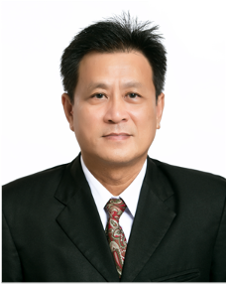
JP Hong is a 5th-generation Hinghwa in Kuching, with ancestry from Fujian, Putian, Jiangkou, Gangxia Village (福建省莆田縣,江口鎮港下村).
His father, the late Hong Tian Huat (方天發), was also born in Kuching and was related to the late Pehin Hong Kok Tin, a Hinghwa minister in pre-independent Brunei Darussalam.
He was also related to the late Temenggong Datuk Tan Meng Chong, a prominent community leader in Kuching, Sarawak.
A devout Taoist, JP Hong played a key role in designing and funding the construction of the magnificent Tong Kak Kuan (东岳观) in Kuching. The temple features a graphic historical narrative of ancient China, illustrating values such as heroism, loyalty, and filial piety, among others.
His business ventures encompass the automotive dealership, property management, real estate development, and investment sectors. Notably, he owns Borneo Happy Farm, a 130-acre agri-ecotourism destination that includes a graphic section on the early history of Borneo and the Chinese migrants in Nanyang. The farm cum museum has become a popular attraction for both locals and tourists.
He previously served as Chairperson of the Hong Boon Siong & Teo May Tze Charity Foundation, which supported public welfare, particularly in education. His charitable approach reflects his belief in giving back to society.
---
*
Lin Yuzhong (林宇中)
Music Composer and Actor

Source: Federation Heng Ann,
Malaysia
Lin Yuzhong (林宇中) was born on December 29, 1978, in Sarawak, Malaysia, and he has ancestral roots in Putian, Fujian Province, China.
After completing his basic education in Sarawak, he attended the University of Malaya, where he graduated with a degree in Microbiology.
A music enthusiast from a young age, Lin participated in songwriting competitions and won the Best Composer Award at the National Junior College Chinese Song Creation Competition. This achievement helped launch his career in the entertainment industry, where he collaborated with some of the most renowned Chinese artists, including Jordan Chan (陈小春), Lin Junjie (林俊杰), Zhang Jie (张杰), Li Bingbing (李冰冰), Pin Guan (品冠), Guo Jing (郭靖), and many others.
Lin went on to receive numerous prestigious awards in Hong Kong and Malaysia, where he produced chart-topping albums for various artists. His talent was further recognized when he won the Best Chinese Album Award and the Top Ten Golden Melody Awards. Perhaps his crowning achievement was receiving China's Most Popular Chinese Song Award. This success motivated him to pursue acting, and he earned the Golden TV Awards and the Best TV Drama Award for his performances.
As a celebrated artist throughout China and the surrounding region, Lin became an ambassador for many organizations across Malaysia and China, including Taiwan.
In 2018, he was honored with the Cultural Achievement Award in Malaysia.
---
Excerpts from pp. 294–299 of "Federation Hing Ann Notable People" (Written by Yang Qianni).
*
Sibu, Sarawak
Rev. Ling Kai Cheng
(林开臻, 1897-1987)

Founder of the Sibu Hin Hua Association (诗巫兴化公会创会人), now known as the Hin Hua Pou Sen Association, Sibu (诗巫兴化莆仙公会)**
Rev. Ling was born on July 8, 1897, in Xianyou County, Fujian, China. At the age of 14, he was moved by a sermon and vowed to serve in a church. In 1913, he joined his parents, who were part of the second group of migrants to Sibu organized by Methodist missionaries.
Two years later, they relocated to Kuching to start a grocery business. In 1917, he married Lee Bui Moi (李尾妹) and returned to Sibu, where they were blessed with four sons and two daughters.
In 1923, he founded the Hua Ying Printing Company (华英印务公司) with a few friends. The name '华英' indicates it was a Chinese company operating within the British Empire.
In 1925, he moved to Singapore, where he and his friends established the Rong Guang Printing Company (榕光公司). There, he became active in the Methodist Church and occasionally served as a speaker. In 1930, he returned to Sibu, where he led efforts to assist those affected by a devastating fire. He worked on building roads, planting fruit trees, and constructing schools, churches, clinics, and hospitals by raising funds both locally and overseas. He was instrumental in constructing the Iban Methodist Church, the Methodist Children’s Home, the Methodist Theological College, the Methodist Book Room, and the rebuilding of the Tien Tao Methodist Church, Tien Sik Methodist Church, and the Methodist Secondary School in 1947. Additionally, he purchased valuable land for the Methodist Church that now houses the Pilley Memorial Institute (MPI) in Sibu.
In 1951, he played a key role in establishing the Sibu Hin Hua Association, with its association building completed in 1958. This association was later renamed the Hin Hua Pou Sen Association, Sibu (诗巫兴化莆仙公会), where he served as chairman for three years.
His Christian faith deepened when he was ordained as a pastor of the Tien Sik Methodist Church (天锡堂) in 1952, followed by ordinations in several more churches.
Rev. Ling passed away in 1987 and was buried in the Hin Hua Methodist Cemetery in Sungai Merah, a piece of land he helped transform. He left behind a rich Hinghwa legacy, commemorated by a road named after him: Ling Kai Cheng Road (林开臻路) in Sibu, Sarawak, Malaysia.
(Excerpts from Wong Meng Lei) Publisher: 马来西亚基督教卫理公会砂拉越华人年议会文字事业部
*
Datuk Teng Chin Hua (PGBK), ABS, PBS
(拿督陈仁华; 1932-2008)

& Kapitan Frankie Nee
Datuk Teng was born in Sibu, Sarawak, on March 15, 1932.
He married Datin Kee Mee Chieu (纪美洲) in 1949. Together, they were blessed with five sons and one daughter, all of whom received a quality education and became professionals in various fields, including medicine and finance.
The family is devoted to the Methodist faith. In 1983, he was awarded the title of P.G.B.K. Datuk by the Head of State of Sarawak, making him the first Hinghwa individual in Sibu to receive such recognition.
Datuk Teng joined Sarawak United Sawmill Sdn. Bhd.. in 1952, managing on just six hours of sleep a day. Through hard work and honesty, he rose to the position of general manager. In 1962, he also assisted in running Lien Ho Sawmill Sdn. Bhd.. until 1979.
After nearly 27 years of employment, he decided to establish his own company, Tropical Timber Trading Sdn. Bhd.., where he served as chairman for the remainder of his life.
In addition to his business endeavors, Datuk Teng was actively involved in social work, taking on many leadership roles. He served as the president of the Sibu Hin Hua Pou Sen Association (HHPSA) from 1982 to 1985 and continued as permanent chairman and advisor to the association. He was also president of the Federation of Heng Ann Associations Malaysia (FHAAM) from 1992 to 1995 and president of the United Chinese Association (UCA) in Sibu from 1993 to 1995. Furthermore, he was the chairman of Kiang Hing Middle School (建兴中学) from 1982 to 1992 and Tiong Hin Secondary School (中兴中学) from 1996 to 2008.
Datuk Teng made significant contributions to the infrastructure of both Kiang Hing Middle School and Tiong Hin Secondary School during his tenure as School Board Chairman. A building block at Tiong Hin Secondary School was named in his honor to commemorate his contributions. He also played a vital role in establishing Tiong Hin Primary School (中兴小学) and Tiong Hin Kindergarten (中兴幼儿园).
Whenever the schools faced funding shortages, he stepped in to help. He showed great generosity by inviting staff and teachers from the eight schools founded by the Hinghwa forefathers in Sibu town for an annual gathering aimed at fostering friendship and cooperation, as well as expressing gratitude for their service.
Overall, Datuk Teng was very generous in donating to educational, cultural, social, and national causes. He actively participated in HHPSA’s activities and led the construction of several major projects, including the two Hinghwa Memorial Gardens built in 1982 and 1992, respectively.
He graciously assisted the Hinghwa clan in the neighboring town of Bintulu by helping them acquire a shophouse to serve as their association building.
He played a crucial role in forming the Federation Heng Ann Association Malaysia in Malacca before relocating to Kuala Lumpur. This initiative eventually united all 34 Hinghwa organizations in Malaysia under one umbrella.
In addition to his service to the Hinghwa clan, Datuk Teng contributed to numerous other non-profit organizations (NGOs) in Sibu. He also built the Table Tennis Building in 2003 and Su Lai Primary School in 1988 in Sibu town.
His exemplary service to both the nation and the community was recognized by the state, which conferred upon him the honorable title of “Datuk.”
During the Centennial Celebration of the Hinghwa Clan Settlement in Sibu in 2012, a road was named Teng Chin Hua Road in his honor—an accolade befitting a great Hinghwa man.
*
Datuk Lau King Kah, Philip, PGDK.
(刘庆嘉拿督)
Honorary President/Advisor Sibu Hin Hua Pou Sen Association
Penghulu Yong Che Chong
(B.B.S., P.P.T., A.B.K.) (杨志聪)
Chairman, Sibu Hin Hua Pou Sen Association
Chairman, Federation of 7-Clan Associations, Sibu

Source: Kapitan Frankie Nee
Penghulu Yong Che Chong is a third-generation Hinghwa in Sibu. He was born in 1957. His father, Yong Jeck Seng, hailed from Sungai Teku, Sibu, with ancestral roots in Xianyou, China. His mother, Chiew Say Chia, was also from the same county. Penghulu Yong is married to Wong Sheau Xia, and together they have a son, Samuel Yong Zhong Sheng.
Penghulu Yong was appointed as a Penghulu in 2022. He is a devoted civil servant who has served in various government departments, including the Department of Agriculture, Land and Survey Department, the Public Works Department (JKR), and the Rural Water Supply Department. His deep passion for preserving and promoting Hinghwa culture led him to dedicate significant time and expertise to the Hin Hua Pou Sen Association, where he currently serves as Chairman. His current term spans from 2024 to 2026.
In addition to his role at the Association, he also holds several other positions:
-
President, Federation of 7-Clan Associations, Sibu (2024–2026)
-
Secretary, Tiong Hin Secondary School Board of Management
-
Deputy Secretary, SJK(C) Tiong Hin
-
Secretary, Tadika Methodist Tien Sik
-
Lay Leader, Tien Sik Methodist Church
During his time as Secretary of the Hin Hua Pou Sen Association (HHPSA), he also served as the Association’s publication advisor. In this role, he accompanied writer Wong Meng Lei to Putian, China, to conduct research on Hinghwa history. Their findings were published in a Chinese-language book titled Sibu Hin Hua: A Hundred Years' History and Reflections, released in November 2012. The publication traces the history of Putian and its connection to the Hin Hua (HH) community in Sibu.
For his outstanding contributions to society, Penghulu Yong was awarded the Pingat Perkhidmatan Terpuji (P.P.T.) by the Governor of Sarawak in 2003 and the Ahli Bintang Kenyalang (A.B.K.) in 2009.
*
Low Muong Huat @ Lu Muong Huat
Former President of Hin Hua Pou Sen Association,
Sibu, Sarawak, Malaysia

Source: Kapitan Frankie Nee
Muong Huat was born on December 14, 1957, in Sibu, Sarawak. His father, Low Ka Lok, and mother, Nee Hong Eng, both originally from Xianyou, Putian, migrated to Sibu in 1949. They were blessed with six sons and one daughter.
Like many families of their time, Muong Huat's parents worked hard as laborers, rubber tappers, and farmers, cultivating rice and vegetables. Despite facing tough conditions, they persevered and triumphed against the odds.
Muong Huat received his basic education in Sibu and later pursued his ACCA in the UK from Tunku Abdul Rahman College. He is a qualified accountant and served as the general manager of Dunia Forest Group of Companies for over 30 years.
In terms of social service, he was the treasurer of the Hin Hua Pou Sen Association from 2010 to 2018, served as deputy president from 2018 to 2020, and was the president for the term 2020-2024. He is now the Permanent Honorary Chairman cum Advisor to the association. He is also a marriage registrar for the Hinghwa clan.
In his religious community, he is a devoted Methodist and serves at Hwai Ang Methodist Church as a lay leader, chairman of economic planning, and auditor. Additionally, he is the chairman and vice-treasurer of Tiong Hin Primary School and Tiong Hin Secondary School, respectively. His spouse is Ling Kong Jui.
*
Kapitan Samuel Goh Kee Seng, (BBS)
甲必丹吴义生
Chairman: Huong Seng Motor Company

Source: Kapitan Frankie Nee

Source: Kapitan Frankie Nee
Congratulations to
Kapitan Samuel Goh Kee Seng
甲必丹吴义生
for being conferred the title of
Bentara Bintang Sarawak (BBS)
Samuel Goh traces his ancestry to Putian, China. He is a third-generation Hinghwa residing in Sibu. His father, Goh Kai King, hailed from Sungai Teku, Sibu, while his mother, Lu Kee Hiong, is from Penasu -- both of whom have ancestral roots in Putian, China.
He is married to Kee Ket Hua (紀克花). Together they have a son, Vincent Goh Kiang Hong, and a daughter, Flora Goh En Chin.
Samuel currently serves as the Chairman of Huong Seng Motor Company, a business that offers comprehensive motoring services -- including vehicle sales, after-sales service, maintenance, and repairs.
On January 1, 2024, Samuel Goh was appointed as a Kapitan, a position he will hold until December 31, 2027.
A Kapitan is a respected community leader responsible for overseeing a specific area. Acting as a liaison between the residents and the authorities, the Kapitan plays a crucial role in safeguarding the welfare of the local community. It is a demanding position, as residents may seek assistance at any time, day or night.
The responsibilities of a Kapitan include certifying government documents, mediating family or neighborhood disputes -- often during unconventional hours -- and supervising public projects within their jurisdiction. It is a noble role, deeply rooted in social service and community care.
Despite the significant responsibilities, Kapitans receive only a modest allowance, typically not exceeding RM1,000. However, for many -- including Samuel -- it is not the financial reward that matters, but a genuine passion for helping others. Like many of his Hinghwa compatriots, Samuel Goh strongly believes in giving back to society.
Apart from this social role, he also serves as the secretary of Hin Hua Pou Sen Association w.e.f. 2024-2026. He is also a secretary of the Tiong Hin Primary School Board of Management. He is also the secretary of the Sibu Automobile Repairer Association, and Vice Chairman, Deacon Department (执事部副主席) of the Borneo Evangelical Mission (BEM) Hosanna Church.
On 29 October 2024, he was awarded the title of Bentara Bintang Sarawak (BBS) by the authorities.
*
Kapitan Nee Chung Shyang, Frankie
Bank Manager
Sibu, Sarawak

Frankie Nee was born in Sarawak on December 6, 1963. His father, Nee King Chiong, and mother, Yew Ah Poi, were natives of Putian, Fujian Province, China. They migrated to Sibu, Sarawak, in the early 1930s, where they worked as laborers, rubber tappers, and farmers, planting rice and vegetables. The couple was blessed with four sons and four daughters.
Frankie graduated from Bolton University in the UK with a Bachelor of Arts degree. He is currently the Branch Manager of RHB Bank Berhad at the Sungai Merah Branch in Sibu, Sarawak, Malaysia. He completed his secondary education at Tiong Hing Secondary School, which was founded by Hinghwa pioneers in Sarawak. Frankie has been serving as the Chairman of the Alumni since 2014.
In addition to his role at the bank, he has served as the Secretary of the Sibu Hin Hua Pou Sen Association since 2020. He was also appointed as a Kapitan, a position he will hold from January 1, 2024, to December 31, 2027.
Frankie is married to Ms. Yii Mai Ik, Elizabeth. They have two sons and a daughter. Their eldest son, Raymond Nee Chan Yew, graduated with a degree in Occupational Safety and Health Management and married Connie Wong Huah Nee, who is a Chinese Traditional Medicine Practitioner. Their second son, Eric Nee Chan Hon, is an Electrical Engineer married to Grace Kho, a teacher.
Their daughter, Dr. Irene Nee Chan Yin, is a Medical Doctor with a degree from Perdana University-Royal College of Surgeons in Ireland. She is currently working at Sibu General Hospital and is married to another medical doctor, Dr. Bobby Lee Yung King.
---
In Gratitude to Kapitan Frankie Nee, Hin Hua Pou Sen Association and Churches.
In 2023, as part of my study tour on the Hinghwa community in Sarawak, I had the privilege of visiting Sibu. There, I was warmly received by the President and Committee members of the Hin Hua Pou Sen Association, including pastors, church members, present and past Penghulu and Kapitan.
Their generous hospitality left a deep impression on me. Not only did I gain invaluable insights during my visit, but I have continued learning since my return—thanks to the many publications they kindly shared with me, including copies of the Hinghwa Bible.
The graciousness and thoughtfulness extended to me throughout my stay were truly moving. For that, I remain profoundly grateful.
*
Nee Chee Piaw @ Ling Chee Piaw
(林志耀)
Chairman Nee Seng Ngeng & Sons Sago Industries Sdn Bhd,
Sibu, Sarawak,

Source: Kapitan Frankie Nee
Chee Piaw was born in Sibu, Sarawak on 03 September 1959. His spouse is Ms. Tang Pick Kiaw. His father is Nee Seng Ngeng, and his mother is Teo Ah Leng.
Both parents were from Xianyou, Putian, and had earlier migrated to Sibu in the early 20th century. Together they were blessed with 7 sons & 4 daughters.
His father and his uncle pioneered the sago starch food industry in the early 1950s. In 1984, Chee Piaw and his father formed the Nee Seng Ngeng & Sons Sago Industries Sdn Bhd to further developed it into a fully automated sago flour mill to serve markets in Malaya, Singapore, Japan, China, Thailand, Myanmar, etc.
In social services, he served as a patron and advisor to the Hin Hua Pou Sen Association, Sibu, and vice-chairman of Tiong Hin Secondary School in Sungai Merah, Sibu.
Nee Choong Sing, Alan
Managing Partner
McMillan Woods Nee Wong
Chartered Accountants

Source: Kapitan Frankie Nee
Alan was born in Sibu in 1957 and is fluent in the Hinghwa language.
His father, Nee King Chiong, and mother, Yew Ah Poi, both hailed from Putian. They migrated to Sibu, Sarawak, in the early 1930s, where they worked as laborers, rubber tappers, and farmers, cultivating rice and vegetables, among other crops. Together, they were blessed with four sons and four daughters.
Alan received his basic education in Sibu before pursuing a degree in the UK, where he graduated with an ACCA qualification.
Upon returning to Sibu, he held several positions, including Assistant Audit Manager at Hock Hua Bank Bhd, Credit Manager at Delta Finance Bhd, Branch Manager of Sarawak Securities Bhd. in Miri, General Manager of Rimbunan Sawit Bhd., and Chief Operations Officer of WTK Holdings Bhd.
Before his career in Sibu, he was recruited as a trainee pilot with the Singapore Air Force in 1975. His training included learning to fly a fighter jet and parachuting. However, his aspirations for this exciting career came to an end when he decided to remain a Malaysian, as only Singapore citizens can serve in the Republic of Singapore Air Force.
Alan is married to Loi Lea Ling, and they have two sons: Nee Chan Gin, William, who graduated with a Master of Law from Reading University in the UK, and Nee Chan Lik, Gordon, who graduated with an ACCA from the London School of Business
*
Dr. Irene Nee
Medical Doctor
Sibu, Sarawak

Source: Kapitan Frankie Nee
Dr. Irene Nee is the daughter of Kapitan Frankie Nee, who serves as the secretary of the Sibu Hin Hua Pou Sen Association.
Irene is a medical doctor, having earned her degree from Perdana University in association with the Royal College of Surgeons in Ireland.
She currently practices at Sibu General Hospital.
Dr. Irene Nee is married to Dr. Bobby Lee Yung King, who is also a medical doctor.
*
Indonesia
Yeow Hong Liong
(姚豐隆; 1874 - 1956)
Ban Hong Liong Company (万丰隆公司) (Makassar, Indonesia)


Source: Author & 童志军
From: Dongda Village Museum: Yeow Hong Leong & Company
Yeow Hong Liong (姚豐隆; 1874 - 1956), Ban Hong Liong Company (万丰隆公司) (Makassar, Indonesia). Yeow Hong Liong was a native of Jiangkou, Putian. His wife has a surname 'Chen' (陈), says Yao Bin (姚斌著), the writer of '魁山侨屋漫话'.
According to the Yeow Family Tree records, Ban Hong Liong Company (万丰隆公司) was founded by Yeow Hong Liong and Yeow Ban Hong.
They were among several other clan members who owned a mansion each with a large compound in Dong Yuan Village, Jiangkou Town, Putian (莆田江口镇东源村).
Yeow Hong Liong’s mansion is a landmark in the village today. It is also a state-protected attraction in Hanjiang. Yeow Ban Hong later set up his own company, Ban Hong Ltd. Co. (萬豐有限公司) in Surabaya (泗水).
After he passed on, he was survived by his two sons, Yeow Daode (姚道德; 1910-2001) and Yeow Tianxi (姚添喜; 1915-1981).
His grandson, Yeow Joo Hin (姚子興), was reputed to be the King of Tyres in the Nanyang. He is featured in the Malaysia section.
---
Excerpts from Yao (2024, pp. 38-39 & p. 127)
Note: The hometown of the Yeow Clan is now a museum where many of the mansions in the village have been renovated and state-managed.
*
Lo Xiao Jia (盧孝嘉)
(1885 to 1969)

Source: Ong Lee Wha
Lo Xiao Jia was born in Dong Yuan Village, Dong Da Cun, in Jiang Kou Zhen, Putian County, Fujian Province, China (东源村大东村江口镇莆田县福建省), where he worked as a farmer.
His wife, Mdm. Yeow Cha Li (姚姹娌; 1893 - 1968) was also born in the same county. They were blessed with 15 children.
His eldest son, Lo Sian Bie (盧善美), followed him to Indonesia, then known as the Dutch West Indies. Lo Junior worked in his father’s company and expanded it into selling and repairing bicycles and cars in Java, Sumatra, and Kalimantan, Indonesia.
He started to acquire properties in Indonesia, including a public swimming pool and a palm oil factory. He later progressed to real estate and stock exchange businesses that became his main business.
He was also a filial man who would send back money to support his extended family and the building of a temple and a family shrine in his hometown.
His eldest son was Dr. Lo Soen Tie (盧顺智), who was to carry on the family’s legacy of success in his own way, in the medical field.
---
Note: Dong Da Cun is home to many mansions built by the overseas Yeow clan. The sprawling compound has become a museum after it was renovated. It stood as a testimony to the strong Chinese culture of filial piety, where children must return to their ancestral land.
*

Source: Ong Lee Wha
Lo Sian Bie (盧善美; ca. 1911 - ?)
(Ban Sin Hin)
(Indonesia)
Lo Sian Bie was born around 1911 in Dong Yuan Village (东源村). He was the eldest son of Lo Xiao Jia. He followed his father to the Dutch West Indies. His wife was also a Hinghwa from the same hometown. He is the second generation of the Lo Xiao Jia lineage.
Earlier, Lo Sian Bie started working in his father's company called “Ban Sin Hin”. The Lo family continued to expand the company in Indonesia, selling and repairing bicycles through their family-run shops in Java, Sumatra, and Kalimantan, Indonesia. Lo Sian Bie became the owner of several properties in Indonesia, including a public swimming pool/resort type and a palm oil factory. He became famous and wealthy in Indonesia. The Lo and the Yao families were two well-known Hinghwa families in Indonesia.
In 1958, Lo Sian Bie left Indonesia for Hong Kong, where he first partnered with Tek Guan Co., which imported wood from Borneo. He then went on to start his own company, the Great Asia Impex Co., and expanded Ban Sin Hin to Hong Kong to do import and export. He later progressed to real estate and stock exchange businesses that became his main business.
He was generous with his several wives and 17 children. He supported them, including his siblings, through education. The eldest son is Dr. Lo Soen Tie (盧顺智).
Mr Lo Sian Bie was also a filial man who never forgot his hometown in Putian. He would send back money to support his extended family and the building of a temple and a family shrine in his hometown.
*
Ong See Mie (王世美)
(ca. 1909 - 1990)
Sin Hiap Leong Company, Indonesia
Source: Daniel Ong
Ong See Mie was a native of Jiangdou.
At the age of 9, he followed his father to Singapore, whose relatives had arrived earlier. They later migrated to Indonesia and Malaysia.
Ong See Mie went to Surabaya, Indonesia, and founded the Sin Hiap Leong Company, where he became a pioneer. According to his grandson, Daniel Ong Tjong Swie, he was good at social interaction and marketing.
He soon became very rich.
His philosophy was never to borrow money from banks, but if it is necessary, the debt must be repaid in the shortest possible time.
The logic behind this is "one must always be trustworthy".
Amidst his busy schedule in business, he still found time to take care of his children and grandchildren.
As Daniel says, "He was a very good family man".His grandson is Daniel Ong Tjong Swie (王宗瑞), and his granddaughter-in-law is Agnes Tee Tjhioe Lian (戴秋蓮).
*
The following were contributed by Yao Bin. We welcome photo contributions of the subject from anyone who may have one to share.
Yao Shun (姚顺, 1874–1955), Makassar, Indonesia)
姚顺(1874–1955),字孟彰,一名文隆,在家族内排行第 十二,故又称顺十二,莆田平民医院的创始人。姚顺早年读过私塾, 是家族内较早到达南洋的人。民国初年,赴南洋不需要护照。那时, 姚顺和他的堂兄弟从厦门乘船启程,漂流至印度尼西亚望加锡。姚顺 也是从拉黄包车开始艰苦创业,接着开设自行车修理铺,兼出租黄包车。 20世纪20年代,姚顺加入万丰隆有限公司,成为股东之一。后从万 丰隆分拆出去,创建万瑞隆有限公司。姚顺发达后于1930年携巨资回 乡,建造“德有邻”大厝。姚顺在家乡时,慷慨解囊,热衷公益事业, 修桥铺路,与姚丰隆共同出资建造萩芦大桥。1950年,姚顺创办莆田 平民医院,成立医院董事会,并亲自担任董事长。他借用江口石厝旧 屋设立病房,招募姚道进、姚金荣、姚玉清和姚明扬四人到莆田平民 医院工作,医院得以顺利开张。1953年,姚顺又不惜变卖私人黄金, 在江口东来寺旁建造门诊大楼,这样就使得莆田平民医院初具规模, 更好地服务于缺医少药的家乡人民。今天,莆田平民医院早已成为二 级甲等医院,依然承担着救死扶伤的使命,发挥了它应有的作用。姚 顺在公益事业上做出了卓越贡献,没有因时光流逝而磨灭,将永载史册。
Yao Shun (姚顺, 1874–1955), Makassar, Indonesia)
Yao Shun courtesy name Mengzhang, also known as Wenlong, was the twelfth child in his family, hence also called Shun Twelve. He was the founder of Putian People's Hospital. Yao Shun received a private education in his early years and was one of the earliest members of his family to reach Southeast Asia. In the early years of the Republic of China, passports were not required to travel to Southeast Asia. At that time, Yao Shun and his cousins set sail from Xiamen and drifted to Makassar, Indonesia. Yao Shun started his business from scratch by pulling a rickshaw, then opened a bicycle repair shop and also rented out rickshaws. In the 1920s, Yao Shun joined Wanfenglong Co., Ltd., becoming one of its shareholders. Later, he spun off from Wanfenglong and founded Wanruilong Co., Ltd. After becoming wealthy, Yao Shun returned to his hometown in 1930 with a large sum of money and built the "De You Lin" mansion. When Yao Shun was in his hometown, he generously donated money and was passionate about public welfare, building bridges and roads. He co-funded the construction of the Qiulu Bridge with Yao Fenglong. In 1950, Yao Shun founded the Putian People's Hospital, established a board of directors, and personally served as chairman. He used an old stone house in Jiangkou to set up wards and recruited Yao Daojin, Yao Jinrong, Yao Yuqing, and Yao Mingyang to work at the hospital, allowing it to open smoothly. In 1953, Yao Shun sold his personal gold to build an outpatient building next to Donglai Temple in Jiangkou, thus giving the Putian People's Hospital its initial scale and better serving the people of his hometown who lacked medical care and medicine. Today, the Putian People's Hospital has long been a Grade II Class A hospital, still shouldering the mission of saving lives and playing its due role. Yao Shun made outstanding contributions to public welfare, which have not been erased by the passage of time and will be forever recorded in history.
---
Yao Wenxie (姚文协, 1883-1966), Makassar, Indonesia)
姚文协(1883-1966),小名协哥。早年种田,吸过鸦片。有一 天他看到涧边的一棵龙眼树,于是异想天开,将树锯掉修剪成“牛犁” 的模样,招致村中长者责骂,说他没出息。他深受刺激,惶恐中决定 跟随乡人下南洋闯荡,到了印度尼西亚望加锡,进入万丰隆公司做事。 数年后,姚文协离开万丰隆公司,决心自己创业,到望加锡一个名叫 生港的小镇创建了万盛兴公司,又名生港万丰隆,从事自行车、汽车 配件和汽油生意。当时,有一家与万盛兴同名的英国公司,也从事汽 油生意,与姚文协的万盛兴有业务往来。经过几年的商业活动,姚文 协终于发家致富,决定在家乡建房。但他自己并没有回国,而是将建 房任务交给其堂弟姚文合。姚文协大厝是一座中西合璧的华侨民居, 建筑精美,在艺术价值上名列东源前茅。姚文协于1948年回国庆祝 乔迁之喜,特地来到涧边,将“牛犁”改为“牛刀”,这是后话。姚 文协少时顽劣,但他能够改过自新,奋发图强,最终成就事业。人孰 能无过,改之,则善莫大焉。目前,姚文协后人已经将大厝捐献给村子, 由村子统一管理。
Yao Wenxie (姚文协, 1883-1966), Makassar, Indonesia)
Yao Wenxie, also known as Xie Ge, was a farmer in his early years and had used opium. One day, he saw a longan tree by a stream and, in a moment of whimsy, cut it down and pruned it into the shape of a "plow," incurring the wrath of the village elders who called him a good-for-nothing. Deeply affected and fearful, he decided to follow his fellow villagers to Southeast Asia, arriving in Makassar, Indonesia, where he worked for the Wan Feng Long Company. Several years later, Yao Wenxie left Wan Feng Long and decided to start his own business. He founded Wan Sheng Xing Company, also known as Sheng Gang Wan Feng Long, in a small town in Makassar, dealing in bicycles, auto parts, and gasoline. At that time, a British company with the same name as Wan Sheng Xing, also dealing in gasoline, had business dealings with Yao Wenxie's Wan Sheng Xing. After several years of business activities, Yao Wenxie finally became wealthy and decided to build a house in his hometown. However, he did not return to China himself but instead entrusted the construction to his cousin, Yao Wenhe. Yao Wenxie's mansion is a Chinese-Western style residence, exquisitely built and ranking among the top in Dongyuan in terms of artistic value. In 1948, Yao Wenxie returned to China to celebrate his housewarming and specially came to the riverbank to change the "ox-plow" (a type of plow) to a "ox-knife" (another type of plow). Yao Wenxie was mischievous in his youth, but he was able to reform himself, strive for improvement, and ultimately achieve success. Everyone makes mistakes; to correct them is the greatest virtue. Currently, Yao Wenxie's descendants have donated the mansion to the village for unified management.
---
Yao Wanfeng (姚万丰, 1884-1946) Makassar, Indonesia)
姚万丰(1884-1946),字孟起,一名玉,因在家族内排行第 十八,故又名玉十八。姚万丰出自姚孔誉(五哥)家族,系姚孔誉之侄, 万丰隆有限公司创始人之一。姚万丰于民国初年到达印度尼西亚望加 锡,从经营自行车修理铺开始,后与姚丰隆共同发起万丰隆有限公司。 万丰隆公司先从事修理并出售自行车业务,垄断了英国名牌“莱斯”“哈 久里”和荷兰名牌“鹿标”自行车的经营权。后又增加摩叨(摩托车)、 汽车零部件销售及修配业务。姚万丰在经营万丰隆有限公司的过程中, 其重要性同等于姚丰隆,对万丰隆公司的发展做出了卓越的贡献。万 丰隆公司具有大爱精神,在引领乡亲到南洋创业、共同致富方面,特 别引人瞩目,从而获得了广泛赞誉,这与姚万丰的行事风格密不可分。 姚万丰是姚万丰大厝的主要建造者。这座大厝先后修建过三次。原先 为姚孔誉所建,但是原大厝建得既矮小,光线又差。姚万丰于20世纪 20年代回国后见此情景,决定重新翻建大厝,遂形成了今天所见的基 本规模和样式。姚万丰后来从万丰隆公司分拆出去,独自成立了万丰 有限公司,并将公司迁至泗水。姚万丰去世后,其子姚道德和姚添喜 继承父业,继续经营万丰有限公司,至今已历三代,也可谓基业长青了。
Yao Wanfeng (姚万丰, 1884-1946) Makassar, Indonesia)
Yao Wanfeng (1884-1946), courtesy name Mengqi, also known as Yu, was the eighteenth child in his family, hence the name Yu Shiba. Yao Wanfeng was a nephew of Yao Kongyu (his fifth brother) and one of the founders of Wanfenglong Co., Ltd. Yao Wanfeng arrived in Makassar, Indonesia in the early years of the Republic of China, starting with a bicycle repair shop. Later, he co-founded Wanfenglong Co., Ltd. with Yao Fenglong. Wanfenglong initially focused on repairing and selling bicycles, monopolizing the distribution rights of the British brands "Rice" and "Hajuri" and the Dutch brand "Deer Brand" bicycles. Later, it expanded into the sales and repair of motorcycles and automobile parts. Yao Wanfeng's role in the operation of Wanfenglong Co., Ltd. was as important as Yao Fenglong's, and he made outstanding contributions to the company's development. Wan Feng Long Company is known for its spirit of compassion, particularly in leading fellow villagers to start businesses and achieve common prosperity in Southeast Asia, earning widespread praise. This is inseparable from Yao Wanfeng's style of doing things. Yao Wanfeng was the main builder of the Yao Wanfeng Mansion. This mansion was rebuilt three times. Originally built by Yao Kongyu, the original mansion was small and poorly lit. After returning to China in the 1920s, Yao Wanfeng saw this and decided to rebuild the mansion, resulting in the basic scale and style seen today. Later, Yao Wanfeng spun off from Wan Feng Long Company and established Wan Feng Limited, relocating the company to Surabaya. After Yao Wanfeng's death, his sons Yao Daode and Yao Tianxi inherited the business and continued to operate Wan Feng Limited, which has now been run by three generations, demonstrating its enduring success.
---
Yao Wenxiang (姚文祥, 1884-1944) (Indonesia)
姚文祥(1884-1944),小名五妹九,东源村一位英雄式的传奇 人物。姚文祥民国初年到达新加坡,从事苦力。后到印度尼西亚,曾 在万丰隆公司做事。姚文祥在赚得一笔钱后遂回国建屋,在古秋枫树 下建得一楼,曰“文祥楼”。这是一座框架结构的双层四目房,外墙 和内墙皆夯土,二层及楼梯为木构,顶层却以钢筋混凝土浇灌,再施 以葫芦瓶护栏。两层正面墙体皆有彩绘,或麒麟或飞风或麋鹿或白象。 文祥楼最有创造性的是在一层阳台上筑有葫芦瓶护栏,这使得其楼别 具一格,颇具西洋色彩。姚文祥为人刚正不阿,疾恶如仇,好打抱不 平,但绝不凌弱欺小。他对村中游手好闲之徒敢说敢管,连无赖地痞 也对其畏惧三分,从来不敢在他面前惹是生非。当时莆田山中巨匪郭 楼古经常进犯东源村,姚文祥数度带头率领村民迎战,击退匪徒。这 使得匪徒视姚文祥为眼中钉,欲除之而后快。1944年的一天,郭楼古 率匪再次进犯东源村,姚文祥第一个在自家楼房顶层提枪迎敌,不幸 被匪枪击中,英勇牺牲。姚文祥是东源村为数不多殒命于匪枪的人之 一。姚文祥之子姚震美是东源村姚氏中第一个考上大学的人,于1947 年考入上海大夏大学土木工程系。
Yao Wenxiang (姚文祥, 1884-1944) (Indonesia)
Yao Wenxiang (1884-1944), also known as Wu Mei Jiu, was a legendary, heroic figure from Dongyuan Village. In the early years of the Republic of China, Yao Wenxiang arrived in Singapore and worked as a laborer. Later, he went to Indonesia and worked for the Wanfenglong Company. After earning a fortune, Yao Wenxiang returned to China and built a house. Under an ancient maple tree, he built a one-story house called "Wenxiang House." This was a two-story, four-bay house with a frame structure. The exterior and interior walls were made of rammed earth, the second floor and staircase were made of wood, while the top floor was made of reinforced concrete and fitted with a gourd-shaped balustrade. The front walls of both floors were painted with various motifs, including qilin, flying phoenixes, deer, and white elephants. The most creative feature of Wenxiang House was the gourd-shaped balustrade on the first-floor balcony, which gave the building a unique and Western-style appearance. Yao Wenxiang was upright and incorruptible, hated evil, and was always ready to help the weak, but he never bullied the weak. He dared to speak out and manage the idlers in the village, and even the scoundrels and thugs feared him, never daring to cause trouble in his presence. At that time, Guo Lougu, a notorious bandit in the Putian mountains, frequently raided Dongyuan Village. Yao Wenxiang repeatedly led the villagers in battle, repelling the bandits. This made the bandits see Yao Wenxiang as a thorn in their side, wanting to eliminate him as soon as possible. One day in 1944, Guo Lougu led his bandits to raid Dongyuan Village again. Yao Wenxiang was the first to raise his gun on the top floor of his house to meet the enemy, but was unfortunately shot and heroically sacrificed. Yao Wenxiang was one of the few people in Dongyuan Village to die from bandit gunfire. Yao Wenxiang's son, Yao Zhenmei, was the first member of the Yao family in Dongyuan Village to be admitted to university, entering the Department of Civil Engineering at Shanghai Daxia University in 1947.
---
Yao Wenrui (姚文瑞, 1885-1940) (Jakarta, Indonesia)
姚文瑞(1885-1940),字孟达,小名阿三,系姚丰隆之三弟, 因在家族内排行第十五,故又称文十五,是姚丰隆大厝的基建者。姚 文瑞早年也漂洋过海前往印度尼西亚望加锡,与姚丰隆等人共同创业, 后来成为万丰隆有限公司的股东。姚文瑞热心公益事业,曾主持建造 村南和村北两座堞楼(其中村北堞楼后来被毁),为东源村构筑安全 防护体系。姚文瑞的家风极好。长子姚焕章为万丰隆雅加达公司董事 长,曾为韶源小学捐建一栋教学楼。20世纪80年代,东源姚氏纪念 堂建造时,在十八万元人民币的捐资中,姚丰隆家族(即姚焕章、姚 焕德、姚永霖和姚振德诸人)占三分之二。姚焕章之子姚子兴于20 世纪90年代捐建平民医院妇幼大楼,这座楼被命名为“姚焕章纪念楼”, 其大堂中心就矗立着姚焕章铜像。姚文瑞次子姚焕德20世纪40年代 即出任雅加达兴安会馆主席,也是一代著名侨领。1945年,他积极参 与莆田锦江中学筹建并募资,为锦江中学的创办立下汗马功劳。
Yao Wenrui (姚文瑞, 1885-1940) (Jakarta, Indonesia)
Yao Wenrui (1885-1940), courtesy name Mengda, also known as Asan, was the third younger brother of Yao Fenglong. Because he was the fifteenth child in the family, he was also called Wen Shiwu (Wen the Fifteenth). He was the architect of Yao Fenglong's mansion. In his early years, Yao Wenrui also traveled to Makassar, Indonesia, to start a business with Yao Fenglong and others, later becoming a shareholder of Wanfenglong Co., Ltd. Yao Wenrui was enthusiastic about public welfare, and he oversaw the construction of two watchtowers in the south and north of the village (the north watchtower was later destroyed), building a security system for Dongyuan Village.
Yao Wenrui had an excellent family tradition. His eldest son, Yao Huanzhang, was the chairman of Wanfenglong Jakarta Company and donated a school building to Shaoyuan Primary School. In the 1980s, when the Dongyuan Yao Family Memorial Hall was built, the Yao Fenglong family (including Yao Huanzhang, Yao Huande, Yao Yonglin, and Yao Zhende) contributed two-thirds of the 180,000 RMB donation. Yao Huanzhang's son, Yao Zixing, donated funds to build the Maternal and Child Health Building of the People's Hospital in the 1990s. This building was named the "Yao Huanzhang Memorial Building," and a bronze statue of Yao Huanzhang stands in the center of its lobby. Yao Wenrui's second son, Yao Huande (姚焕德), served as the chairman of the Jakarta Xing'an Association in the 1940s and was also a prominent overseas Chinese leader. In 1945, he actively participated in the preparation and fundraising for the establishment of Putian Jinjiang Middle School, making significant contributions to its founding.
---
Yao Huande (姚焕德) (Jakarta, Hin Ann Association chairman).
Yao Wenrui's second son, Yao Huande (姚焕德), served as the chairman of the Jakarta Xing'an Association in the 1940s and was also a prominent overseas Chinese leader. In 1945, he actively participated in the preparation and fundraising for the establishment of Putian Jinjiang Middle School, making significant contributions to its founding.
---
Yao Youlan (姚友烂, 1888-1977) (Makassar, Indonesia)
姚友烂(1888-1977),字孟养,在家族内排行第二十,又名烂 二十,既是姚万丰的堂弟,又是连襟。他少读私塾,年十九父卒,遂 担家庭大任。民国初年远赴印度尼西亚望加锡,从修理自行车起家, 后被邀进万丰隆公司,成为十二大股东之一。不久离开万丰隆,在望 加锡马律创立万美兴公司。由于经营得法,声名大振,身家大涨,于 1917年回老家在宅里东边下间建房。姚友烂事母至孝,为探母先后七 次往返于中国与南洋之间。1939年,他转让一家分店给同村姚孝, 姚孝三年后即回乡建起一座五间厢。他留下养子姚为霖、长女姚玉 春在南洋继续经营万美兴,自己携妻带子,怀巨款七万国币回乡。原 想建七间厢大厝一座,因宅基未能落实,迟迟未建。姚友烂乐于助人, 见其堂弟姚孟瓒建房款项未到,遂将七万国币借出,同三年后归还时, 已大幅贬值,再建房已无可能。姚友烂为人正直,其堂兄姚丰隆因大 厝无人看护,曾数次将房产清册、大厝钥匙委托姚友烂,均被婉辞。 姚友烂育有四子四女,家教甚严。长子姚为美,1947年赴南洋经商。 次子姚道进,1951年进入莆田平民医院,后参军,荣立三等功,后又 保送至福建卫生干校,再回莆田平民医院。三子姚道义,1958年考入 福建农学院。四子姚道明,1958年考入福建师范学院。
Yao Youlan (姚友烂, 1888-1977) (Makassar, Indonesia)
Yao Youlan courtesy name Mengyang, was the twentieth child in his family, also known as Lan Ershi. He was both Yao Wanfeng's cousin and brother-in-law. He received a private school education in his youth, and after his father's death at the age of nineteen, he shouldered the family's responsibilities. In the early years of the Republic of China, he went to Makassar, Indonesia, starting as a bicycle repairman. Later, he was invited to join the Wanfenglong Company, becoming one of its twelve major shareholders. He soon left Wanfenglong and founded the Wanmeixing Company in Malu, Makassar. Due to his effective management, his reputation grew, and his wealth increased significantly. In 1917, he returned to his hometown and built a house in the eastern part of his family home. Yao Youlan was extremely filial to his mother, traveling between China and Southeast Asia seven times to visit her. In 1939, he transferred a branch shop to Yao Xiao, a fellow villager. Three years later, Yao Xiao returned to his hometown and built a five-room house. He left his adopted son Yao Weilin and eldest daughter Yao Yuchun to continue operating Wanmeixing in Southeast Asia, while he himself returned to his hometown with his wife and children, carrying a large sum of 70,000 national currency. He originally intended to build a large seven-room house, but construction was delayed due to the lack of a land plot. Yao Youlan, always eager to help others, lent his cousin Yao Mengzan 70,000 national currency when the funds for building a house had not arrived. When the money was returned three years later, it had significantly depreciated, making further construction impossible. Yao Youlan was an upright man; his cousin Yao Fenglong, needing someone to look after the house, had repeatedly entrusted Yao Youlan with the property register and keys, but Yao Youlan politely declined each time. Yao Youlan had four sons and four daughters, and he was very strict with his family. His eldest son, Yao Weimei, went to Southeast Asia to do business in 1947. His second son, Yao Daojin, entered Putian People's Hospital in 1951, later joined the army, received a third-class merit award, and was later recommended to the Fujian Health Cadre School before returning to Putian People's Hospital. The third son, Yao Daoyi, was admitted to Fujian Agricultural College in 1958. The fourth son, Yao Daoming, was admitted to Fujian Normal College in 1958.
---
Yao Wenlin (姚文霖, 1890-1970) (Indonesia)
姚文霖(1890-1970),字孟邻,又名来喜,小名阿四,姚丰隆 之四弟,韶源小学创始人。姚文霖早年与其兄弟共赴南洋,艰苦创业, 后参与创建万丰隆有限公司,并成为股东之一。彼时姚顺看到家乡孩 子无处就读,遂产生办学之强烈愿望。1917年,姚文霖联合姚文瑞和 姚顺等人,共筹集了一千大洋(银圆),由姚顺回国主持修建。从那 时起,地处偏远的东大村就有了一所小学,并且延续至今,已历百余年, 造就了一大批人才,功在千秋,使得东大村人文荟萃,文化底蕴深厚。 姚文霖厥功至伟,他虽置身海外,但仍被奉为韶源小学名义上的董事 长,其照片一直悬挂在教师办公室正中,直到20世纪60年代后才撤下。 姚文霖之子姚振德为人耿直,敢于正言,慷慨无私。对于前来印度尼 西亚的乡亲,无论是否相识,皆一视同仁,并且往往出力,为其奔走。 他在沟通海外与家乡方面起到了桥梁的作用。
Yao Wenlin (姚文霖, 1890-1970) (Indonesia)
Yao Wenlin courtesy name Menglin, also known as Laixi, nicknamed Asi, was the fourth younger brother of Yao Fenglong and the founder of Shaoyuan Primary School. In his early years, Yao Wenlin and his brothers went to Southeast Asia to start a business, enduring hardship. Later, he participated in the establishment of Wanfenglong Company and became one of its shareholders. At that time, Yao Shun saw that children in his hometown had nowhere to go to school, and thus developed a strong desire to establish a school. In 1917, Yao Wenlin, together with Yao Wenrui and Yao Shun, raised one thousand silver dollars, which Yao Shun returned to China to oversee the construction. From then on, the remote Dongda Village had a primary school, which continues to this day, over a century later, cultivating a large number of talents and making a lasting contribution, making Dongda Village a place of rich culture and profound heritage. Yao Wenlin's contributions were immense. Although he lived overseas, he was still regarded as the nominal chairman of the board of directors of Shaoyuan Primary School, and his photograph was displayed in the center of the teachers' office until it was removed in the 1960s. Yao Wenlin's son, Yao Zhende, was an upright, outspoken, generous, and selfless man. He treated all fellow villagers who came to Indonesia equally, regardless of whether he knew them or not, and often went to great lengths to help them. He served as a bridge between overseas and his hometown.
---
Yao Mengzan (姚孟瓒, 1900-1966, Surabaya, Indonesia)
姚孟珊(1900-1966),小名细妹,少孤苦,八岁时父母双亡, 十四岁时由堂兄弟们携带下南洋,到达印度尼西亚泗水,进入万丰隆 公司泗水分公司做事。1918年姚孟瓒回国省亲,成家立业,两年后携 带家眷再赴南洋。由于堂兄弟亲密无间的关系,姚孟瓒昆仲获得干股, 成为万丰隆公司股东。后来万丰隆又成立了一家分公司万仁里,由姚 孟珊主持经营。1936年,姚孟瓒承万丰隆公司关照,回国返乡建房。 房子竣工后,他想再次前往泗水,结果碰上日军封锁南洋,并且家乡 匪患极为严重,需要男丁守护,于是姚孟瓒留在了家乡,不再前往南 洋。姚孟瓒昆仲建有传统七间厢样式的大厝一座,形制宏大厚重,共 有三层,厅堂楼层及立柱以钢筋混凝土浇筑,二层以上则以木料构建。 所用石材均手工打磨,做工精致考究,光是打磨工钱就花费了相当于 当年七十六担大米的价格。姚孟瓒姚孟琼姚孟瑞昆仲七间厢多彩绘, 其画栩栩如生,造型丰富;其色鲜艳耀眼,至今不败。由于战乱导致 交通阻断,现金无法汇回国内,原来规划的两边下间也没有继续建造, 二楼的木料门窗也未能上漆,但仍具有较高的艺术观赏价值。姚孟瓒育 有九子七女,长子姚文龙1945年考入福建警察学校,毕业后进入警政 部门工作,1949年到台湾。
Yao Mengzan (姚孟瓒, 1900-1966, Surabaya, Indonesia)
Yao Mengzan, also known as Ximei, was orphaned at a young age. He lost both parents at eight and, at fourteen, was taken to Southeast Asia by his cousins. He arrived in Surabaya, Indonesia, and worked for the Surabaya branch of the Wanfenglong Company. In 1918, Yao Mengzan returned to China to visit his family, started a family, and two years later returned to Southeast Asia with his family. Due to the close relationship between his cousins, Yao Mengzan and his brothers obtained shares in the Wanfenglong Company, becoming shareholders. Later, Wanfenglong established a branch, Wanrenli, which was managed by Yao Mengzan. In 1936, with the help of the Wanfenglong Company, Yao Mengzan returned to his hometown to build a house. After the house was completed, he wanted to go to Surabaya again, but the Japanese blockade of Southeast Asia and the severe banditry in his hometown required male protection. Therefore, Yao Mengzan stayed in his hometown and did not go to Southeast Asia again. The Yao brothers, Mengzan and Mengqiong, built a grand, imposing three-story house with seven rooms. The main hall and pillars were constructed of reinforced concrete, while the upper floors were made of wood. All the stone used was hand-polished, with exquisite craftsmanship; the cost of the polishing alone was equivalent to the price of 76 dan (a unit of weight) of rice at the time. The seven rooms of the house, belonging to the Yao brothers, Mengzan, Mengqiong, and Mengrui, were decorated with colorful paintings, the paintings lifelike and richly detailed, the colors vibrant and dazzling, remaining vibrant to this day. Due to the disruption of transportation caused by war, cash could not be remitted back to China, and the planned side rooms were not completed. The wooden doors and windows on the second floor were also left unpainted, but they still possess high artistic value. Yao Mengzan had nine sons and seven daughters. His eldest son, Yao Wenlong, entered the Fujian Police Academy in 1945, worked in the police department after graduation, and went to Taiwan in 1949.
---
Yao Desheng (姚德盛, 1900-1992, Makassar, Indonesia)
姚德盛(1900—1992),字孟福,民国初年随其长兄姚德仁、次 兄姚德芳下南洋,到达印度尼西亚望加锡,进入万丰隆公司做事。后 离开万丰隆前往雅加达,独自创建了自己的公司,兴办工厂,专业生 产自行车轮胎。姚德盛爱国爱乡,热爱公益事业。20世纪80年代, 他频繁回国,先后捐资三十余万元人民币,修建“孔子井”,铺设村 道,联合其他爱国侨胞捐资购买手扶拖拉机、货车等,赠送给老家村 民,帮助家乡逐步实现农业机械化。在这个过程中,姚德盛总是不甘 落后,每次捐资都积极参与,并且是出大头。姚德盛的义举在东源村 获得了广泛的赞誉。姚德盛昆仲在村中原来建有一座大厝,后来所说 的三十三座东源华侨民居就有姚德盛昆仲建造的一座,可惜在“村改” 中被全部拆毁,以致现在踪迹全无。姚德盛有女嫁与同村华侨姚来富, 与其结为亲家。姚来富系姚孔誉之侄孙、姚万丰之侄。这个家族拥有 相当强的实力,姚孔誉之子姚友谅创立了南洋汽车有限公司。姚万丰 又系姚孔誉之侄,后来创立了万丰有限公司。
Yao Desheng (姚德盛, 1900-1992, Makassar, Indonesia)
Yao Desheng, courtesy name Mengfu, went to Southeast Asia with his elder brothers Yao Deren and Yao Defang in the early years of the Republic of China. They arrived in Makassar, Indonesia, and he worked for the Wanfenglong Company. Later, he left Wanfenglong for Jakarta, where he independently established his own company and factory, specializing in the production of bicycle tires. Yao Desheng was patriotic and devoted to his hometown, and passionate about public welfare. In the 1980s, he frequently returned to China, donating over 300,000 RMB to build the "Confucius Well," pave village roads, and, together with other patriotic overseas Chinese, purchase hand tractors and trucks to donate to his hometown villagers, helping to gradually achieve agricultural mechanization. Throughout this process, Yao Desheng was always actively involved, contributing the lion's share of the funds. Yao Desheng's philanthropic deeds earned him widespread praise in Dongyuan Village. The Yao brothers originally built a large house in the village, one of the thirty-three Dongyuan overseas Chinese residences mentioned later. Unfortunately, it was completely demolished during the village redevelopment, leaving no trace. Yao Desheng had a daughter who married Yao Laifu, an overseas Chinese from the same village, thus establishing a familial relationship. Yao Laifu was the grand-nephew of Yao Kongyu and the nephew of Yao Wanfeng. This family possessed considerable wealth; Yao Kongyu's son, Yao Youliang, founded Nanyang Automobile Co., Ltd. Yao Wanfeng, also a nephew of Yao Kongyu, later founded Wanfeng Co., Ltd.
---
Yao Chunrong (姚春荣, 1901-1983) (Makassar, Indonesia)
姚春荣(1901-1983),字子楼,十九岁时随乡人远赴南洋,到 达印度尼西亚望加锡,先进入万丰隆公司做事,后独立出去经营。姚 春荣披荆斩棘,艰苦创业,生意蒸蒸日上。20世纪50年代是姚春荣 生意鼎盛的年代。那时他进入银行业,最多时曾经营九家银行,控制 了印尼整个望加锡地区的金融。姚春荣虽然身在海外,然而心系故园, 关注家乡。20世纪60年代初,国家正处在三年困难时期。1962年, 姚春荣回国探亲,目睹了乡亲们实际的生活状况。于是,他从日本购 买化肥一百多吨运回家乡,无偿捐献给家乡人民。当年一斤化肥价值 人民币十五元,一百多吨化肥则价值三百多万元。与此同时,他还购 买手扶拖拉机等农业生产工具,一并捐给家乡人民使用。姚春荣的义 举得到了当时莆田县人民政府的表彰,获得了父老乡亲的广泛赞誉。
姚春荣家族具有良好的家风,并且这种家风得到了很好的传承。他的 侄儿姚孙华后来在家乡也积极参与公益事业,获得社会好评。
Yao Chunrong (姚春荣, 1901-1983) (Makassar, Indonesia)
Yao Chunrong (1901-1983), courtesy name Zilou, at the age of nineteen, followed his fellow villagers to Southeast Asia, arriving in Makassar, Indonesia. He first worked for Wanfenglong Company, and later went independent. Yao Chunrong overcame numerous obstacles and worked hard to build his business, which flourished. The 1950s were the peak of Yao Chunrong's business. At that time, he entered the banking industry, at one point operating nine banks, controlling the financial sector of the entire Makassar region of Indonesia. Although living abroad, Yao Chunrong remained devoted to his hometown. In the early 1960s, the country was experiencing the Three Years of Natural Disasters. In 1962, Yao Chunrong returned to China to visit relatives and witnessed the actual living conditions of his fellow villagers. Therefore, he purchased over 100 tons of fertilizer from Japan and transported it back to his hometown, donating it free of charge to the people there. At that time, one kilogram of fertilizer was worth 15 yuan RMB, so over 100 tons of fertilizer was worth over 3 million yuan. At the same time, he also purchased agricultural tools such as hand tractors and donated them to the people of his hometown. Yao Chunrong's righteous act was commended by the Putian County People's Government at the time and won widespread praise from his fellow villagers.
The Yao Chunrong family has a fine family tradition, which has been well passed down. His nephew, Yao Sunhua, later actively participated in public welfare undertakings in his hometown, earning social acclaim.
---
Yao Youliang (姚友谅, 1906-1956, Wanfenglong company, Indonesia)
姚友谅(1906-1956),小名阿乜,系姚孔誉(五哥)长子,南洋 汽车有限公司创始人。姚友谅早年在万丰隆有限公司做事,也是万丰隆 的股东。后来他脱离万丰隆公司独自出去经营,是第一个离开万丰隆的 人。离开万丰隆后,姚友谅随即创建了南洋汽车有限公司,建有一幢四 层大楼,拥有七家子公司,仅一个车库即可停放四十辆卡车,员工百多 人。20世纪40年代,南洋汽车有限公司快速发展,紧追万丰隆有限公司, 直至与万丰隆齐名,可谓旗鼓相当。姚友谅于20世纪40年代回国,见 其父姚孔誉所建的大厝为堂兄姚万丰拆掉重建,心有不甘,试图再次拆 除重建,后被宗亲制止。姚友谅遂决定于大厝下间前加建两个六角亭, 重金聘请两支外国工程队前来东源设计施工,这就是今天能看到的姚万 丰大厝的独特样式。南洋汽车有限公司在整个东南亚声名显赫,传承至 今,已历三代,基业长青。姚友谅去世后,继承人是其女姚玉梅。由于 南洋汽车有限公司大名鼎鼎,声誉卓著,至今许多乡亲到望加锡后,都 要到“南洋”去看看。乡亲们往往会被问起:“到“南洋”了吗?”而 许多乡亲会回答:“不是已经在南洋了吗?”原来这个“南洋”是指南 洋汽车有限公司。也就是说,若没有到过“南洋”,就等于没有去过南洋。
Yao Youliang (姚友谅, 1906-1956, Wanfenglong company, Indonesia)
Yao Youliang (1906-1956), also known as A-Nie, was the eldest son of Yao Kongyu (Fifth Brother) and the founder of Nanyang Automobile Company. In his early years, Yao Youliang worked for Wanfenglong Company and was also a shareholder. Later, he left Wanfenglong to run his own business, becoming the first person to leave Wanfenglong.
After leaving Wanfenglong, Yao Youliang immediately founded Nanyang Automobile Company, building a four-story building with seven subsidiaries. A single garage could hold forty trucks, and over a hundred employees. In the 1940s, Nanyang Automobile Company developed rapidly, closely following Wanfenglong Company, until they became equals. Yao Youliang returned to China in the 1940s and saw that the large house built by his father, Yao Kongyu, had been demolished and rebuilt by his cousin, Yao Wanfeng. He was resentful and attempted to demolish and rebuild it again, but was stopped by his relatives. Yao Youliang then decided to add two hexagonal pavilions to the front of the main house, and hired two foreign engineering teams at great expense to design and construct them in Dongyuan. This is the unique style of Yao Wanfeng's mansion that we see today. Nanyang Motor Company enjoys a prestigious reputation throughout Southeast Asia, and its business has been passed down through three generations, remaining prosperous. After Yao Youliang's death, his daughter Yao Yumei succeeded him. Due to the renowned reputation of Nanyang Motor Company, many villagers still visit "Nanyang" when they go to Makassar. They are often asked, "Have you been to 'Nanyang'?" Many villagers will reply, "Aren't we already in Nanyang?" This "Nanyang" refers to Nanyang Motor Company. In other words, if you haven't been to "Nanyang," it's as if you haven't been to Nanyang at all.
---
Yao Xiaotian (姚孝靝, 1913-1941, Makassar, Indonesia)
姚孝靝(1913—1941),小名阿震,原籍今福清市新厝镇风迹村, 幼年时被抱养至姚家,遂随姚姓。1931年,年仅十八岁的姚孝漂 洋过海,到达印度尼西亚望加锡,进入万丰隆公司做事。五年后,他 向另一位华侨姚友烂购买一间店面,从事自行车修理、出租业务,并 销售自行车配件。姚孝诚信经营,生意蒸蒸日上,仅过了三年时间 就回乡建房。他曾于1935年回国探亲,好友乡亲与其合影留念,照 片至今保存完好。可惜姚孝因肺痨医治无效于1941年病逝,年仅 二十八岁。姚孝英年早逝,是由于那个年代缺医少药,让他成了东 源华侨中最具悲剧性的一个人物。姚孝建有四目房一座,坐落于村 中宫庙前的戏台旁。这是一座样式很传统的莆田民居,共两层半,却 没有采用土木结构,而是采用了钢筋混凝土结构。四目房前有宽敞的 石埕,屋顶为歇山式曲线燕尾脊;檐口挂滴水和瓦当,并饰有彩绘图画; 另外,还创造性地在东西外墙建有雨棚。主人充分利用屋后空地砌起 水泥外墙,采用西式建筑形式,在顶楼浇灌钢筋混凝土楼层,颇具中 西合璧的特色。整座建筑小巧玲珑,在东源华侨传统民居中独具匠心。
Yao Xiaotian (姚孝靝, 1913-1941, Makassar, Indonesia)
Yao Xiao, also known as Azhen, was originally from Fengji Village, Xincuo Town, Fuqing City. He was adopted by the Yao family as a child and thus took the Yao surname. In 1931, at the age of eighteen, Yao Xiao traveled overseas to Makassar, Indonesia, and worked for the Wanfenglong Company. Five years later, he bought a shop from another overseas Chinese, Yao Youlan, and engaged in bicycle repair, rental, and sales of bicycle parts. Yao Xiao operated with integrity, and his business flourished. After only three years, he returned to his hometown to build a house. He returned to China to visit relatives in 1935, and friends and fellow villagers took a group photo with him, which is still well-preserved. Unfortunately, Yao Xiao died of tuberculosis in 1941 at the young age of twenty-eight. Yao Xiao's untimely death, due to the lack of medical care and medicine in that era, made him one of the most tragic figures among the overseas Chinese in Dongyuan. Yao Xiaojian owns a four-eyed house, located next to the stage in front of the village temple. It's a traditional Putian-style residence, two and a half stories high, but instead of a timber structure, it's constructed of reinforced concrete. The house features a spacious stone courtyard in front, and a hipped roof with curved swallowtail ridges; the eaves are adorned with drip tiles and painted decorations; additionally, it creatively incorporates canopies on the east and west exterior walls. The owner made full use of the space behind the house to build a cement exterior wall, adopting a Western architectural style, and poured reinforced concrete floors on the top floor, creating a unique blend of Chinese and Western architectural features. The entire building is small and exquisite, a unique example of ingenuity among the traditional overseas Chinese residences of Dongyuan.
Send feedback
---
Yao Weirang (姚为让, 1916-1943, Surabaya, Indonesia)
姚为让(1916-1943),万发兴有限公司创始人之一,其兄姚为富, 其弟姚为德。姚为让早年随其兄下南洋,到达印度尼西亚泗水,进入 万丰隆公司做事。后来姚为让昆仲离开万丰隆公司,独自经营自行车 修理铺;不久又创立了万发兴有限公司,主营车业。他们发家致富后, 就回到家乡建房,名叫为富楼。为富楼是姚为让昆仲共同创业的成果。 该楼主体结构是一座双层七间厢,加下间双层三间厢,形成一个三合 院。二层护栏皆采用青绿色葫芦瓷斗,极具西洋创意,值得观赏。姚 为让育有两男两女,皆事业有成。长子姚孝辉,早年随父至南洋,子 承父业。姚孝辉也爱国爱乡,20世纪60年代祖国大陆三年困难时期, 他为乡人族人捐献了大批粮油和化肥,帮助家乡人民共渡难关。80年 代初回国时,借春节元宵之名,给乡人族人大发善款,敬献爱心。次 子姚孝瑞,学业出色,1954年考入北京矿业学院,毕业后分配到福建 冶金设计院工作,后获得高级工程师职称。长女姚美金,早年随夫至 南洋,一直协助丈夫经商。次女姚美玉,学业出色,1958年考入福建 农学院,后获得高级农艺师职称。
Yao Weirang (姚为让, 1916-1943, Surabaya, Indonesia)
Yao Weirang, one of the founders of Wanfaxing Co., Ltd., had an elder brother, Yao Weifu, and a younger brother, Yao Weide. In his early years, Yao Weirang followed his brother to Southeast Asia, arriving in Surabaya, Indonesia, where he worked for Wanfenglong Co. Later, the Yao brothers left Wanfenglong Co. and ran their own bicycle repair shop; soon after, they founded Wanfaxing Co., Ltd., mainly dealing in bicycles. After they became wealthy, they returned to their hometown and built a house called Weifu Building. Weifu Building is the result of the Yao brothers' joint entrepreneurial efforts. The main structure of the building is a two-story building with seven rooms, plus a lower two-story building with three rooms, forming a courtyard house. The second-floor railings are all made of blue-green gourd-shaped porcelain brackets, showing a strong Western creative style and worth admiring. Yao Weirang had two sons and two daughters, all of whom were successful in their careers. His eldest son, Yao Xiaohui, followed his father to Southeast Asia in his early years and inherited his father's business. Yao Xiaohui was also patriotic and devoted to his hometown. During the three years of hardship in mainland China in the 1960s, he donated large quantities of grain, oil, and fertilizer to his fellow villagers and clansmen to help them overcome the difficulties. When he returned to China in the early 1980s, he used the Spring Festival and Lantern Festival as an opportunity to distribute large sums of money to his fellow villagers and clansmen, demonstrating his love and care. His second son, Yao Xiaorui, excelled academically, entering Beijing Mining Institute in 1954. After graduation, he was assigned to work at the Fujian Metallurgical Design Institute, later obtaining the title of senior engineer. His eldest daughter, Yao Meijin, followed her husband to Southeast Asia in her early years and assisted him in his business endeavors. His second daughter, Yao Meiyu, also excelled academically, entering Fujian Agricultural College in 1958 and later obtaining the title of senior agronomist.
---
Yao Jinzao (姚金灶, 1926-2000) (Jakarta, Indonesia)
姚金灶(1926—2000),字书棋,早年就读于韶源小学,20世纪 40年代中期随乡人下南洋,到达印度尼西亚雅加达,先从小生意做起, 然后自己独立创业,陆陆续续购买了十余部汽车,创办了一家汽车租 赁公司,从事商业运输生意。后加入雅加达兴安会馆,长期担任兴安 会馆秘书长,尽心尽力打理各项事务,勤勉守正。姚金灶为人至善, 对于前来寻其办事者,无论贵贱贫富,皆友好待之,因而广获好评。 实际上,姚金灶自身生意不是做得很好,生活亦非富足,并且曾经很 长时间依靠妻兄郭金森资助。郭金森,东源邻村上后人,曾任保长, 后至南洋,在印度尼西亚雅加达创业,大获成功,富甲一方。姚金灶 爱国爱乡,常怀赤子之心。他在兴安会馆组织海外华侨共同捐资,在 家乡重建佑贤庙,修缮东源庵,兴建姚氏纪念堂,修桥铺路,为家乡 的公益事业做出了重大贡献。
Yao Jinzao (姚金灶, 1926-2000) (Jakarta, Indonesia)
Yao Jinzao, courtesy name Shuqi, attended Shaoyuan Primary School in his early years. In the mid-1940s, he went to Southeast Asia with his fellow villagers, arriving in Jakarta, Indonesia. He started with small businesses, then became an independent entrepreneur, gradually purchasing more than ten cars and establishing a car rental company engaged in commercial transportation. Later, he joined the Xing'an Association in Jakarta, serving as its secretary-general for a long time, diligently managing various affairs with diligence and integrity. Yao Jinzao was a kind-hearted person, treating all those who came to him for help, regardless of their social status or wealth, and thus earned widespread praise. In reality, Yao Jinzao's own business was not very successful, and his life was not wealthy; moreover, he relied on his brother-in-law, Guo Jinsen, for a long time. Guo Jinsen, a descendant of Shanghou from a neighboring village in Dongyuan, had served as a village head before going to Southeast Asia, where he achieved great success in Jakarta, Indonesia, becoming very wealthy. Yao Jinzao loved his country and hometown, always maintaining a pure and patriotic heart. He organized overseas Chinese to jointly donate funds at the Xing'an Guild Hall to rebuild Youxian Temple, repair Dongyuan Nunnery, build Yao Family Memorial Hall, and repair bridges and roads in his hometown, making significant contributions to the public welfare of his hometown.
Send feedback
---
Yao Shun (姚顺, 1874-1955) To check on name (Makassar, Indonesia)
姚顺(1874–1955),字孟彰,一名文隆,在家族内排行第 十二,故又称顺十二,莆田平民医院的创始人。姚顺早年读过私塾, 是家族内较早到达南洋的人。民国初年,赴南洋不需要护照。那时, 姚顺和他的堂兄弟从厦门乘船启程,漂流至印度尼西亚望加锡。姚顺 也是从拉黄包车开始艰苦创业,接着开设自行车修理铺,兼出租黄包车。 20世纪20年代,姚顺加入万丰隆有限公司,成为股东之一。后从万 丰隆分拆出去,创建万瑞隆有限公司。姚顺发达后于1930年携巨资回 乡,建造“德有邻”大厝。姚顺在家乡时,慷慨解囊,热衷公益事业, 修桥铺路,与姚丰隆共同出资建造萩芦大桥。1950年,姚顺创办莆田 平民医院,成立医院董事会,并亲自担任董事长。他借用江口石厝旧 屋设立病房,招募姚道进、姚金荣、姚玉清和姚明扬四人到莆田平民 医院工作,医院得以顺利开张。1953年,姚顺又不惜变卖私人黄金, 在江口东来寺旁建造门诊大楼,这样就使得莆田平民医院初具规模, 更好地服务于缺医少药的家乡人民。今天,莆田平民医院早已成为二 级甲等医院,依然承担着救死扶伤的使命,发挥了它应有的作用。姚 顺在公益事业上做出了卓越贡献,没有因时光流逝而磨灭,将永载史册。
Yao Shun (姚顺, 1874-1955) (Makassar, Indonesia)
Yao Shun (1874–1955), courtesy name Mengzhang, also known as Wenlong, was the twelfth child in his family, hence also called Shun Twelve. He was the founder of Putian People's Hospital. Yao Shun received a private education in his early years and was one of the earliest members of his family to reach Southeast Asia. In the early years of the Republic of China, passports were not required to travel to Southeast Asia. At that time, Yao Shun and his cousins set sail from Xiamen and drifted to Makassar, Indonesia. Yao Shun started his business by pulling a rickshaw, then opened a bicycle repair shop and also rented out rickshaws. In the 1920s, Yao Shun joined Wanfenglong Co., Ltd., becoming one of its shareholders. Later, he spun off from Wanfenglong and founded Wanruilong Co., Ltd. After becoming wealthy, Yao Shun returned to his hometown in 1930 with a large sum of money and built the "Deyoulin" mansion. When Yao Shun was in his hometown, he generously donated money and was passionate about public welfare, building bridges and roads. He co-funded the construction of the Qiulu Bridge with Yao Fenglong. In 1950, Yao Shun founded the Putian People's Hospital, established a board of directors, and personally served as chairman. He used an old stone house in Jiangkou to set up wards and recruited Yao Daojin, Yao Jinrong, Yao Yuqing, and Yao Mingyang to work at the hospital, allowing it to open smoothly. In 1953, Yao Shun sold his personal gold to build an outpatient building next to Donglai Temple in Jiangkou, thus giving the Putian People's Hospital its initial scale and better serving the people of his hometown who lacked medical care and medicine. Today, the Putian People's Hospital has long been a Grade II Class A hospital, still shouldering the mission of saving lives and playing its due role. Yao Shun made outstanding contributions to public welfare, which have not been erased by the passage of time and will be forever recorded in history.
---
Yao Kunzong (姚坤宗, 1926-?, Jakarta, Indonesia)
姚坤宗(1926-),出生于东源家乡,其父彼时身在南洋,他从 小由祖母一手抚养长大。姚坤宗早年就读于韶源小学,后以优异成绩 考入莆田哲理中学。姚坤宗于1946年前后前往印度尼西亚,到达首都 雅加达。姚坤宗并不依附其父,而是从远洋货船的船员做起,一直做 到自己创办公司,最终进入银行业。又从一家银行,发展到旗下拥有 十一家银行,主要分布在印度尼西亚,延伸至香港地区,事业可谓蒸 蒸日上。姚坤宗具有相当的商业天赋和出色的经营才能,在同一代华 侨中,姚坤宗的商业地位仅次于姚子兴,也是众望所归的侨领之一。 姚坤宗是爱国爱乡的典型代表,虽身处海外,但对家乡倾注了无限的 热爱之情。20世纪80年代,他参与捐献给家乡八台手扶拖拉机、两部 货车,提高了农民的生产力,使当地农业初步走向机械化。他参与韶源小 学的改造工程,捐资兴建一栋教学楼,极大地改善了办学条件。同时,他 也参与捐资修建村道,优化交通设施。除了致力于家乡的公益事业外,他 还参与捐资兴建江口侨联大厦和莆田县侨联大厦,让海外华侨回乡时更有 归属感。作为有影响力的侨领,姚坤宗对家乡人关怀备至。家乡人到印度 尼西亚也乐于找他,而他都会尽力而为,从而赢得家乡人的广泛称誉。
Yao Kunzong (姚坤宗, 1926-?, Jakarta, Indonesia)
Yao Kunzong (1926-) was born in his hometown of Dongyuan. His father was in Southeast Asia at the time, and he was raised by his grandmother. Yao Kunzong attended Shaoyuan Primary School in his early years and later entered Putian Zheli Middle School with excellent grades. Around 1946, Yao Kunzong went to Indonesia, arriving in the capital Jakarta. He did not rely on his father but started as a crew member on ocean-going cargo ships, eventually founding his own company and entering the banking industry. He expanded from one bank to own eleven banks, mainly located in Indonesia and extending to Hong Kong, achieving great success. Yao Kunzong possessed considerable business acumen and outstanding management skills. Among his generation of overseas Chinese, his business standing was second only to Yao Zixing, and he was a highly respected overseas Chinese leader. Yao Kunzong was a typical representative of patriotism and love for his hometown; although living abroad, he poured boundless love into his hometown. In the 1980s, he participated in donating eight hand tractors and two trucks to his hometown, improving farmers' productivity and enabling local agriculture to begin mechanization. He participated in the renovation project of Shaoyuan Primary School, donating funds to build a teaching building, which greatly improved the school's conditions. He also donated funds to build village roads and improve transportation infrastructure. Besides his dedication to public welfare in his hometown, he also donated funds to build the Jiangkou Overseas Chinese Federation Building and the Putian County Overseas Chinese Federation Building, giving overseas Chinese a greater sense of belonging when they return home. As an influential overseas Chinese leader, Yao Kunzong showed great care for his hometown people. People from his hometown were happy to seek him out when they traveled to Indonesia, and he always did his best to help, thus earning widespread praise from his hometown.
Send feedback
---
Yao Wenmao (姚文茂, 1928-2001, Surabaya, Indonesia)
姚文茂(1928-2001),早年就读于韶源小学,出自姚丰家族。
姚丰及其弟姚发早年同赴南洋,到达印度尼西亚泗水,创立姚丰有限 公司。20世纪30年代,姚丰决定在家乡建屋,委托其弟姚发回国督建, 取名为“怀远堂”。姚文茂系姚丰之侄,姚发之子。他于1951年取 道香港,再转赴印度尼西亚。先是在其伯父的公司做事,后独立创业。 他从小商小贩做起,再创立公司,从事自行车零配件业务,生产自行 车坐垫、链条等,获得了成功。由于事业有成,姚文茂被推为泗水兴 安会馆负责人,成为侨领之一。他事母至孝,祖国大陆改革开放后, 他频繁回国探母。姚文茂热心家乡的公益事业,他捐资修缮水利设施, 加固水渠;参与重建佑贤庙,修建东源庵;参与捐资兴建莆田市第一 医院门诊大楼、莆田平民医院门诊大楼;并联合姚坤宗等华侨老乡捐 资购买手扶拖拉机、农用货车赠送给老家,使得家乡逐步走向农业机 械化。由于姚文茂在家乡的公益事业上做出了积极的贡献,他连续几 届出席全国侨联代表大会,成为家乡人民的骄傲。
Yao Wenmao (姚文茂, 1928-2001, Surabaya, Indonesia)
Yao Wenmao, a student at Shaoyuan Primary School, came from the Yao Feng family.
Yao Feng and his brother Yao Fa went to Southeast Asia in their early years, arriving in Surabaya, Indonesia, where they founded Yao Feng Limited Company. In the 1930s, Yao Feng decided to build a house in his hometown, entrusting his brother Yao Fa to return to China to oversee its construction. The house was named "Huaiyuan Hall." Yao Wenmao was Yao Feng's nephew and Yao Fa's son. In 1951, he traveled via Hong Kong to Indonesia. He first worked for his uncle's company before starting his own business. He began as a small vendor, then founded a company specializing in bicycle parts, producing bicycle seats, chains, etc., achieving success. Due to his success, Yao Wenmao was elected as the head of the Surabaya Xing'an Association, becoming one of the overseas Chinese leaders. He was extremely filial to his mother, and after China's reform and opening up, he frequently returned to China to visit her. Yao Wenmao was enthusiastic about public welfare in his hometown. He donated funds to repair water conservancy facilities and reinforce irrigation canals; participated in the reconstruction of Youxian Temple and the construction of Dongyuan Nunnery; and donated funds to build the outpatient buildings of Putian First Hospital and Putian People's Hospital. He also joined with fellow overseas Chinese, including Yao Kunzong, to donate funds to purchase hand tractors and agricultural trucks for their hometown, enabling it to gradually move towards agricultural mechanization. Because of his positive contributions to public welfare in his hometown, Yao Wenmao attended the National Congress of Returned Overseas Chinese for several consecutive terms, becoming a source of pride for the people of his hometown.
Gentle Reminder
The content above was contributed by Yao Bin and translated into English using Google Translate. Please read with discretion. If you can provide a better translation, kindly contact us using the form below.
Additionally, photo contributions of the subject are warmly welcomed from anyone who may have one to share.
Thank you!
Wang Zhenxiang (王振祥)

A 14th-generation descendant of Yanqing Gong, he was born in 1942 in Kediri, Java, Indonesia. His year of death is unknown. He was a native of Sanzuocuo, Jiangbei Village.
After graduating from high school, he moved to Surabaya, where his business acumen led to remarkable success. He subsequently became a prominent Chinese Indonesian businessman.
He served as Chairman of the Surabaya Fuqing–Putian–Xianyou Association. Deeply attached to his ancestral homeland, he enthusiastically supported public welfare projects in his hometown and made generous donations towards the construction of the Jiangdou Overseas Chinese Building, the expansion of Jiangdou Overseas Chinese Middle School, and land-reclamation projects.
He devoted himself to serving his fellow countrymen and earned the respect of people from Fuqing, Putian, and Xianyou.
"Note: The text above is an automated Google Translation of the Chinese entry in the 'Hinghwa Identity in Nanyang' section and may not be fully accurate.If you are able to provide an accurate English translation, we would greatly appreciate it! Please submit your translation for publication using the form at the bottom of this page, along with your contact number for verification purposes. Thank you!"
Wang Huang Junfa (王黄俊发)

He was born in Indonesia in 1925 and died in 2012. He had his ancestry in Jiangdou, Fuqing. He served as an adviser to Xinghua University, Honorary President of the FuPuXian Association, and Vice-Chairman of Jinbao Bank in Indonesia. He also served as a director of Indonesia A.U. Insurance Company, a subsidiary of the Meiya Group.
His family made significant contributions to the development of his hometown. In 1981, his father, Huang Qingsong, donated funds to support the construction of embankments and paddy fields in Jiangdou. In 1992, Junfa personally funded another embankment and garden construction project at a cost of approximately HK$100,000. The project attracted the attention of China's Ministry of Agriculture, which sent officials to inspect it and praised the work highly.
Junfa also made substantial charitable contributions in Fuqing, supporting education, hospitals, Jiangdou Primary School and Secondary School, Jiangbei District Hospital, and Qiaowei Hospital.
In the Putian area, he donated a teaching building to Xinghua University, which was named the “Sino-Indonesian Friendship Building,” and contributed to the construction of the Dongyang Highway. He also donated to schools in Putian, Hanjiang, Jiangkou, and Wenjiang.
Widely praised for his public spirit and generosity, Junfa devoted much of his life to supporting education, healthcare, infrastructure, and community development in his ancestral homeland.
"Note: The text above is an automated Google Translation of the Chinese entry in the 'Hinghwa Identity in Nanyang' section and may not be fully accurate.If you are able to provide an accurate English translation, we would greatly appreciate it! Please submit your translation for publication using the form at the bottom of this page, along with your contact number for verification purposes. Thank you!"
Dr. Willy Ardian Renandya
(姚國忠博士)
Principal Lecturer,
National Institute of Education - English Language & Literature

Dr. Willy A. Renandya, the son of Jauw Boen Kwie (姚文貴), a second-generation Hinghwa businessman who ran a small bicycle shop in Semarang, Indonesia, is an experienced language teacher educator with a rich multicultural background. Educated in both Indonesia and the United States, Dr. Renandya has cultivated a deep understanding of diverse educational contexts, which he brings to his extensive teaching career across Asia. He currently teaches language education courses in Singapore at institutions such as NIE-NTU, SUSS, and RELC, while also serving as a visiting professor at Chulalongkorn University and Wuhan University.
Known for his expertise in ELT, Dr. Renandya has delivered numerous keynote presentations at prestigious international ELT conferences, including AsiaTEFL, IATEFL, KOTESOL, SEAMEO RELC, and ThaiTESOL. His contributions to the field of second language education and acquisition are well-documented in his extensive publications, including Language Teaching Methodology: An Anthology of Current Practice (2002, Cambridge University Press) and Student-Centred Cooperative Learning (2019, Springer International).
In addition to his academic and professional achievements, Dr. Renandya maintains a vibrant online community for educators through his Teacher Voices forum on Facebook: https://www.facebook.com/groups/teachervoices/. This platform serves as a hub for teacher professional development, reflecting his ongoing commitment to fostering collaboration and growth within the global education community.
*

Ong Tjong Swie @ Daniel Indrawan
(王宗瑞) (Indonesia)
Daniel Ong is the grandson of Ong See Mie, a Hinghwa pioneer in Surabaya, Indonesia. Daniel graduated with a BSc. from New York University, majoring in Banking & Finance and International Business, and an MBA from Golden Gate University.
Daniel had a fruitful life where he was a shareholder and director of an Indonesian bank, and Deputy Chairman in the Department of Banking, Finance & Insurance at the Indonesian Chamber of Commerce. He was the founder and CEO of Danes, a pharmaceutical company operating eleven skin clinics and one skin institute with his patented formulas in clinical skin care. He is now in semi-retirement, but keeps himself busy doing financial investments.
A devoted Christian, he was blessed with three wonderful children. They are Dr. Olivia Ong Lee Wee, Dr. Andrew Ong Ming Liang, and Mr. William Ong Ming Chuan (CPA).
*
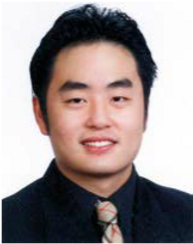
Source: Daniel Ong
Associate Professor, Dr. Andrew Ong Ming Liang
(王明亮, 副教授医学博士)
Assoc. Prof. Dr. Andrew Ong is the great-grandson of pioneer Ong See Mie. His father is Mr. Daniel Ong Tjong Swie. He is currently practicing in Singapore as the Clinical Associate Professor.
He is also the Consultant in Gastroenterology & Hepatology at Singapore General Hospital. He also specializes in Diagnostic and Therapeutic Endoscopy, Gastroesophageal Reflux Disease (GERD), Irritable Bowel Syndrome, Motility Disorders, and General Hepatology. He also treats patients with Fatty Liver, Hepatitis, and Liver Cirrhosis.
He also holds academic appointments in the Yong Loo Lin School of Medicine, Lee Kong Chian School of Medicine, and the Duke-NUS Medical School. He also serves as the Program Director in the Singapore General Hospital Gastroenterology Senior Residency Program.
*

Source: Fupuxian Archive
Bong A Lok (王亞祿; 1919 - 1978).
Great Eastern Bank (大東銀行)
(Indonesia)
Bong A Lok was a native of Putian, Jiangkou Guan Hou Yuan Li Cun (福建莆田江口觀後院里村).
He was among a very small group of Hinghwa who dived straight into the world of commerce, where he not only became the pioneer of it, but also a very successful entrepreneur (Chen, 2003, p. 322).
He was also the Chairman of the Yecheng Chinese Association (耶城中華線會理事長) and Chairman, Da Dong Bank (大東銀行事長). The name of the bank is believed to be the name of his hometown in Jiangkou, Putian.
Together with his brothers, Bong A Gui (王亞桂) and Bong A Jin (王亞金) they became known as the pepper king in the Nanyang region. He also founded Tong Mei Ltd. Company (通美有限公司) to import a large number of bicycles and their parts to be sold to resellers in Jakarta, Indonesia.
He became successful in Indonesia and a natural leader of the Overseas Chinese community (同僑). He also became the Chairman of the Chinese General Chamber of Commerce in Jakarta, Indonesia (前椰城中華總商會會長先賢), Chairman of the Chinese Business School, and Director of Yecheng Zhongshan Middle School (椰城中山中學校). He was also very generous in developing his hometown in Putian and to all his Hinghua compatriots outside China. He also contributed much to the development of the Hin Ann Association across the Nanyang.
Hence, when he passed on, the whole Chinese community was shocked into profound sadness.
*
Karen Carlotta
(Union Brasserie)

Source: Ong Lee Wha
Karen Carlotta (KC) has had a passion for cooking and baking since childhood. What began as a hobby eventually blossomed into a career when she moved to Singapore and enrolled at the prestigious SHATEC School of Pastry.
Her impressive culinary journey includes working at Swissôtel The Stamford, where she trained under renowned pastry chef Gael Etillard, as well as at the Laurent Bernard Chocolate Factory. KC later became the Executive Pastry Chef for two of Singapore’s iconic dining establishments: One Rochester and One Twenty Six.
In 2008, she was awarded the Cacao Barry Lenôtre Paris Scholarship, which was announced during the World Gourmet Summit in Singapore—an honour that further solidified her reputation in the pastry world.
Now based in her hometown of Jakarta, KC is the creative force behind Union Bakery. She is the pastry chef-owner of Union Brasserie, an American-style brasserie with a modern twist, with locations at the prestigious Plaza Senayan Courtyard (est. 2011), Pondok Indah Street Gallery (est. 2013), and Union Deli at Grand Indonesia (est. 2014), among others across Indonesia.
In 2011, she ventured into mass media when she hosted the Iron Chef Kids programme. After several appearances as a guest judge on MasterChef Indonesia Seasons 5 and 6, she was officially appointed a permanent judge for Season 13 in 2025.
One of KC’s original creations, the Union Red Velvet Cake, has developed a strong cult following and remains a beloved favourite to this day.
Liem Swie King
World Badminton Champion

Source: 華人百科
According to the 華人百科 (Chinese People Encyclopedia), Swie King was born in Indonesia in 1956. His father is Lin Tian Bao (林天宝) from Putian Xitian Wei Zhen hou huangcun (福建莆田西天尾镇后黄村) in Licheng District. In 1928, Senior Lin built his ancestor's home in Putian. Prof. Chen C. Y. affirmed that Liem Swie King's ancestry is in Putian, where their ancestor's mansion still stands.
He began his badminton career at the age of 15. He went on to win the All England Championship in 1978, 1979, and 1981.
After collecting all the best badminton trophies in the world's arena, he happily retired in 1988 to run a health spa in Jakarta. In 2009, he published a book aptly entitled "Panggil Aku King" or "Call me King".
*
(Germany)
Dr. Lo Soen Tie (盧顺智) (Germany)

Source: Ong Lee Wha
Dr. Lo Soen Tie (盧顺智) is the third generation of Lo Xiao Jia's lineage. He is also the eldest son of Lo Sian Bie.
Dr. Lo Soen Tie (盧顺智) was born in 1935 in Jakarta, Indonesia. It was there that he married his childhood sweetheart, Dr. Lim Giok Lian (林玉莲), also a Hinghwa, born in 1938 in Jakarta. They had an interesting love story that began when both of them were members of a basketball team. Their cord of love could not be broken by the negative will of his father. They bided their time and continued courting until his father relented. This was when Dr. Lo had his Love in the net.
The pathway of Dr. Lo's journey in medicine was well-lit because his uncle, Lo Sian Xi, the younger brother of his father Lo Sian Bie, was already studying medicine in post-war Germany in 1957. At that time, many Indonesians sent their children to Europe and other countries for further studies.
It helped that the German Government was welcoming foreign students, life was affordable, and the universities were free. Lo Sian Xi seized the opportunity to accompany six other family members to study in Germany. They were the parents of Dr. Lo Ying-Ru ( Lo Soen Tie, Harry and Mdm.. Lim Giok Lian), uncle Lo Sian Xi, uncle Lo Sian Zhang, aunt Lo Yi Zhen (sister of Lo Sian Xi), Lo Hwa Ying, and cousin Zhen Su Shen. All boarded a cruise ship, Queen Victoria, to Europe.
Before they arrived in Hamburg in September 1957, they had stop-over at Colombo, Karachi, Mumbai, Alexandria, and finally arrived in Hamburg in September 1957. The classes at the university started the following month.
As Dr. Jacqueline Lo says, "Uncle Lo Sian Xi (Lo Sian Bie’s younger brother) had helped them to register. It was a difficult time as all the lectures were given in German. They studied the German language in the afternoons, taking private lessons. Both studied hard and became medical doctors in Germany."
Dr. Lo Soen Tie (盧顺智) ran a successful private medical practice in Hamburg, specializing in internal medicine and radiology until his retirement. His wife, Dr. Lim Giok Lian, became a medical doctor working as a geriatrician in old folk homes.
Together, they have three children. They are Dr. Lo Ying-Ru (firstborn), Dr. Lo Wei-Yih, David, and Dr. Lo Ping-Ru Nancy.
Dr. Lo Soen Tie's clinic was taken over by his son, Dr. David Lo. His youngest daughter, Dr. Nancy Lo, is a pharmacist living in London.
Dr. Lo Soen Tie and his wife, Dr. Lim Giok Lian, are now happily retired and are living in Hamburg, Germany. A loving couple indeed.
*

Source: Ong Lee Wha
Dr Lo Ying-Ru, Jacqueline
(盧颖如医生)
(Germany)
(Head (Ret.) of WHO - Southeast Asia)
Dr Jacqueline Lo was the fourth generation of Hinghwa of pioneer Lo Xiaojia. However, Dr Jacqueline was born in Hamburg, Germany, where she later embarked on a very successful medical career to become a specialist in infectious diseases and public health. After more than 13 years as a clinician in Hamburg, Germany, she pursued her professional duties in Mexico, where she moved on to the World Health Organisation (WHO) from 1998 till now.
Since October 2017, Dr Lo has also Head of Mission and WHO Representative to Malaysia, Brunei Darussalam, and Singapore. The office is in Kuala Lumpur, Malaysia.
She married Dr. Jean-Louis Excler from France, who is a vaccine expert. They both live in Kuala Lumpur.
*
(Australia)

Source: Daniel Ong
Dr. Olivia Ong Lee Wee (王莉瑋醫生)
(Australia)
Dr. Olivia Ong is the great-granddaughter of pioneer Ong See Mie. Her father is Mr. Daniel Ong Tjong Swie. She is a medical doctor who specializes in rehabilitation and is very experienced in pain management. She graduated from the University of Melbourne in 2004 and completed her specialist training in 2016. Her main interest is Neuropathic pain in Neurological Disorders.
She is fluent in Mandarin, English, and Bahasa Indonesia, and is currently practicing in Australia.
*

Source: Daniel Ong
William Ong Ming Chuan, CPA
(王明全会计师)
(Australia)
William Ong is a CPA currently practicing in Australia. He is the great-grandson of pioneer Ong See Mie. His father is Mr. Daniel Ong Tjong Swie.
With years of experience in the Financial Services Industry since 2009, William works in a Company (DPM) to assist Medical professionals (Clients) in a Broad area of Services, including Accounting, Business Services, Wealth Creation, and Taxation. He and his colleagues provide Medical Professionals with Financial Peace of mind.
*
(Thailand)
Ou Zongqing (欧宗清)

Source: Baidu
Ou Zongqing (欧宗清) is a native of Thailand, where he was born in 1930 in Jiangtong Province. His ancestral hometown is Wenchang City on Hainan Island, China.
As a young boy, he grew up in a temple. Through hard work and determination, he went on to achieve great success in business, becoming a prominent tycoon with interests in various industries, particularly property development.
He also holds a doctoral degree and has served as Chairman of the Thai Hainan Association and Chairman of the World Hainan Hometown Association.
In 2003, he commissioned Ou Tan Sheng, curator of the Fujian Tanshishan Site Museum, to conduct research on Kantou Village (莆田坎头村) in Putian. This village was believed to have been the ancestral home of Ou Dagong more than 700 years ago. It is now generally identified as Qiantou Village in Pinghai Town, Xiuyu District, Putian City, Fujian Province (福建省莆田市秀屿区平海镇嵌头村).
Ou Tan Sheng's research culminated in the publication of A Record of Tracing Roots in Putian (《莆田寻根记》).
The discovery of his ancestral village enabled Ou Zongqing to lead a delegation to Putian in 2004 to trace his roots and pay homage to his ancestors.
Following his visit, he generously contributed to the development of his ancestral hometown. His actions reflect the deeply rooted Chinese tradition of filial piety, which extends beyond caring for one's living parents to honouring one's ancestors with enduring respect and gratitude.
For many Chinese families, remembering and giving back to their ancestral homeland is a meaningful expression of reverence for those who came before them.
"Note: The text above is an automated Google Translation of the Chinese entry in the Baidu internet and may not be fully accurate.If you are able to provide an accurate English translation, we would greatly appreciate it! Please submit your translation for publication using the form at the bottom of this page, along with your contact number for verification purposes. Thank you!"
Gentle Reminder
Some of the English names are transliteration from their Chinese names. Please help to correct them, if you know of their actual name in English. Thank you.