
Another project of the Hinghwa Heritage Centre
Religion
(宗教; Zōngjiào)

Top Left: Mazu, Source: Author & Lin Zhou,
Top Centre; Tong Kak Kuan Temple, Kuching, Source: Author & JP Hong Boon Siong;
Top Right: Lin Zhaoen aka Lin Longjiang, Source: Author & Lin Zhou
Bottom Left: Jiu Lidong, Putian, Source: Author & Lin Zhou;
Bottom Centre, Hinghwa Methodist Church, Source: Author;
Bottom Right, Kong Meng San Buddhist Temple, Source: Author
Arrangements by Author
The Hinghwa people predominantly practice Taoism and Buddhism, with a small number identifying as Christians, Muslims, or atheists. Many of the deities worshipped by the Hinghwa are rooted in folk beliefs, honoring ancient heroes who possess virtuous qualities deemed worthy of reverence. While there are over a thousand deities worshipped throughout Southern China, the Hinghwa have their own specific deities as well as some common ones that are widely venerated in other regions of Southern China. Although there are signs that other parts of China are increasingly adopting idol worship, the numbers remain relatively small.

This text discusses the religious aspect of Tao (道) and its relationship with nature and harmony, including departed souls, through the principles of Yin and Yang. It is important to distinguish this aspect from Daojia (道家), which refers to the philosophical side of Tao.
The evolution of Tao into Taoism occurred when Zhang Ling (张陵), also known as Zhang Daoling, promoted it as a religion during the Eastern Han dynasty (IRO, 2020). He is recognized as one of the Four Heavenly Masters of Taoism and is often depicted in illustrations as an ancient sage riding a tiger.
Lao Zi is considered the founder of Daojia (道家), the philosophical aspect of Tao, while Zhang Daoling is recognized as the founder of Daojiao (道教), which represents the religious dimension of Taoism.
The primary goal of this religion is to understand the Dao -- the underlying force that governs the universe and the balance of life as it relates to Yin and Yang and the five elements. The two equal opposites of Yin-Yang image must coexist harmoniously, moving in unison, as illustrated in the Yin and Yang symbols commonly found in Taoist temples. Imbalances can lead to difficulties, as emphasized by the principles of Yin and Yang.
Consequently, the principles of Yin and Yang suggest that human survival is intricately linked to nature and to maintaining a balanced life.
Murphy's Law states, "Anything that can go wrong will go wrong." Taoists aim to prevent misfortunes through ritualistic prayers.
According to a person nicknamed "Dragon," who has served as a medium since the age of 14, when an individual enters a trance, their spirit is temporarily replaced by a spirit that he refers to as a ghost (鬼). While in this trance, the medium speaks in a language only an experienced interpreter can understand, after which they explain in human terms. In essence, the medium serves as an intermediary between the devotee and the spirit world. When the trance ends, the medium's spirit returns, and the ghost departs from their body. In this spirit realm, nearly anything can be "revived" or spiritualized. For example, a devotee might purchase an idol from a shop and have it spiritualized before placing it on their altar.
Ways to which an object can come 'alive' or 'spiritualised'.
According to "Dragon," there are three ways an idol can become "alive" or spiritualized with a spirit:
-
The owner can pray to the idol, and after a few days, a spirit will "enter" it, making the idol come "alive".
-
Alternatively, the owner or a medium can simply place a dot on each eye of the idol to bring it to life.
-
Another method involves bringing the idol to a temple, where a medium in a trance performs a ritual. This ritual includes burning a talisman paper over the idol while reciting prayers, allowing the idol to become "alive."
The belief and history of various deities are intricate and deeply embedded in the spirit world. I do not aim to explore these complexities further. For more detailed information, refer to Historical Introduction to the Return of the Gods: Ritual Alliance of the Putian Plain (Vol. I & II) by Dean, K., and Zheng, Z. (2010). This section focuses on the Taoist practices of the Hinghwa people.
Ronni Pinsler is another dedicated follower of Taoism with an extensive collection of deities he has encountered. Under Taoism, there are numerous deities, with each ethnic group having its own for worship.
The Qiongyau religion is primarily practiced in Hinghwa temples, with the first temple founded in 1336 in Jiangkou, Putian, a town known as the ancestral home of many Nanyang immigrants. In Singapore and surrounding regions, Hinghwa temples continue to practice this religion, including Jiu Li Dong (九鲤洞), Qiongyau Jiao Di (琼瑶教邸), Qiongyao Xian Jiao (琼瑶仙教), and other related Hinghwa temples.
Each temple may have its deities, categorized into main gods and secondary gods (Dean & Zheng, 2009b, pp. 435–943).
Other associated Hinghwa Taoist temples include Dong Yue Guan Temple (东岳观庙), the Sanyi religion (三一教), and Mazu (媽祖).
*
"Long before the Greek philosopher’s idea that 'everything flows', later encapsulated in the phrase 'change is constant', and before the Buddhist concept of 'impermanence', the Chinese had already articulated this truth through the ancient wisdom of the 'I-Ching."
*
易經
(I-Ching)

Source: Author
Taoism is strongly influenced by the Book of Changes (I-Ching), which was also adopted by Confucius as part of his teachings in the Five Classics. The symbols within the text evolved from understandings and practices passed down since the Zhou dynasty.
The knowledge in this book has been used by Feng Shui masters, mediums, and fortune-tellers to predict the fate or destiny of individuals and the patterns of nature.
While many regard it as superstition, believers in the I-Ching and Taoism stand by its wisdom.
Interestingly, some physicists have drawn symbolic parallels between the I-Ching and modern scientific theories, even using its concepts and symbols to illustrate ideas in their teachings.
*
The Bagua, or hexagram, traces its origins to one of the simplest yet most profound symbols, the yin-yang. This swirling motif of black and white, each containing a seed of its opposite, encapsulates a fundamental truth: the universe is in constant motion, defined by balance, change, and interconnectedness. Rooted in Daoist philosophy, this concept evolved over time from a philosophical idea into a religious and cosmological framework. It came to represent not just the harmony of natural forces, but also the deeper spiritual and cosmic order that governs existence.
Over time, additional layers of meaning were added to the Bagua to interpret how celestial movements, particularly those of planets, correlate with earthly events, including human fate. This evolving worldview gave rise to the Lunar Calendar, a system that remains remarkably accurate in predicting the cycles of the seasons: the beginnings and ends of winter, spring, summer, and fall. While that may seem like simple astronomy today, its deeper spiritual implications are far more complex.
This is also where Feng Shui masters enter the picture. They interpret and apply ancient principles to influence harmony and energy in daily life. While modern skeptics, such as former Singapore Minister Mentor Lee Kuan Yew, have dismissed their claims, the ancient Chinese practice continues to thrive. In fact, it’s experiencing a resurgence across Mainland China, attracting millions of new believers intrigued by its blend of spirituality, nature, and symbolism.
Among the Hinghwa people who follow Daoism, it is common to own a copy of the Chinese horoscope known as Dong Ni. This traditional almanac offers daily guidance based on one’s zodiac sign, outlining auspicious and inauspicious activities, sometimes down to specific personal habits like when one can or cannot wash their hair. In the past, when hygiene norms were different, following such restrictions was more practical. But in today’s modern workplaces, skipping a hair wash, even for a single day, can seem absurd. As a result, these traditions have evolved, adapting to contemporary lifestyles while retaining their mystical roots.
If you're curious about the complexity and allure of this ancient system, please click on the link above to have a glimpse of how complex the Bagua has become. Please view it with discretion.
*
I-Ching in brief
The I-Ching and the Truth of Impermanence
The central philosophy of the I-Ching (易经), like that of Buddhism, rests on the principle of impermanence, that everything in the universe is in a constant state of flux. Whether it is the ever-expanding cosmos or the tiniest atom, nothing remains unchanged.
This truth is especially evident in the human life journey. From the moment we are born, change becomes our only constant. We begin as infants, grow into adolescents, pass through the stages of youth and adulthood, become spouses, then parents, grandparents, and eventually great-grandparents, each stage a transformation in identity and role.
In Chinese culture, the way a man is addressed often evolves with the stages of his life and relationship. During courtship, a woman might affectionately call him 爱人 (ài rén, "beloved"). Once engaged, he becomes 未婚夫 (wèi hūn fū, "fiancé", literally, "not-yet-married husband"). After marriage, he is commonly referred to as 老公 (lǎo gōng, "husband"). As the years go by and he grows older, the pretty girl who once called him '爱人 ' may now call him 老头, (lǎo tóu, "old man").
These changing titles are more than just labels; they reflect the shifting roles, responsibilities, and relationships that mark each chapter of a person’s life. Just like the I-Ching teaches, nothing remains static. Change is not only inevitable; it is the essence of life.
*
List of Hinghwa Temples in Singapore (新加坡兴化庙)
Compiled by Author

Qiong Yau Jiao Di (琼瑶教邸) is located at 741 Jurong West Street 42, #01-01, Singapore. It is one of the few temples in Singapore that offers free clinic services, available from 7 PM to 9 PM.
All the temples are rooted in various regions, including Putian, Xianyou, and Jiangkou. Temples marked with an asterisk were not reachable for contact. The existing temples either operate independently or collaborate with one another to continue their religious and community activities.
*
Mazu -- The Queen of Heaven
(妈祖; 960AD – 987AD).

Source: Author & 林洲

Source: Hong Lin
Mazu evolved from a local folk belief in Putian into a global religion due to her immense popularity, which was further enhanced by endorsements from several Chinese emperors.
According to traditional accounts, Lin Mo (林默), better known as Mazu (妈祖) was born in Putian County on March 23, 960 AD, during the Song dynasty.
The so-called “Chinese Identity Card” attributed to her was likely created by devoted followers in modern times as a tribute to her legacy. The legendary story of Mazu began on Meizhou Island in Putian (莆田湄洲岛), where she was later revered as a protective deity of seafarers.
In 1086 AD, the belief in Mazu was brought to Putian via Hanjiang, leading to the establishment of the Shengdun Mazu Temple (圣墩妈祖庙).
In 1123 AD, Song Emperor Huizong, while paying tribute to her at the Shunji Miao (顺济庙), addressed her as "Furen" (夫人), or "Madam." This was a significant sign of respect from an emperor. The gesture by the emperor to advance Mazu to divine status was because of a report by one of his court officials. The report states that when the court official Lu Yundi (路允迪) was on his way back to China after his mission to Korea, their fleet of eight boats was caught in a thunderstorm. Out of the eight boats, only Lu's boat was saved because he prayed for divine intervention. When the storm subsided, he noticed that a lady in red was sitting on the mast. The lady was referred to as Mazu. Acting on the report by official Lu, the emperor elevated the status of Mazu to a Goddess. As a result, she became known as the Goddess of Navigation (Chen, 2012a).
Heavenly Concubine (天妃)
In 1281 AD, during the Yuan dynasty, Kublai Khan (忽必烈) awarded her the title of "Heavenly Concubine" (天妃), and the temple subsequently became known as the Tian Fei Palace (天妃宫).
In 1303, Li Qingshu (李清淑), a descendant of Li Fu, rebuilt the temple and personally oversaw its supervision.
During the Ming dynasty, Admiral Cheng Ho (Zheng He) featured Mazu enshrined on his fleet of Treasure Ships (宝船) during his famous voyages to Nanyang and the Western seas.
Queen of Heaven (天后)
In 1684 AD, Emperor Kangxi of the Qing dynasty posthumously conferred upon her the title "Queen of Heaven" (天后). As a result, all Mazu temples are now known as Tian Hou Gong (天后宫).
This was the highest honor ever granted by any imperial court in ancient China to a civilian. It supersedes all previous titles bestowed upon her and remains the most commonly used honorific in Mazu temples today.
The image of Mazu's identity card is believed to have been created by her followers to affirm that she was indeed a real woman from Putian before becoming deified.
*
Mazu On Meizhou Island

Source: Author & 林洲
On March 23, 1991 -- Mazu’s birthday -- a monumental sculpture of Mazu was unveiled on Meizhou Island. Designed by Professor Li Weisi of Xiamen University and carved by renowned Putian sculptor Zhu Boying (朱伯英), the statue stands at 14.35 meters tall, symbolizing the total area of her birthplace, Meizhou Island, which spans 14.35 square kilometers. Constructed from 365 slabs of concrete, the sculpture represents Mazu’s blessings for the people throughout the entire year. It is recognized as part of a UNESCO-accredited cultural heritage. Legend has it that this statue faces a corresponding sculpture on Taiwan Island, with the eyes of both figures precisely engineered to align -- symbolizing an eternal connection across the sea.
*
Source: Author & 林洲
Note: The video may require high-speed internet and sufficient storage capacity. The gusty sound of the wind reflects the sheer power of the typhoon, even though I was only standing at its edge.
On September 5th, 2024, I captured this video from the highlands of Meizhou Island, where the main sculpture of Mazu stands.
At the time, I didn’t realize I was experiencing the outer edge of Typhoon Yagi, which was sweeping through the region and leaving a trail of destruction in its wake.
The wind was so powerful that I had to hold my phone with both hands. Only later did I understand the scale of the devastation and just how close I had been to danger.
A Mazu devotee remarked, “Mazu saved you.”
*
Source: JP Hong Boon Siong
Note: This video may require a fast internet speed and capacity. If you experience intermittent disruptions, try closing all other apps or sites. You may also click on the link above to watch via YouTube. As with all social media, please watch with discretion.
*
Dong Yue Guan Temple, Kuching (东岳观庙, 古晋)

Dong Yue Guan Temple, Kuching (东岳观庙, 古晋)
Source: Author & JP Hong Boon Siong
The Chinese characters and the symbol of Yin & Yang in the temple's design reflect the philosophical and theological aspects of Taoism, although both are distinct in theory.
Dong Yue Guan is another Hinghwa Taoist temple founded during the Song dynasty in Jiangkou, Putian, amid a peasant rebellion on Mount Tai. It evolved through the Yuan dynasty under another name but was renamed Dong Yue Guan during the Ming dynasty (Shi, 2015). The first such temple is believed to have been built in Beijing in 1319 during the Yuan dynasty. It is located at 141 Chaowai Street, Chaoyang District, Beijing.
There is one in Kuching, East Malaysia, and another in Medan, Indonesia. The temple advocates filial piety, loyalty, benevolence, and righteousness. These values are significant among the Chinese people. One symbol that embodies these values is Guan Gong, aka Guan Yu, who was known for his loyalty, righteousness, and bravery. Some of his descendants are found within the Hinghwa community today.
According to lawyer, Kok Yong Hwa (郭镕華律師), Legal Counsel and Vice Chairman of the temple explains, “Dong Yue Guan represents the theological aspects of Daoism beginning with the mythical periods of Pangu (Creator of the cosmologic world – heavens and the earth), Fuxi and Nuwa (creator humanity) followed by the five Premier Emperors and Three Dynasties, known as Sanhuang Wudi which symbolised the beginnings for the Chinese civilization (Guo, 2022, p. 17).
This building, known as Tong Kak Kuang, Kuching (东岳观, 古晋), is located at Lot 2237, Block 10, Jalan Laksamana Cheng Ho, 93200, Kuching, Sarawak, Malaysia.
JP Hong explains that each deity in the temple is rooted in ancient Chinese history and relates to the values treasured by the Chinese people.
Among the many deities are the Jade Dog (玉狗) and the golden crow (金乌). JP Hong clarifies that the worship is not directed at the creatures themselves but at what they symbolize.
These values are reflected in the design, layout, sculptures, and literature of the temple. A walk through the temple showcases the history of ancient China, captured in the publication "Kuching Dong Yue Temple (古晋东岳观)" marking the temple's 20th anniversary.
*
Symbolic Culture Sculpture

Golden Crow sculpture in Dong Yueguan Temple, Kuching
Source: Author & JP Hong Boon Siong

Dog sculpture in Dong Yueguan Temple, Kuching
Source: Author & JP Hong Boon Siong
JP Hong Boon Siong explains that it is not the crow or the dog that is worshipped directly, but rather the values they symbolize. He says, “The Golden Crow sculpture represents filial piety, as it cares for and feeds its aged mother when it could no longer fly."
He further explains that the Dog sculpture symbolizes loyalty, affirming the common saying that the dog is a person's best friend because of its loyalty.
Both values are held with deep reverence in Chinese culture.
*
Dong Yueguan Temple, Kuching, Sarawak

Source: JP Hong Boon Siong
The history of the temple and all that it represents is beautifully captured in this remarkable book. It traces the temple's origins from the beginning of time and follows its evolution into what it is today. At its core, the book weaves together the philosophy and theology of Taoism, offering deep insights into both its spiritual foundations and cultural significance.
*
Dong Yue Guan Temple, Medan
(东岳观)

Dong Yue Guan Temple, Medan (东岳观)
Source: 李永球
In Medan, Indonesia, the Dong Yue Guan (东岳观) was established by the Hinghwa community from Xianyou, Putian. According to the inscription at the temple, it was constructed around 1923 (Li, 2016). The temple is situated at JL. AR. Hakim, No. 24, Sukaramai II, Kec. Medan Area, Kota Medan, Sumatera Utara 20224, Indonesia. Notably, its design closely resembles that of a temple in Kuching. A member of the temple, Suryanto Fang (方家瑞), noted that their temple, Dong Yue Guan, is referred to as the Golden Wheel Grand Court (金轮大法院), and Jiu Li Dong is associated with Qiong Yao Grand Court (琼瑶大法院). Suryanto believes that their temple is the oldest in Medan and possibly in all of Indonesia. The history of their primary temple in China dates back to the Song dynasty era.
*
Jiu Lidong Temple
(Kiew Li Dong Temple)
(Hanjiang, Putian)

Source: Author, 林洲, & 刘启星
This is the largest Jiulidong Temple in Putian, China. The temple, located in Jiangkou, Putian, was founded in 1336. Jiangkou is a well-known ancestral hometown of many Nanyang immigrants, who went on to establish three temples in Singapore: Jiu Li Dong (九鲤洞), Qiongyau Jiao Di (琼瑶教邸), and Qiongyao Xian Jiao (琼瑶仙教).
A unique feature of the temple is a spiritual writing instrument known as the Panchet -- a three-legged wooden stick with a dragon head. The short leg is designed to support the dragon’s head when it rests on the table, and it also functions as the “tip of a pen” during spiritual writing. The longer legs represent the dragon's left and right horns.
The Panchet is typically displayed during festivals or spiritual ceremonies, held by two men: one holds the left horn with his right hand, while the other holds the right horn with his left hand. When the spiritual writing begins, both men automatically synchronize their movements, as though the Panchet is being guided by a single force.
The main temple in Putian is located at Jiangkou, Sitthen, Hanjiang District, Putian (莆田涵江江口石庭九鲤洞总镇). It practices the Qiongyau religion, a branch of the Taoist faith.
The temple has a history of over 2,000 years, with mythology rooted in the tale of the Nine He Brothers from Jiuli Lake. According to legend, the brothers became immortal after experimenting with and consuming an elixir.
Their corresponding temples in Singapore include:
-
Jiulidong Temple (九鲤洞): Jalan Tambur, Singapore
Chairman: Alex Tay Yee Chen (郑义昌) -
Qiongyau Jiao Di (琼瑶教邸): 741 Jurong West Street 42, #01-01, Singapore 649369
Contact: 6560 3069 -
Qiongyao Xian Jiao (琼瑶仙教): 29 Lorong 29 Geylang, #02-01, Chan Khoo Kong Huay, Singapore 388078
Contact: 9221 8658
*
The Planchet
(A Spiritual Writing Instrument)

Panchet (A spiritual writing instrument at the Jiulidong Temple in Hanjiang, Putian
Source: Author, 林洲, & 刘启星.
Appeasing the Gods and Spirits @
Jiu Lidong, Hanjiang

Source: Author, 林洲, & 刘启星.
Opera in Putian

Source: Author & 林洲.
Jiu Lidong (Putian)
Centennial Anniversary

Source: Author 林洲, & 刘启星
Gratitude to Mr. Liu Qixing (刘启星先生) of Jiulidong Temple, located in Shi-ting Jiulidong Town, Jiangkou, Hanjiang District, Putian (莆田涵江区江口石庭九鲤洞总镇), for his generous gift.
The book he shared offers valuable insights into the temple’s history and the legends of its revered deities.
Their affiliated organizations in Singapore include:
-
Jiulidong Temple (九鲤洞): Jalan Tambur, Singapore
Chairman: Alex Tay Yee Chen (郑义昌) -
Qiongyau Jiao Di (琼瑶教邸): 741 Jurong West Street 42, #01-01, Singapore 649369
Contact: 6560 3069 -
Qiongyao Xian Jiao (琼瑶仙教): 29 Lorong 29 Geylang, #02-01, Chan Khoo Kong Huay, Singapore 388078
Contact: 9221 8658
*
Qiongyao Xian Jiao (琼瑶仙教):
29 Lorong 29 Geylang, #02-01,
Singapore 388078
Contact: 9221 8658
Gratitude to Mr. Wu, Mr. Yeo & Mr. Tan
for their sharing.
Source: Author
琼瑶教邸.
Qióngyáo Jiàodǐ
741 Jurong West Street 42, #01-01,
Singapore 649369 Contact: 6560 3069


Source and arrangements: Author
Qiongyau Religion (琼瑶教)
The Qiongyau religion traces its origins to Putian, centering around the legends of the Four Immortals and the Nine He Brothers.
The brothers were later immortalized and became known collectively as the Nine Immortals. They were referred to by several names, including:
-
He Nine Fairy (何九仙, Hé Jiǔxiān)
-
Nine Carp Fairy (九鲤仙君, Jiǔ Lǐ Xiān Jūn)
-
Nine Fairy Duke (九鲤仙公, Jiǔ Lǐ Xiān Gōng)
-
Nine Fairy of the Lake (九鲤湖仙, Jiǔ Lǐ Hú Xiān) (Wang, 2001, p.1)
The Origin of Legend
According to legend, the nine brothers left home after their father refused to heed their warning not to join a rebellion with his close friend. They journeyed across the mountains from Lujiang to the Xianyou region in Putian. Eventually, they settled in what became known as Jiuxian Mountain (九仙山).
While venturing deeper into the mountains, the brothers encountered the Four Immortals, who appeared from the clouds. These were:
-
Lu Shiyuan (Lu Xianzhang) (士元卢仙长, Shìyuán Lú Xiānzhǎng)
-
Xie Yuanhui
-
Wang Chengguang
-
Chen Shande
This meeting occurred in a place called Puyang, where the Four Immortals introduced the concept of the Qiongyau religion and the unification of Taoism. This moment is considered the spiritual origin of the Qiongyau religion. Over time, it became closely associated with the He brothers and contributed to the evolution of the name "Jiuli" or "Jiuxian."
Healing and Immortality
The He brothers, inspired by the teachings of Taoism, dedicated themselves to helping the people of Putian, who were suffering from epidemics. During the day, they searched the mountains for medicinal herbs. At night, they experimented with creating an elixir believed to ward off evil spirits, cure diseases, and prolong life.
During the Yuan Shou era (元狩年间, 122 BC – 117 BC), on the Mid-Autumn Festival, the nine brothers witnessed golden light emanating from the Stone Lake (石湖). From the light emerged nine carps, believed to have consumed their elixir. The brothers each mounted a carp and ascended to the heavens, thus becoming immortal.
The lake was later renamed Nine Carp Lake (九鲤湖, Jiǔ Lǐ Hú), and a temple called Jiuxian Ci (九仙祠) was erected to commemorate their ascension. This temple was eventually renamed Jiuxian Gong (九仙宫), or Palace of the Nine Fairies.
The Temple and Its Legacy
In Shi-ting (石庭), Putian, spirit-writing groups formed small temples referred to as "dong" (洞), meaning caverns (Dean, Fan, & Herrou, 2012a, p.263). Temples practicing the Qiongyau religion eventually came to be known as Jiulidong (九鲤洞) (Wang, 2007).
In Singapore, three temples currently practice the Qiongyau religion, each under a different name:
-
Jiulidong Temple (九鲤洞): Jalan Tambur, Singapore
-
Qiongyau Jiao Di (琼瑶教邸): 741 Jurong West Street 42, #01-01, Singapore 649369
-
Qiongyao Xian Jiao (琼瑶仙教): 29 Lorong 29 Geylang, #02-01, Chan Khoo Kong Huay, Singapore 388078
Rituals and Ceremonies
A key ritual in the Qiongyau religion is the Su Tan Chi Jie (肃坛持戒), a solemn ceremony focused on harmonizing the realms of spirits and humans (Dean, Fan, & Herrou, 2012b, p.268). Its narrative roots can be traced to Buddhism, particularly the Mulian Play (目连戏, Mù Lián Xì), which is a traditional story about filial piety and the salvation of souls.
This ritual, often held once a decade, is conducted alongside one of the temple’s most significant festivals. It is also known as Feng Jia Pu Du (逢甲普度).
The central purpose of this grand ceremony is to restore harmony between the spirits of the deceased and the living. It serves to appease aggrieved or unjustly deceased souls so that they do not trouble the world of the living -- mirroring the values seen in the Seventh Month Festival.
This practice reflects a core Taoist philosophy: the pursuit of harmony and balance between Yin and Yang, viewed here through a religious lens. The ritual’s ultimate significance lies in the salvation of the departed, making it a sacred and monumental event at Kiew Li Tong Temple and among all adherents of the Qiongyau faith.
*

The Scenic Beauty of Jiu li Lake
(九鲤湖美丽的风景)
Source: Jason Ong & 林洲

Source: Jason Ong & 林洲
Source: Author & 林洲

Source: Jason Ong & 林洲
Source: Author & 林洲

Source: Jason Ong & 林洲
Source: Author & 林洲

Source: Jason Ong & 林洲
Source: Author & 林洲

Source: Jason Ong & 林洲
Source: Author & 林洲
Chinese Buddhism in Singapore

Source: Author
Devotees made offerings at the columbarium in Kong Meng San Monastery during Chinese New Year eve morning.
Chinese Buddhism and Taoism in Singapore
Singapore is home to a diverse array of Buddhist sects, each practicing their faith in temples that reflect the cultural traditions of their countries of origin. You’ll find Buddhist temples from Thailand, Myanmar, Sri Lanka, India, China, and more, each adding a distinct spiritual and architectural flavor to the religious landscape of the island.
Among them, the Kong Meng San Phor Kark See Monastery stands out as the largest Chinese Buddhist temple in Singapore. This vast complex includes a Buddhist College, crematorium, columbarium, and multiple halls for worship, making it both a spiritual and community hub for Chinese Buddhists in Singapore.
Interestingly, religious practice among the Chinese community often blends Buddhism and Taoism. Many temples show this integration clearly, with devotees making offerings in ways that are commonly associated with Taoist practices. It is not unusual to find Buddhist and Taoist deities side-by-side, particularly in Chinese folk religious settings.
Integration of Chinese Buddhism and Taoism
Chinese Buddhism itself is a unique integration of Zen (Chan) Buddhism and Taoist philosophy. While Taoist temples may include Buddha images alongside various Taoist deities, not all Buddhist temples reciprocate by housing Taoist images. Nevertheless, the overlap in rituals, values, and festivals reflects how deeply Buddhism and Taoism have influenced Chinese culture and religious practice over the centuries.
Since the Han and Tang Dynasties, Buddhism has become an intrinsic part of Chinese heritage. As such, many Chinese, including the Hinghwa community, who primarily follow Taoist traditions, readily embrace Buddhist beliefs and practices without seeing a conflict in their dual observance.
Cultural Influence through Folklore
One of the most powerful cultural influences that helped popularize Buddhism in China, and by extension, in overseas Chinese communities like Singapore, was the classic Chinese novel Journey to the West (西遊記).
This beloved folklore tells the story of Monk Xuan Zang (玄奘), who journeyed to India to obtain sacred Buddhist scriptures, accompanied by three protectors:
-
Sun Wu Kong (孫悟空) – the Monkey God
-
Zhu Ba Jie (猪八戒) – the pig-like character
-
Sha Wu Jing (沙悟净) – the river ogre
These characters were not only spiritual guardians but also became iconic figures in Chinese opera, cinema, and popular religious ceremonies. In Taoist rituals, it’s common to witness mediums channeling these characters during trance performances, particularly Sun Wu Kong, who remains a favorite among worshippers.
This blend of storytelling, performance, and spirituality continues to shape the way Chinese Buddhism and Taoism are lived and practiced in Singapore today.
*
Venerable Seet Kim Beng
(释金明法师; 1914-1999)

Source: Federation Heng Ann Malaysia
Venerable Seet was born Tan Jin Ming on 7 January 1914 in Zhangtiancuo, Ludong, located in Putian, Fujian Province, China (中国福建省蒲田县芦东张田厝). Orphaned by his father at a young age, he was raised by a resilient mother who worked tirelessly to provide him with a private education. This early foundation enabled him to pursue Buddhist studies as he grew up.
As the only son, his decision to become a monk was initially met with resistance from relatives. However, his mother -- supportive and determined -- overruled the opposition. In 1931, he was ordained as a monk and received the Dharma name Zhixin (至心), marking the beginning of his lifelong devotion to the Buddhist path.
Spiritual Journey and Contributions in Malaya
Soon after his ordination, he followed his revered mentor, Grandmaster Ding Guang (定光法师; 1904–1986), to Malacca, Malaya. There, Venerable Seet emerged as a respected leader and educator within the growing Buddhist community.
In 1951, to honor his own master, Venerable Xiang Lin (香林法师), he established two institutions:
-
Xiang Lin School (香林学校) – providing Chinese-language education
-
Xiang Lin Institute (香林觉苑) – focusing on Buddhist studies and spiritual training
His work in religious education played a pivotal role in nurturing future generations of Chinese Buddhists in Malaya.
Leadership and Legacy
In 1959, Venerable Seet co-founded the Malaysian Buddhist Association, a milestone in formalizing the organizational structure of Buddhism in the region. Over the years, he held numerous senior positions, contributing actively to the promotion of Buddhism and inter-racial harmony in Malaysia.
Venerable Seet is fondly remembered for his wisdom, compassion, and unwavering dedication to peace and spiritual development. His legacy is immortalized in Malacca, where a road named Jalan Rev. Seet Kim Beng stands as a lasting tribute to his life’s work.
---
Source: Huang Wenbin (黃文斌). The Malaysian Henghua Personalities. Federation of Heng Ann Association Malaysia, pp. 460–465.
*

Source: Liu Ruxia

Source: Jason Ong
& 林洲
Source: Author & 林洲
Sanyi Religion (三一教): Unity of the Three Teachings
Founder: Lin Zhaoen (林兆恩), also known as Lin Longjiang
The Sanyi Religion (三一教) was founded by Lin Zhaoen, a respected Confucian scholar from Putian, who claimed lineage from Confucius himself. His vision was revolutionary: to unite Taoism, Confucianism, and Buddhism into a single harmonious system of belief, one that could heal a fractured society.
During the Ming dynasty, Putian suffered a devastating massacre by Japanese pirates. The trauma left communities in turmoil. In response, Lin Zhaoen sought a philosophical and spiritual framework to restore unity and moral order. He believed the key lay in integrating the moral discipline of Confucianism, the natural flow and harmony of Taoism, and the spiritual insight of Buddhism.
To lay the foundation for this new system, Lin Zhaoen immersed himself in the study of all three traditions. He noted that:
Each has its own views of life and death and how the living should live. He adopted their logical and pragmatic views to combine what they thought was good for the people’s well-being and the nation. The commonality amongst the three 'religions' is Peace.
-
Taoism teaches flowing with nature to attain peace,
-
Buddhism teaches detachment from the world to attain peace, and
-
Confucianism teaches self-discipline to attain peace.
By embracing their shared values and harmonizing their philosophies, Lin Zhaoen gave rise to a new faith: Sanyi Jiao (三一教), meaning “The Religion of the Three-in-One.”
Though often mistaken for Sanqinggong, a Taoist temple dedicated to the Three Pure Ones (三清), Sanyi Religion is distinct. While it also draws from Daoist and Confucian teachings, Sanyi Jiao represents a conscious, structured unification of the three traditions, not simply a Taoist sect.
Lin Zhaoen’s Sanyi Religion reflects a uniquely Chinese syncretic tradition, emphasizing balance, unity, and moral cultivation. It was both a philosophical response to crisis and a spiritual blueprint for social harmony.
*
Christianity

First Christian Convert
Christianity was first introduced to Putian, specifically Nanri Island (南日岛), around 1863. The journey began with Lin Zhenzhen (林振珍), a local islander who became the first convert. Lin went on to become a preacher in Fuqing, spreading the faith in the region.
In 1865, the Methodist Church established ‘Grass Lake Church’ (草湖堂) with 35 believers. Lin Zhenzhen, continuing his work, traveled to Pucheng (莆城), a city in Xinghua Fu (now Putian), and set up a church on a rented premise. By 1867, a Hinghwa Pastoral was formed to cater to the growing Christian flock in the region.
Rev. W. N. Brewster
The expansion of Christianity in the Hinghwa region continued with the involvement of Rev. W. N. Brewster, an American missionary, who was transferred from Singapore to Hinghwa, Fujian in 1890. Rev. Brewster was instrumental in the construction of schools, churches, and hospitals, and his dedication to the community left a significant impact.
In his efforts to support the Hinghwa people, Brewster learned of the success of earlier Chinese settlers in Sibu, Sarawak, and decided to visit. After seeing the success firsthand and with the help of Rev. James Mathews Hoover, he secured a piece of land from the Second White Rajah of Sarawak. The land had originally been granted by the First White Rajah, James Brooke, in recognition of his efforts to keep rebels at bay.
On February 12, 1912, Rev. Brewster entrusted Rev. Teng Bing Tiong and Mr. Hong Kah Ming with the responsibility of leading 101 Hinghwa settlers to Sibu. The group arrived safely on May 22, 1912, and settled along Sungai Merah and Sungai Teku.
Upon arrival, lots were drawn to determine each family's place of residence in the pre-constructed huts. The settlers began clearing the land and cultivating crops such as padi, potatoes, and yam. In time, they also introduced rubber trees to the region, contributing to the area's agricultural development.
Founding of Tien Tao Methodist Church
As the Hinghwa settlement took shape in 1912, the Tien Tao Methodist Church was also being established, marking the beginning of both a community and its spiritual foundation.
The Hinghwa community, devout in their Christian faith, worked diligently six days a week, reserving Sunday for worship.
Rev. Brewster later sent Rev. Teng Bing Tiong to lead a second batch of 141 Hinghwa from Putian to Sibu, further cementing the community’s Christian roots in the region.
Hinghwa Bible
One of Rev. Brewster’s most notable achievements was his translation of the Bible into the Romanized Puxian dialect (兴化平话字) in 1890. This translation became a cornerstone of Christian practice among the Hinghwa people and demonstrated Rev. Brewster’s commitment to the mission. The Romanized Hinghwa phonetics used in the translation are still in use today.
As a result of these foundational efforts, a long line of dedicated missionaries was trained and sent to Sibu to continue the work of nurturing and supporting the growing Christian community.
This account highlights the transformative role of Christianity in the Hinghwa community, as well as the enduring influence of missionaries like Rev. W. N. Brewster in shaping the spiritual and cultural landscape of Sibu.
*
The Hinghwa Bible


The bible gave the Hinghwa People their own written language.
Tien Tao Methodist Church, Sungai Merah, Sibu
"I received, with deep reverence, the gift of these Hinghwa Bibles from Reverend Yong Shin Rong (杨欣荣牧师) of the Tien Tao Methodist Church (卫理天道堂), Sungai Merah, Sibu."

L-R: Kapitan Frankie Nee, Yong Kie Ho, Dew Ka Kiang, Author, Benny Ling Heng Zhi & Penghulu Sephen Yong Che Chong
Source: Author & Kapitan Frankie Nee
Rev. Teng Bing Tiong (1881 - 1923)
Rev. Teng Bing Tiong (陈秉忠牧师) was a pivotal figure in the Christian history of the Hinghwa community and played a critical role in the spread of Christianity in Sibu, Sarawak.
Born in Xianyou, Putian in 1881, Rev. Teng graduated from the Hin Hua Bible School and was ordained as a minister in 1910. His commitment to Christianity and his faith in spreading the gospel led him to embark on a significant journey that would shape his legacy.
In 1912, Rev. Teng joined a group of Hinghwa Christians who embarked on a sea journey from Putian to Sibu, Sarawak. On 22nd May 1912, they arrived in Sungei Merah (Red River) in Sibu, marking the first batch of Hinghwa pioneers to settle in the region. Their arrival helped establish a foundation for the Hinghwa Christian community in Sarawak.
In August 1913, Rev. Teng was appointed pastor of Tieng Doh Church in Singapore, where he continued his ministry and set up the Kwong Hang School. Rev. Teng and his wife, Mdm. Hu Teck Ang took care of Hinghwa immigrants who passed through Singapore on their way to Sibu. Their dedication to both spiritual and practical matters helped many immigrants adjust to their new lives.
In 1921, Rev. Teng returned to China to seek medical treatment but sadly passed away just two years later, in 1923, at the age of 42. His wife, Mdm. Hu Teck Ang continued the evangelistic work after his passing. She became a pastor herself and served the Lord with great dedication until her death at the age of 84.
Rev. Teng's work and disciplined approach to ministry were highly praised by those who worked alongside him. According to Rev. Paul Hang, "Rev. Teng and his wife were very efficient and hard-working. Rev. Teng was also a very methodical and disciplined person, where he kept everyone, even the District Superintendent, in order" (Hang, 1970a, p. 14). Their legacy is felt deeply within the Hinghwa Christian community, both in Singapore and Sibu.
Rev. Teng’s commitment to his faith, discipline, and devotion to the Hinghwa people has made him a cherished figure in Christian history, remembered for his pioneering spirit and tireless work for the Kingdom of God.
*
Churches built by the Hinghwa People in Sibu, Sarawak
-
卫理公会天锡堂 (Tien Sik Methodist Church)
-
卫理公会兴安堂.. (Hin Ann Methodist Church, 1936-2024) (deconsecrated on 15/12/24 after 88years)
-
卫理公会天道堂 (Tien Tao Methodist Church)
-
天主教圣德肋撒堂 (St. Teresa's Church)
-
卫理恩道堂 (En Tao Methodist Church) (New)
-
卫理幸福堂 (Bahagia Methodist Church (Kpg. Bahagia) (New)

BG: Tien Sik Methodist Church, Sibu
L-R: Kapitan Frankie Nee, Soh Keo Yew, Ex-Penghulu Teng Swee Ho, Author, Reverend Ling Yue Feng, Yong Kie Ho & Ms. Ling Pick Sum.
Source: Author & Kapitan Frankie Nee

BG: Tien Tao Methodist Church, Sibu
L-R: Kapitan Frankie Nee, Yong Kie Ho, Author, Dew Ka Kiang, & Penghulu Stephen Yong Che Chong
Source: Author & Kapitan Frankie Nee
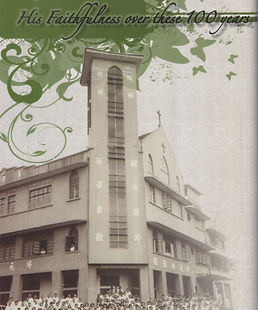
Hinghwa Methodist Church, Singapore
Slowly, but surely, the Hinghwa Methodist arrived at Kitchener Road.
Source: Author


The Hinghwa Methodist Church in Singapore holds a special place in the history of the Hinghwa Christian community. The church’s establishment and growth can be attributed to the dedicated efforts of several leaders, including Rev. Dr. W. N. Brewster, Rev. Teng Bing Tiong, and Rev. Ling Kai Cheng. These leaders not only oversaw the development of the church in Singapore but also maintained strong ties with the Hinghwa Christian community in Sibu, Sarawak.
Before the church was founded, the Hinghwa Christians in Singapore attended services at the Telok Ayer Chinese Methodist Church. Located at 235 Telok Ayer Street, Singapore 068656, the church's services were in a dialect that many of the Hinghwa worshippers could not fully understand. Recognizing this problem, Rev. Dr. W. N. Brewster founded the Hinghwa Methodist Church (兴化音天道堂) in 1911. A year before China became a Republic. The church was initially set up in rented premises at Middle Road, catering specifically to the Hinghwa-speaking congregation.
Under the leadership of Rev. Teng Bing Tiong and his wife, the membership of the Hinghwa Methodist Church grew rapidly, reaching 80 members (Hang, 1970e, pp. 14-19). Rev. Teng’s dedication to his congregation and his disciplined approach to ministry helped foster a strong sense of community among the Hinghwa Christians in Singapore.
When Rev. Teng retired, Rev. Lau Hwei Jin took over from 1922 to 1924, followed by Rev. Yap Ip Tong who served from 1924 to 1925. However, from 1926 to 1927, the church was without a pastor, and the responsibility of overseeing the church fell on three prominent church members: Mr. Lin Hong Ping (林鸿宾), Mr. Sie Teck Hoe (薛德和), and Mr. Ling Kai Cheng (林开臻). Mr. Ling later became a Reverend and played an important role in guiding the church during this transitional period.
In 1927, Rev. Paul Hang from Putian was appointed to lead the Hinghwa Methodist Church. Under his leadership, the church began making plans to expand, recognizing the growing need for a larger space to accommodate the increasing number of worshippers. With donations pouring in, the church was able to purchase its first permanent premises in 1933 at 27 Sam Leong Road. This move allowed the church to serve a larger congregation, with a capacity to hold 1,000 people.
The church continued to grow, and in 1956, further expansion took place. A generous donation of $10,000 was made by Ms. Ruth Lim in memory of her loving parents, which contributed to the renovation and expansion of the church building.
Today, the Hinghwa Methodist Church is located at 93 Kitchener Road. It remains a vibrant center of worship and community for the Hinghwa Christians in Singapore. The church’s growth from a small rented premises to its current large-scale establishment is a testament to the dedication and hard work of its leaders and the unwavering faith of its congregation.
*
Rev. Paul Hang Sing Hoh (1901 - 1972)
(范新福牧师)

Rev. Paul Hang, born in Xianyou, Fujian Province in 1901, is a revered figure in the Methodist Church, especially for his significant contributions to the Hinghwa Christian community in Singapore and beyond. His journey into ministry is one of devotion and faith, influenced by his upbringing, education, and unwavering commitment to serve the Lord.
Rev. Hang's early life was marked by the absence of his father, who moved to Perak, Malaya, for work when Paul was only eight months old. Raised by his mother, who was a devout Christian, Paul grew up in a household filled with faith and service. His mother attended the Bible School for Women and graduated after four years. Her dedication to the church was legendary, and she became known as the "Biblewoman" in the Methodist Church for 21 years. Her influence shaped Paul’s spiritual foundation and set him on a path of ministry.
As a young man, Paul was actively involved in his local church. He helped with household chores and worked diligently on Sundays, tidying up the pews and assisting in the church’s choir. These early experiences laid the groundwork for his future role in the church.
Paul’s formal education in theology began at Fukien University in 1924, and by 1927, he graduated with a B.A. degree from the Nanking Theological Seminary. Under the mentorship of Rev. George W. Hollister, Paul was groomed for ministry. Initially known as Hang Hoh-Gi, Paul felt a strong calling to serve the Lord and, after much reflection, changed his name to Hang Sing Hoh -- a decision he believed was divinely inspired.
Rev. Hang’s calling led him to serve the Hinghua Methodist Church in Singapore. In 1927, upon the request of the church, he began his ministry there and served faithfully for 36 years until his retirement in 1963. His work in Singapore was not confined to just one location. He also traveled extensively, delivering speeches across Malaya and working as a member of the Malayan Methodist Mission. Even after his retirement, Rev. Hang remained involved, continuing to serve as an advisor to the church.
Rev. Hang’s service to the church spanned 44 years, and his dedication to the Lord was unwavering throughout his life. His ministry was not only about preaching the word but also about guiding and nurturing the Hinghua Christian community. His life of service was a testament to the principles of faith, discipline, and devotion.
As Dr. Paul B. Means aptly put it, Rev. Hang’s life and service to the Lord echo the words: "Well done, good and faithful servant."
---
Rev. Paul Hang's legacy in the Hinghua Methodist Church and the broader Christian community in Singapore remains one of faith, commitment, and love for the Lord. His contributions and the example he set continue to inspire those who follow in his footsteps.
*
The powerful preacher, whose light shone too brightly, disturbed the spirits of those who were filled with the spirits, and they thought he was insane and committed him to a mental hospital in the USA.
*
After his friends informed the religious and hospital authorities that they had all misunderstood him, he was released from the mental hospital. He returned to China, and while on the ship, he tore up his Ph.D. certificate and tossed it into the sea. He went on to become the world’s most powerful preacher.
His name is...
*
Rev. Dr. John Sung (1901 -1944)
(宋尚节牧师博士)

Rev. Dr. Timothy Tow
Far Eastern Bible College
Rev. Dr. John Sung (宋尚节), born Zhu En (God’s Grace) on 27 September 1901 in Hong Chek Village, Putian, is remembered as one of the most powerful and influential Christian revivalists in the modern history of China and Southeast Asia. A son of a Methodist pastor, Sung Xue Lian, he was immersed in Christian teachings from a young age. Later, adopting the name Shangjie (尚节) -- meaning “Noble and Frugal” -- he would grow into a preacher whose impact would transcend borders, cultures, and denominations.
John Sung's preaching was known for its fiery conviction, deep Biblical insight, and spiritual authority. He drew massive crowds and led thousands to Christ across China and the Nanyang region (Southeast Asia), including Singapore, Malaysia, and Indonesia. His sermons were uncompromising, emotionally charged, and often included dramatic calls to repentance. Despite being labeled “controversial” by some, the enduring spiritual revival he sparked spoke volumes about the authenticity and power of his ministry.
As William E. Schubert, a fellow contemporary and observer, profoundly noted:
“Dr. John Sung was probably the greatest preacher of this century. I have heard almost all the great preachers from 1910 until now... Yet John Sung surpassed them all in pulpit power, attested by amazing and enduring results.”
His messages weren’t just sermons -- they were movements of the Spirit that stirred hearts, transformed lives, and birthed entire spiritual communities.
One of those deeply influenced by Dr. John Sung was Rev. Dr. Timothy Tow, the founder of Life Bible-Presbyterian Church in Singapore. Dr. Tow was not only a spiritual successor but also a devoted chronicler of Sung's legacy. His book, “In John Sung’s Steps -- the Story of Lim Puay Hian”, stands as a tribute and testimony to Sung’s immense influence on the spiritual landscape of Singapore and beyond.
Through his writing and ministry, Timothy Tow ensured that the memory and teachings of John Sung would not be forgotten and that his passion for revival would continue to burn in new generations of believers.
John Sung's evangelistic tours in the 1930s left a lasting imprint on Singapore's Christian community. Churches were filled, people wept in repentance, and a new wave of spiritual fervor swept across congregations. His ministry not only converted individuals but also strengthened churches, inspired local pastors, and gave birth to new ministries.
Even decades later, many Christians in Singapore and across Southeast Asia trace their spiritual heritage to the revival sparked by John Sung. His legacy is not one of theological complexity but of raw, spirit-led transformation -- an enduring testimony that true revival can shake nations when one man is wholly surrendered to God.
---
Rev. Dr. John Sung is more than a name in Christian history; he is a symbol of what it means to preach with power, live with passion, and pursue God with relentless faith. His life continues to challenge and inspire believers across Asia -- and the world.
*
Church Of the True Light (Anglican) aka
The Trishaw Rider Church
Source: True Light Church
Founded in 1911, the Church of the True Light (真光堂) in Singapore holds a special place in the hearts of many within the Hinghwa and Hock Chia communities. Affectionately known as the “Trishaw Rider Church,” it earned this nickname because many of its earliest members were trishaw riders who found both spiritual refuge and community fellowship inside its walls.
The church’s early story is one of faith, resilience, and cross-cultural collaboration. It started with Miss Apple, an Anglican missionary from the Church of England Zenana Missionary Society (C.E.Z.), working among Chinese communities in Singapore. She was motivated to reach out specifically to the Hinghwa-speaking population, and her call to serve was answered.
A 21-year-old named Guok Koh Muo responded to her invitation and dedicated himself to the ministry. He later became a Reverend, faithfully serving for many years. In the beginning, services were held in humble and borrowed spaces, including a friend’s barber shop. Despite limited resources, the congregation gradually grew, fueled by deep devotion and unwavering commitment to the Gospel.
As the congregation expanded, it became clear that they needed a permanent spiritual home. The church eventually purchased a piece of land at the corner of Dickson Road and Perak Road, launching a building project with a fundraising campaign in 1949.
On October 4th, 1951, the foundation stone was laid, marking a major milestone. Reverend Guok personally traveled across Malaya (modern-day Malaysia) to raise the necessary funds, rallying support from believers and well-wishers who believed in the church’s mission.
On February 24th, 1963, the Church of the True Light was officially established as a parish of the Anglican Diocese of Singapore, settling at its current address: 25G Perak Road, Singapore.
The church served not only as a place of worship but also as a symbol of dignity and hope for many Hinghwa and Hock Chia trishaw riders, who were often part of working-class and migrant communities. Here, they found fellowship, support, and spiritual nourishment, a church built for the people, by the people.
Today, the Church of the True Light remains a historic and cultural landmark for the Hinghwa-speaking Christian community in Singapore. Its story exemplifies how mission work, local leadership, and community support can come together to create something that endures far beyond its humble beginnings.
Even now, the memory of its origins among trishaw riders reflects the church's inclusive spirit and dedication to uplifting the marginalized, staying true to the “True Light” that continues to shine from its foundation.
*
Bishop (Datuk) Ng Moon Hing
(主教 (拿督)) 黄满兴

Bishop Datuk Ng Moon Hing is a remarkable leader whose journey from Ipoh, Perak, to becoming the Archbishop of the Anglican Church in Southeast Asia reflects a life deeply rooted in faith, service, and leadership. His ancestral roots trace back to Putian, China, a heritage that connects him with generations of faith-driven Hinghwa communities across Southeast Asia.
Born in Malaysia, Ng Moon Hing pursued civil engineering at Monash University, graduating in 1978. But his path would soon turn from building structures to building lives. In 1985, he completed his Master’s degree in Divinity, a decision that led him into full-time ministry. His blend of technical and theological training would later shape his practical, strategic, and people-centered approach to ministry.
In 2011, Bishop Ng was conferred the prestigious Panglima Jasa Negara (PJN) by the Yang di-Pertuan Agong, the King of Malaysia—an honor that bestowed upon him the title "Datuk". But long before that, his impact was already being felt in the Church.
In 2007, he was appointed the 5th Anglican Bishop of West Malaysia, and in 2016, he ascended to the role of 4th Archbishop of the Anglican Province of Southeast Asia, a position he held until 2020. As Archbishop, he oversaw churches across nine Southeast Asian countries, guiding them spiritually while also addressing the social, emotional, and economic needs of the people.
Bishop Ng’s ministry has always extended beyond the pulpit. Recognizing that people need more than sermons, he spearheaded initiatives in:
-
Social care and emergency relief
-
Counselling and leadership development
-
Economic empowerment and discipleship training
A church planter, disciple-maker, and leadership trainer, he believes in equipping the next generation to carry the Gospel forward in relevant and compassionate ways.
He currently serves as:
-
Co-Chair of the Anglican Communion Commission on Evangelism and Discipleship
-
President of the Bible Society of Malaysia
Multilingual and deeply relational, Bishop Ng continues to teach, preach, and inspire in churches, camps, seminaries, and Bible schools across Asia. He is often seen ministering side-by-side with his wife, Siew Lan, with whom he has three children and four grandchildren—a living legacy of love, faith, and service.
---
Bishop Datuk Ng M. H. embodies what it means to be a servant-leader in the 21st century: grounded in faith, responsive to real-world needs, and committed to the Gospel in both word and deed.
*
Kuan, Kah-Jin Jeffrey, Ph.D. (關嘉仁)
Clergy and Theologian
President Emeritus, Claremont School of Theology

Prof. Dr. Jeffrey Kuan is a third-generation Hinghwa in Malaysia, where his grandparents emigrated to in the 1920s. His paternal grandfather and grandmother were from Jiangkou, Putian, and Jiangdou, Fuqing, respectively. In the 1950s, his family started the Sin Hoe Hin Sdn. Bhd., the first bicycle and automobile parts business in Taiping, Perak.
He began his career as a Methodist pastor in Kuala Lumpur before going to the United States in 1984 with his wife and 18-month-old daughter in tow to pursue graduate theological education. He eventually pursued his Ph.D. studies at Emory University in Atlanta, Georgia, with a prestigious Robert W. Woodruff Fellowship. He served as a professor of Old Testament Studies at Pacific School of Religion in Berkeley, California, for twenty years before moving on to become the Dean of Drew University Theological School in Madison, New Jersey, the first person of Asian descent to serve as the head of a mainline theological school in North America. In 2013, he was invited to become the President of Claremont School of Theology in Claremont, California in 2013. He is also an ordained clergy of the United Methodist Church. His wife is a Certified Public Accountant, his older daughter is an elementary school teacher, and his younger daughter is a pediatric resident at UCSF.
*
Assoc. Prof. Dr. Linda Too
